Technology has altered many areas of our lives, but one area that is often left undiscussed is faith. Recently, I began to realize that the presence of social media has slowly made our culture more dependent on visual arts over long textual pieces. In every interest people have had, there is something online about it. Some community has already formed and has streamlined the visual aesthetic and fully accessorized it. Whether it’s a hobby, lifestyle or religion, there is a vision attached to it and many who seek to emulate it. As an English Literature major, I am interested by this phenomenon because it is crafting a culture that makes it unclear whether both visual and linguistic arts can coexist. It seems for every book there is a cover that people desire or a painting that captures a scene. But what about the rest of the story?
It’s been said that a picture is worth a thousand words and yet, it seems that those words say a diverse spread of things. As an artistic example, we have recently seen works like that of Piet Mondrian. These abstract pieces of geometrics and and color have presented a dichotomy of interpretation from both color theory to a presentation of philosophy. This makes a clear separation between images and text. Text presents the author’s ideas directly to the consumer while images tend to leave room for the consumer’s ideas to add to the pictures.
People today with social media accounts have likely noticed the overabundance of colors and images. BBC says that more than half of the U.S. population gets news from networks like Facebook, X and YouTube.
“Social media and video networks have become the main source of news in the U.S., overtaking traditional TV channels and news websites,” Ian Youngs, the reporter for BBC, writes.
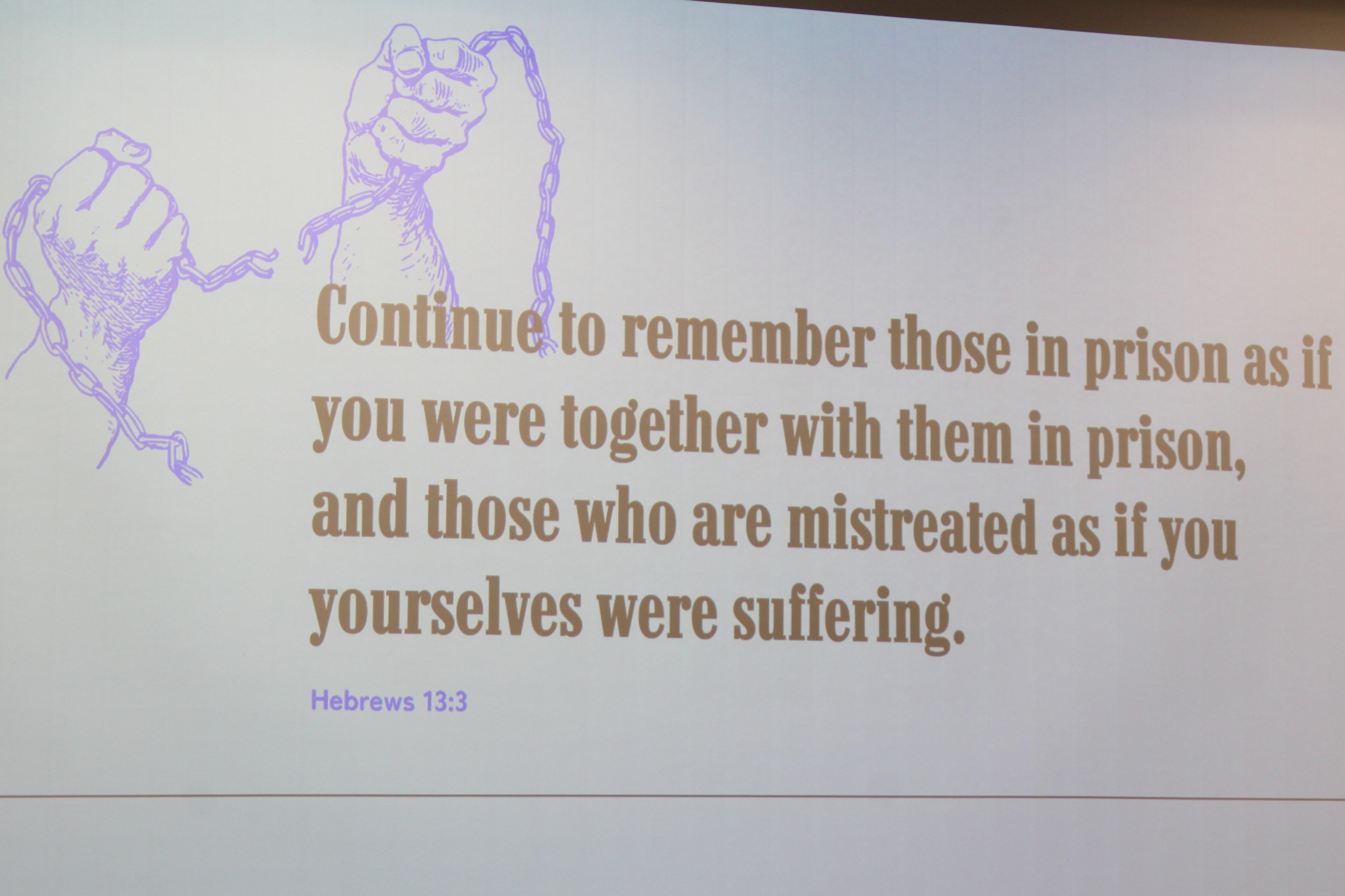
The unfortunate problem with this in regards to Christianity is the use of sensory connection to keep people engaged. There is an increasing attachment between visual styles of living and religion. For example, it does not take long for a user to be recommended a motivational gym picture with a Bible verse on it. Alternatively, there are many visuals of traditional or old-fashioned lifestyles attached to Christianity, cementing it as nothing more than an antiquated religion. These pictures span from baking bread to showcasing Sunday style. Regardless of the video, my claim is that these strange practices of our day are not problems in and of themselves, but a symptom of a deeper problem. That problem is supplementing our lack of faith with visual reassurances. In Romans 10, Paul reminds us of the dangers of overreliance on things seen.
“So faith comes from what is heard, and what is heard comes through the message about Christ,” Romans 10:17, Christian Standard Bible.
This is in Paul's address to a zealous people whose zeal was not based on knowledge of Christ. It is a common human phenomenon that we get excited about things before we fully understand them. This is a good thing, and I believe God created us to be this way to transition us into the curiosity phase. However, it is not a place to stay at, and social media’s algorithms try their best to keep you there as long as possible.
“We have a great deal to say about this, and it is difficult to explain, since you have become too lazy to understand. Although by this time you ought to be teachers, you need someone to teach you the basic principles of God’s revelation again. You need milk, not solid food. Now everyone who lives on milk is inexperienced with the message about righteousness, because he is an infant. But solid food is for the mature — for those whose senses have been trained to distinguish between good and evil,” Hebrews 5: 12-14, Christian Standard Bible.
I am making the claim that social media is trying its best to keep the Christian drinking milk apart from solids. When we become Christians, we recognize our need for a savior and have faith based on hearing the gospel. It is intriguing to me that God did not give us a divinely inspired portrait of the gospel painted in the sky for us. Instead, He gave us words, and I believe that this is because reading lends itself to equal amounts of clarity and faith while images rely heavily on the eyes of the consumer. Of course, many Christians disagree on textual interpretations, but there is such rich objectivity in the written accounts of the gospel and in the whole of the Bible. Yes, social media shows us a visual Christianity, but luckily God has given us an outlet to see our faith lived out.
The visible Church is a beautiful way to see other believers reflect how faith has shaped their lives. It is also the best example of how the visual and written can coexist. Humans are visual stories that should reflect the gospel narrative. Talk to people and ask questions, and you are bound to learn more about the character of your creator. Since we are His creatures, He knows us and has given us the sacrament of communion to visually remind us of the written truth of Christ’s sacrifice. Communion gives us a visual representation of a true spiritual reality. The Lord’s supper uses the literary device of symbolism, but it requires faith for us to see the truth behind it.
So, is there hope for textual art and visual art to coexist in an age where pictures are so inexhaustible? When caution is applied, I would say that images and tangible things can be a great start to exciting the faith. I would comment on that by saying the study of God’s word and learning about Him will enable you to continue growing, as that initial experience of watching an inspiring Instagram reel turns into a distant memory.
Photo by Katrin Bolovtsova via Pexels