News


blog

A Brief History of the US Death Penalty

The long-debated issue of the death penalty in the United States has once again returned to the national stage following the attempted execution of Christi Pike and the planned Dec. 3 execution of Nidal Hasan. In this debate, Americans might be familiar with legal phrases like “cruel and unusual punishment” or “evolving standards of decency,” but few are aware of how fiercely debated capital punishment has been throughout U.S. history.

Prior to the independence of the United States, the penalty of capital punishment was widely accepted throughout Europe and England, so, when the U.S. ratified its Bill of Rights, it assumed the use of the death penalty, but sought to install fair limits.

Two primary limitations appear in the Fifth and Eighth Amendments:

“No person shall be held to answer for a capital, or otherwise infamous crime ... nor be deprived of life, liberty, or property, without due process of law,” the Fifth Amendment states.

The Eighth Amendment adds, “Excessive bail shall not be required, nor excessive fines imposed, nor cruel and unusual punishments inflicted.”

Both provisions were borne directly out of British law. The Fifth Amendment’s guarantee for due process traces back to the 1354 version of the Magna Carta: “No man of what state or condition he be, shall be … put to death, without he be brought to answer by due process of law.” Likewise, the Eighth Amendment’s prohibition of cruel and unusual punishment was taken verbatim from the 1689 English Bill of Rights.

However, these frameworks were not adopted without local dispute. In Virginia and Philadelphia, early leaders like Thomas Jefferson and William Penn successfully limited the scope of the death penalty down from a multitude of major and minor crimes to just two: treason and murder. At the national level, Dr. Benjamin Rush sought unsuccessfully to abolish state executions altogether. Advocating for long-term confinement and labor as a means of rehabilitation, Rush’s ideas formed the foundation for the modern penitentiary system.

“Before this shift, confinement was primarily used to hold individuals awaiting trial or punishment; it was rarely used as a means of punishment in se. The once predominantly public nature of punishment gave way to less theatricality and more privacy,” the University of Richmond School of Law notes.

Throughout the 19th century, the use of the death penalty fluctuated as individual states exercised complete sovereignty over the application of capital punishment. In 1879, the Supreme Court ruled that death by firing squad did not violate the Eighth Amendment. Then, in 1890, the Supreme Court faced another Eighth Amendment challenge regarding execution by electric chair before also ruling it a constitutional method of execution.

A major legal turning point arrived in 1910 with Weems v. United States. The Supreme Court overturned a sentence involving hard labor and removal of civil rights for fraud in the Philippines on grounds that it constituted “cruel and unusual punishment.” Establishing the proportionality of the punishment to the crime, the Court declared the Eighth Amendment clause on unusual punishment to be dynamic and changeable over time.

“Time works changes, brings into existence new conditions and purposes. Therefore a principle, to be vital, must be capable of wider application than the mischief which gave it birth,” the Court said.

In the years from 1900-1918 — years of American prosperity leading into WWI —- the death penalty largely lost favor with the American public, prompting 10 states to abolish it: Minnesota, North Dakota, Colorado, Oregon, Washington, Kansas, South Dakota, Missouri, Arizona and Tennessee.

However, during the post-WWI recession and the 1929 market crash, every one of these states except Colorado reinstated capital punishment. Believing that rising poverty and unemployment would inevitably increase crime, the public once again began to view the death penalty as “a necessary social measure.” Consequently, the 1930s saw more total executions than any other decade in U.S. history, numbering 1,676. Likewise, high approval rates continued throughout the 1940s, resulting in the decade’s 1,289 executions.

Approval remained high through much of the 1950s, fueled by intense Cold War sentiments and highlighted by the federal executions of Julius and Ethel Rosenberg for espionage. By the late 1950s, however, opposition to the death penalty resurfaced. In 1958 with Trop v. Dulles, the Supreme Court extended its definition of cruel and unusual punishment, stating that the clause must draw its meaning from the “evolving standards of decency that mark the progress of a maturing society.”

A wave of state level opposition followed. Between 1957 and 1969, 10 states — Hawaii, Alaska, Delaware, Michigan, Oregon, Iowa, New York, West Virginia, Vermont and New Mexico — repealed the death penalty. This effort was largely driven by the NAACP and its Legal Defense Fund, which raised concerns about the racially discriminatory history of capital sentencing.

This movement culminated in 1972 with Furman v. Georgia, a landmark Supreme Court decision which struck down all federal and state capital statutes as unconstitutional on grounds of violating the Eighth Amendment, ruling that death sentences were being arbitrarily imposed. On June 29, 1972, the Supreme Court effectively voided existing death penalty statutes, “commuting the sentences of 629 death row inmates around the country and suspending the death penalty because existing statutes were no longer valid.” This decision was by no means a uniform decision from the Court. Not only was it a 5-4 vote, but each of the nine justices penned their own separate opinions — an anomaly which has only occurred three times in U.S. Supreme Court History.

The suspension was brief. Just months later, 35 states — led by Florida — redrafted their capital punishment statutes to address the concerns in Furman v. Georgia, reinstating statewide executions.

Public support for the death penalty continued to rise over the following decades, peaking in 1994 with 80% of Americans voting in favor. However, the latest poll in 2025 shows that approval has dropped back down to 52%, its lowest approval rating since Furman v. Georgia in 1972.

Among the G7 nations, the United States and Japan remain the only countries that continue to practice capital punishment, joining roughly 55 countries who maintain the penalty, including China, Iran and Saudi Arabia.

As high-profile cases like those of Pike and Hasan return the death penalty to national headlines, they serve as modern reminders of a centuries-old debate. Reshaped across generations by economic crises, judicial rulings and shifts in public conscience, the American death penalty continues to reflect Trop v. Dulles’ “evolving standard of decency.” And so, as it has since the nation’s founding, the future of capital punishment remains inextricably tied to how Americans define justice in the modern era.

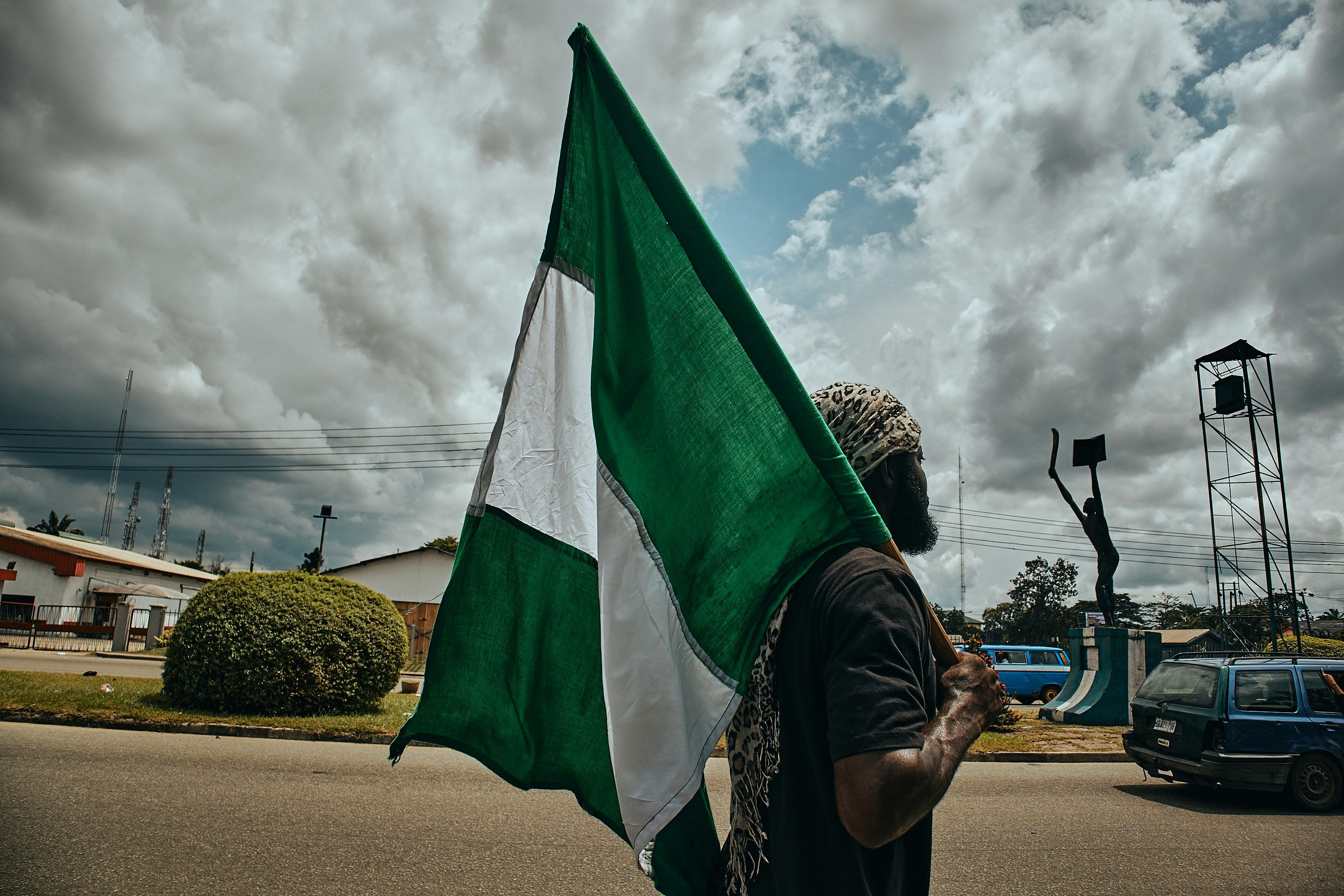
 Photo by Pavel Danilyuk via Pexels 

Read More

Sports


blog

After the Whistle: Harry Kane’s Post-World Cup Achievements

For many Americans, the sport of soccer (known to the rest of the world as football) tends to pass under the radar until global events like the 2026 FIFA World Cup bring it into the international spotlight. From June 11 to July 19, the world watched Cape Verde make its World Cup debut and advance to the Round of 32, witnessed Lionel Messi’s hat-trick against Algeria, and celebrated Norway’s victories with their characteristic “Viking Row.” Japanese fans were introduced to barbecue and armies of bagpipe-wielding Scots marched through the streets of Boston. However, after the final whistle at the championship game in New Jersey, the world of football largely retreated to the background for many Americans. Even though attention has shifted away from the World Cup teams, most players have returned to their respective football leagues and continue to achieve remarkable feats. Harry Kane, who played for England at the 2026 FIFA World Cup, recently won the highly coveted Golden Shoe and cemented his status as one of Europe’s best strikers.

Kane was awarded the Golden Shoe as Europe's top goalscorer for the 2025-26 season, the second time in his career. Playing for the club Bayern Munich, he scored 36 goals in 31 matches held by Bundesliga, Germany’s top professional football league. Italian World Cup winner and former FC Bayern striker Luca Toni congratulated Kane at the award ceremony.

“Dear Harry, on behalf of all strikers – past, present and those who still dream of scoring as many goals as you have: every striker is proud of how you have taken our game to a new level. You are the premium version of a striker,” Toni said.

The award uses a points system that gives more weight to goals scored in Europe’s top five leagues. Kane decisively secured the award ahead of Erling Haaland, who scored 27 goals for Manchester City, and Kylian Mbappe’s 25 goals for Real Madrid.

This accomplishment was made even more historic by the fact that Kane also received the Ballon d'Or, the most prestigious individual prize in football. Football journalists from each of the top 100 FIFA-ranked nations cast votes for 10 players in order from a shortlist of 30 nominees compiled by France Football and the French publication L'Equipe, with weighted points associated with each ranking. The winner is the player who collects the most points. Voting is based off of individual performances, team performances, and class or “fair play.”

Only seven players in history have been awarded both the Golden Shoe and the Ballon d’Or. This exclusive list includes names like Cristiano Ronaldo, Lionel Messi and Eusebio. Kane’s achievements are a testament to his superiority as a striker. Toni addressed Kane during the presentation of the Golden Shoe, praising his athletic prowess.

“You don’t just wait in the box – if the ball doesn’t come to you, you create the chance yourself and then put it away. A good striker finds space – and Harry Kane creates it,” Toni said. “Future strikers will be judged against your standards.”

Off the pitch, Kane is committed to promoting mental health through the Harry Kane Foundation, which, according to the foundation’s website, “collaborates with experts, charities and strategic partners to fund and champion mental health awareness campaigns, proven education programs, workshops, research projects and support services designed to get people of all ages active on mental health.”

Kane’s recent accolades within the world of football and his prominence outside of it prove that the thirty-three-year-old striker is establishing a career to remember. Just because the World Cup is over doesn’t mean that the talent displayed on the global stage has ceased; in some cases, it has only grown. Although these achievements might not be accompanied by bagpipes or barbecue, they are still worth acknowledging. It shouldn’t be another four years before these football players regain the world’s attention.

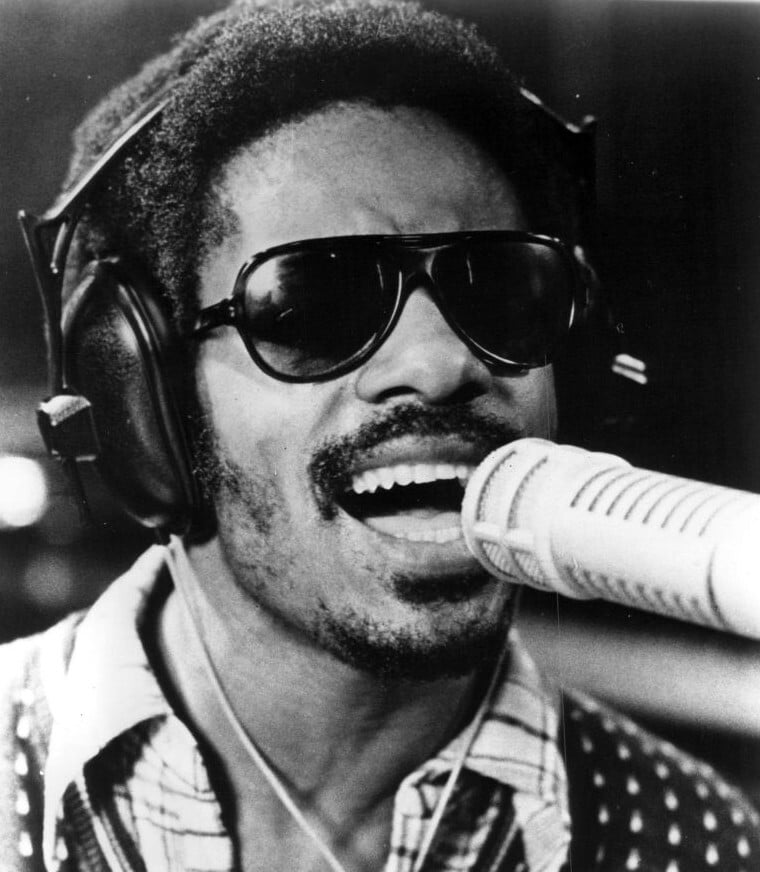
Photo provided by Bryan Berlin / WikiPortraits

Read More

Opinion


blog

Top Murder Mysteries for Fall

Now that it is finally beginning to feel like fall in Northwest Arkansas, it’s a good time to find a new TV show, book or movie to dive into. Unlike any other season, fall always seems like the perfect time to read or watch a new murder mystery. While having a Stars Hollow fall is a great way to start the season, the cold calls for something a bit more sinister. With that in mind, here are my top murder mysteries for fall:

“Knives Out” (2019)

When I think of a fall murder mystery, I immediately picture “Knives Out.” When author Harlan Thrombley (Christopher Plummer) is found dead one morning in his wooded mansion, all eyes turn to his dysfunctional family and his dutiful staff. Starring Daniel Craig, Chris Evans and Ana de Armas, among other A-List actors, this movie takes the traditional murder mystery and adds in hilarious twists and turns as it flips between the unfolding story and police interviews. After the first movie’s success, Netflix took over the franchise, releasing “Glass Onion” and “Wake Up Dead Man.” If you like classic Agatha Christies with a modern twist, this one is for you.

“Enola Holmes” (2020)

The story of Sherlock Holmes has been told over and over since Sir Arthur Conan Doyle debuted his master of deduction in 1887 with “A Study in Scarlet.” This time, however, the focus is on his little sister Enola, played by Millie Bobbie Brown. “Enola Holmes” follows the 16-year-old as she runs away from her brothers to find her missing mother in London. On her way, she stumbles upon Viscount Tewkesbury (Louis Partridge), and the two work together to unravel the conspiracy her mother, and ultimately themselves, have become caught up in. While the story doesn’t start off with a murder, the characters are exposed to more and more danger around every corner as deceptions come to light. In addition to the first “Enola Holmes,” Netflix has also released “Enola Holmes 2” and “Enola Holmes 3.”

“Bones” (2005-2017)

While “Bones” isn’t predominantly a fall TV show, its status as a procedural crime drama earns it a spot on this list. “Bones” follows a forensic anthropologist, Temperance Brennan, and her team as they help out with FBI cases where nothing is left of the deceased but bones. “Bones” helped set the formula for many of the crime procedural shows today with its quirky police consultants and (mostly) by-the-book detectives. Spanning 12 seasons with roughly 20 episodes each, “Bones” has plenty of material for anyone wanting to stay out of the cold and looking for a new binge-worthy favorite.

“The Mentalist” (2008-2015)

“The Mentalist” is another classic crime procedural. Following CBI consultant Patrick Jane, “The Mentalist” tells the story of a former psychic trying to prove that all it takes to solve a murder is good deduction skills. While the premise may sound slightly similar to fans of NBC’s “Psych,” Jane’s character takes on a much more serious role throughout the show, trying to come to terms with the death of his family by the serial killer Red John. Despite its more serious take on the classic crime procedural, “The Mentalist” is full of sarcasm and witty remarks reminiscent of BBC’s “Sherlock.”

“Castle” (2009-2016)

The final procedural on this list is none other than ABC’s “Castle.” “Castle” follows author Richard Castle (Nathan Fillion) as he tags along on NYPD Detective Kate Beckett’s (Stana Katic) assignments so that he can gain material for his new heroine “Nikki Heat.” As Castle refuses to ever take anything too seriously, Beckett’s no-nonsense outlook on police work causes the two to be at odds most of the time, adding to the back-and-forth banter and undeniable chemistry between the two. Complete with cameos from famous mystery writers, “Castle” is perfect for any literature lover's fall watchlist.

Agatha Christie Murders

Obviously you can’t have a list of top murder mysteries without mentioning the “Queen of Crime” herself, Agatha Christie. While Christie originally rose to acclaim through her novels, she has maintained her top spot in the mystery world through their countless movie and TV show adaptations. Recently, several of her novels have taken over the big screen through actor and director Kenneth Branagh’s take on Hercule Poirot, starting with “Murder on the Orient Express” and continuing with “Death on the Nile” and “A Haunting in Venice.” Netflix has also adapted one of Christie’s novels recently with “Agatha Christie's Seven Dials” starring Mia McKenna-Bruce, Edward Bluemel and Martin Freeman. My personal favorite Christie novel is “And Then There Were None,” which was adapted most recently in 2015 by BBC.

“The Thursday Murder Club”

You may know “The Thursday Murder Club” through its Netflix adaptation, but it earned its spot on this list through the five-book series by Richard Osman. While the club usually meets to discuss cold cases, things heat up when people connected to their retirement community start dying. Elizabeth, Joyce, Ibrahim and Ron may seem like quintessential retirees, but as the novels develop, their true sides are revealed as they play those around them like chess pieces to make sure the truth is revealed. While Osman hasn’t released any new books in this series recently, he just came out with “We Chase Shadows” the sequel to “We Solve Murders.” If you are a fan of senior sleuths, consider also checking out “The Marlow Murder Club” (and its accompanying PBS show) and “Vera Wong's Unsolicited Advice for Murderers.”

The Pen & Ink Mysteries

In the mood for a cozy mystery? Look no further than Krista Davis’ “Color Me Murder,” the first in the Pen & Ink Mystery series. In this series, bookstore manager and adult coloring book maker Florrie Fox seems to be constantly stumbling across murders in quaint Georgetown. Throughout this four-book series Florrie works with her friends at the bookstore and Sergeant Eric Jonquille to figure out who is disrupting the peace in their corner of Washington, D.C. Davis is a longtime mystery writer with two other series “A Domestic Diva Mystery” and “Paws & Claws Mystery” in her repertoire.

“Killing November”

Looking for something a bit more high action? “Killing November” by Adriana Mather is the perfect pick. November Adley is a normal girl, or so she thinks, until she wakes up in a castle in the middle of nowhere. That is when she learns that she is actually the latest in a long line of assassins and is part of a secret society. As she learns the rules of her new life, people begin to die around her, making her further question who her parents really were. Although this is a young adult novel, it includes many heavy themes as November deals with the loss of her parents and the world as she knows it. Mather, thankfully, didn’t stop with “Killing November" but continued her story in “Hunting November.”

While this isn’t an exhaustive list, I hope you found some inspiration for a good mystery to spice up your fall. So turn on “No Body, No Crime” and get to sleuthing!

Photo by cottonbro studio on Pexels

Read More

Lifestyles


blog

From Lake America to South America: How Trump’s Renaming Campaign Became a Political Punchline

Political decisions do not always stay within government. Sometimes, they appear on phone screens, spread through social media and eventually become part of popular culture. Recent attempts by President Donald Trump to change geographic names in the United States have done exactly that, becoming the subject of debate, online reactions and even a joke from the creators of South Park.

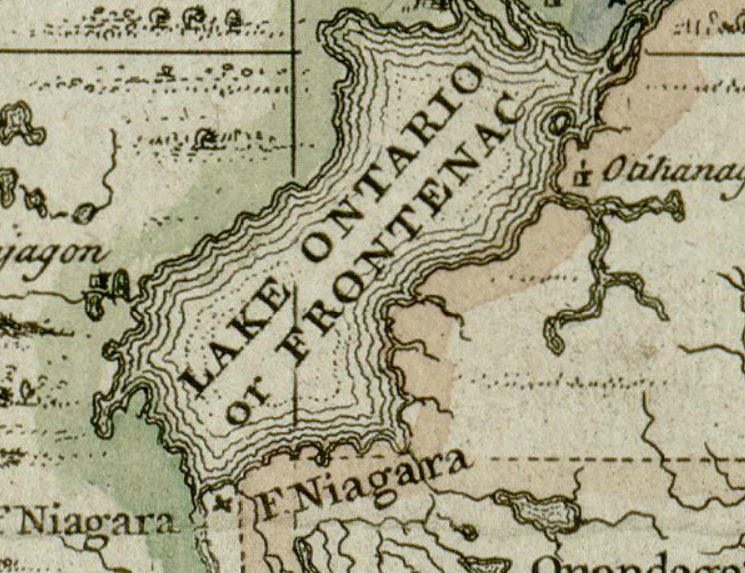
In August, Trump signed an executive order directing the federal government to rename Lake Ontario as Lake America. The lake, which borders New York and the Canadian province of Ontario, became another example of Trump using geographic names as part of his administration’s policies and messaging. The move followed his earlier decision to refer to the Gulf of Mexico as the Gulf of America for federal purposes.

The changes also created different responses from technology companies. Google Maps changed Lake Ontario to Lake America for users in the United States, and Apple later made the same change, though. Users outside of the U.S. continued to see Lake Ontario. Other platforms such as MapQuest, however, decided not to change the name. After announcing its decision on social media, the mapping service experienced an increase in downloads and reached the top of the U.S. App Store.

The naming debate expanded beyond bodies of water. In September, Trump suggested on social media that New Mexico should be renamed “New America.” Unlike Lake Ontario, however, New Mexico was not actually renamed. The proposal generated reactions from residents and politicians in the state, with critics arguing that the existing name is connected to the state’s history and culture.

The situation eventually became material for one of television’s most recognizable satirical shows.

On Sept. 8, South Park creators Trey Parker and Matt Stone announced on the show’s Instagram account that they were changing the name of the series to “SOUTH AMERICA.” The announcement specifically referenced Apple and Google, thanking them for their “bravery and patriotism” after the companies adopted the Lake America name on their maps.

The joke continued when the show’s 29th season premiered on Sept. 16. The opening sequence used the new “South America” name, while the premiere, titled “South American Biker Gangs,” included an animated version of Trump.

The response to these events shows how political decisions can move beyond government and into everyday technology and entertainment.

For South Park, turning political events into satire is nothing new. But the “South America” joke demonstrates how quickly politics can become part of popular culture— and how a decision about what to call a place can become much bigger than a name on a map.

Photo available via the Public Domain

Read More