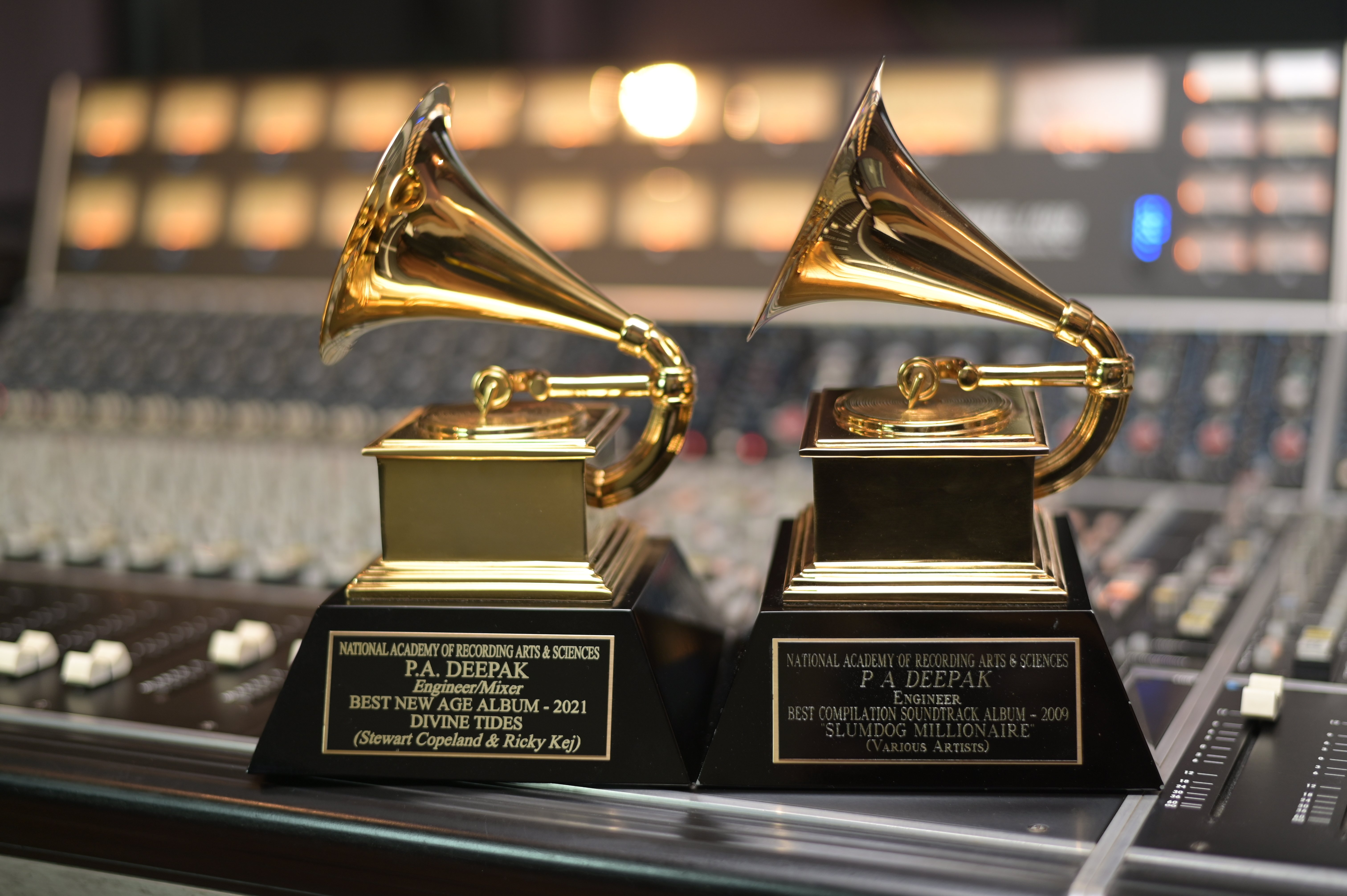
On Nov. 16, the 69th Grammy Award nominations were finally announced after a year of what many have considered phenomenal musical releases. Nevertheless, as per usual, the Recording Academy’s decisions have surprised many and sparked online debate, calling into question once more just how unbiased these prestigious awards really are. Today, we review these nominations, evaluating who, truly deserves a chance at the Golden Gramophone and who may not be as worthy.
The Big Four
The Big Four categories — that is, Record of the Year, Album of the Year, Song of the Year and Best New Artist — are seen as the most prestigious and often treated as the most important awards of the night. This year’s nominations brought some welcome surprises, particularly the strong showing of female artists. Olivia Rodrigo, Olivia Dean, Raye, Ella Langley, Rosalia and Bruno Mars were nominated for the three “big” categories they were eligible for (Record of the Year, Album of the Year and Song of the Year), following a year of successful album releases. Of these, Raye scored the most nominations, tying Beyonce’s 2025 Grammys record with 11 nods in categories including Songwriter of the Year, Best Pop Solo Performance and Best Traditional Pop Vocal Performance. This recognition is well deserved, and it is exciting to see her work receive such widespread acknowledgment.
Rosalía follows the British singer with nine nominations, representing the second consecutive year that a primarily Spanish-language artist and album has been nominated within the main categories. Although her presence in three of the Big Four categories surprised some, Rosalía’s “Lux,” with its blend of genres and avant-garde presentation of music, has made her a worthy opponent for her English-language counterparts. If her wins at the Latin Grammys prove anything, it is that her artistry is something to look out for.
Not all nominations, however, were met with the same enthusiasm. Megastar Taylor Swift scored five nominations, marking the fifth consecutive year in which she’s been nominated for Album of the Year. Unlike the rest of the artists, however, Swift’s nominations have received mixed reactions.
“The Life of a Showgirl’s” initial release was met with criticism from fans and critics alike, with many stating Swift’s work on the album lacked depth and bordered on repetitiveness. It is for these very reasons that many have raised eyebrows at Swift’s nominations.
Now, I don’t think anyone can deny that Swift is a talented artist and songwriter, and her continued recognition throughout the years is proof of her abilities and power as an artist. However, a nomination for an album that is arguably not among her best leaves a bad taste in my mouth, especially when considering the names that were left out of the categories altogether. It’s hard to imagine the same album receiving as much recognition had it not been attached to such a recognizable name.
The Snubs
It is important to recognize that the Grammys, being based on subjective criteria and having a limited bandwidth, will never be able to fully recognize all the work and art that deserves praise. Fans will always be disappointed when their favorites don’t get nominated, and the Recording Academy is unfortunately not there to please everyone.
However, there is something to be said about the snubbing of artists who have made significant impacts on the music industry throughout the year, and what it reflects about the Grammys as a whole.
This year, two major surprises were Noah Kahan’s “The Great Divide” and Harry Styles’ “Kiss All the Time. Disco, Occasionally,” both of which received little to no recognition. I, personally, expected to see them both appear at the very least in the Album of the Year or Song of the Year categories. Instead, Kahan received just one nomination for Best Contemporary Folk Album, while Styles came away with none, despite having completed an astoundingly successful 30-day residency at Madison Square Garden for his "Together, Together" tour.
I'll admit that I have a pretty big bias toward these two artists and their respective albums. I considered both among the best releases of the year, and I was genuinely surprised to see them receive so little recognition. That doesn't mean I think the other nominees were undeserving, or that I would necessarily replace any of the current nominations with theirs. But it does raise a bigger question: how significant can an award ceremony like the Grammys be when audiences have come to expect the same patterns year after year? When widely recognized artists like Swift continue to receive nominations while others, like Kahan, struggle to get the Academy’s attention, it becomes difficult not to question what kinds of artistry the Grammys are actually rewarding.
The “Best Asian Pop Music Performance” Fiasco
Perhaps one of the more interesting developments surrounding this year’s nominations has been the controversy surrounding the newly introduced Best Asian Pop Music Performance category. Earlier this year, the Recording Academy announced the addition of the category as an effort to recognize the diversity and growing influence of Asian music within the global music industry. However, the decision was not met with unanimous support.
Critics have raised concerns that introducing region- or genre-specific categories, while seemingly intended to promote greater representation, might actually reinforce the very divisions that have historically limited international artists’ recognition within the Grammys. Similar criticisms have surrounded categories such as Best Música Urbana and Best African Music Performance, which some argue create a separate space for artists of color and international music without necessarily extending that recognition to the ceremony’s most prestigious categories.
These concerns have also been reflected in the response from the K-pop industry, with major artists and industry representatives questioning the Academy’s approach to recognizing Asian music. Following the announcement of the new category, K-pop group BTS — considered to be one of the potential main contenders for the category — announced its decision to boycott the awards ceremony altogether, stating that the band hoped its music would be “be heard and loved for what it is, rather than being divided by region or language.” The four largest K-pop agencies similarly refused to submit their work to the category.
I bring this up because I think it highlights two significant issues with the Grammys: its narrow scope and its ability to equally recognize artistry across genres, languages and regions. Once again, it seems that predominantly American, English-language pop artists are the most likely to receive recognition within the Big Four, while international artists and artists working in other genres are often recognized primarily within their own designated categories. And while there is certainly nothing wrong with celebrating the contributions of Asian music, Latin music or African music, there is something rather limiting about the idea that these artists should be recognized primarily within those spaces.
The Future of the Grammys
Looking at the nominations as a whole, I think these issues reflect that the Grammys as a show are headed toward a somewhat uncertain future. In the eyes of the public, the award ceremony has become increasingly viewed as predictable, disappointing and unreliable. When audiences see the same kinds of artists and music nominated and rewarded year after year, while equally talented acts go unnoticed, the ceremony starts to lose some of its excitement. What should be a celebration of the year’s music can begin to feel like a predictable, boring rehash of what we've already seen.
Nominations like Rosalía’s “Berghain” certainly serve as a rebuttal to this argument. They show that the Academy is still capable of recognizing experimental music and artists who push the boundaries of what popular music can look like. I hope we see more of that in the future. The Recording Academy should continue widening its scope, giving greater recognition to artists across genres and regions and rewarding the kind of innovation that makes music exciting in the first place.
And, of course, I hope “The Great Divide” wins Best Contemporary Folk Album because I am still salty Kahan received no other nominations.
Photo provided by Padeepak via Wikimedia Commons