How a 21-year-olds’ fight for artistic freedom reshaped the music industry and produced one of the greatest R&B albums of all time.
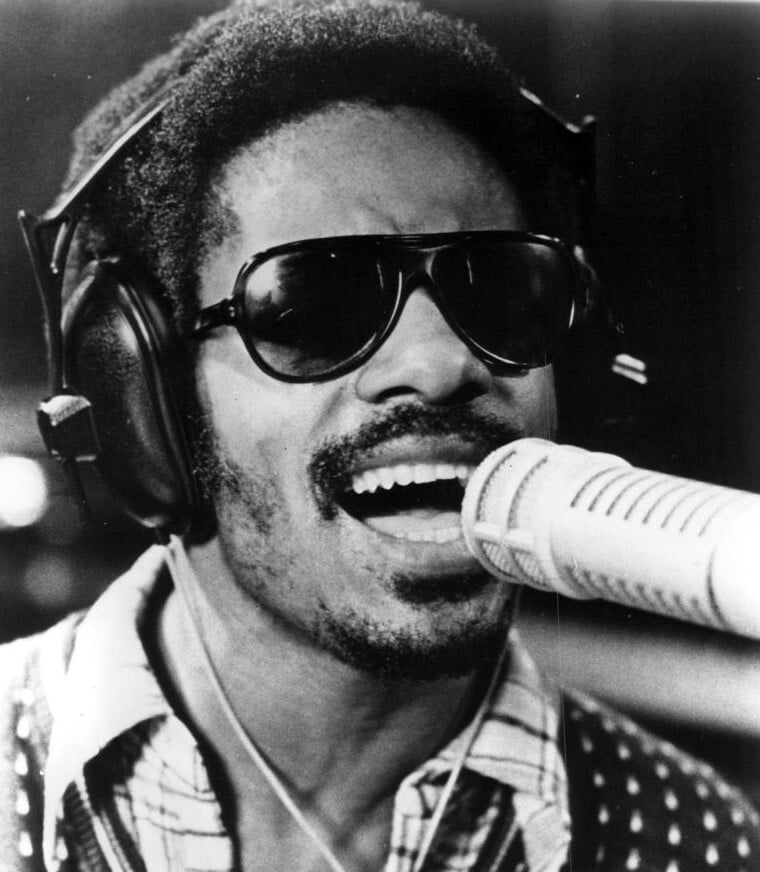
When Stevie Wonder takes the stage this week for an 18-show tour across the US, United Kingdom and Europe, it will be more than a legacy lap for the 76-year-old R&B legend. Opening Oct. 13 in Birmingham, England, and closing Dec. 19 in Los Angeles, Wonder will perform his 1976 magnum opus, “Songs in the Key of Life,” in its entirety to mark its 50th anniversary. In order to understand why this album merits a stadium tour five decades after its release, one has to look at the effect it had on the recording industry and the very sound of popular music as we know it.
The Prodigy
Born six weeks premature, Stevland Hardaway Morris suffered retinopathy of prematurity and was over-exposed to pure oxygen while in the incubator, resulting in permanent blindness from birth. According to a 2004 interview with Oprah Winfrey, Wonder’s mother felt overwhelmed by guilt and often wept in front of her son, believing that God might be punishing her. Yet a young Wonder famously consoled her.
“Don’t worry about me being blind, because I’m happy,” Wonder said.
His sightlessness did not at all impede his musical ability. Wonder was a true musical prodigy, mastering the harmonica, piano and drums when he was just nine. By age 11 he had become well-known around his Detroit neighborhood and caught the attention of Berry Gordy, head of Motown Records. He was signed on immediately, and “Little Stevie Wonder,” as he was rechristened, became the youngest artist in history to hit No. 1 on the Billboard Hot 100 with “Fingertips (Pt. 2)” at just 13 years old.
Throughout the 1960s, Wonder developed into a full-fledged hitmaker, dropping the “Little” from his stage name and churning out classics like “For Once in My Life,” “My Cherie Amor” and “Signed Sealed Delivered (I’m Yours),” all of which were chart toppers.
Yet he had no autonomy as an artist.
Though he was incredibly commercially successful, his childhood contract paid him a meager 2% in royalties and kept him deadlocked in the machine that was Motown: the formula for success focused on three-minute radio singles devoid of political or social commentary and required the use of in-house studio musicians, allowing only material chosen by the label producers.
In May 1971, the morning after his 21st birthday celebration — an extravagant party thrown by Motown in his honor — Wonder decided to walk away.
The Ascent
Allowing his 10-year childhood contract to expire, he withdrew the money held in a trust fund set up by his mother and moved to New York. Wonder then founded his own production company, allowing him to work freely on the concept albums that he had always dreamed of.
With total creative control, Wonder unveiled his full songwriting and instrumental capabilities. On 1972’s “Music of My Mind,” he played every instrument himself except for trombone on one track and guitar on another. Additionally, Wonder began to use synthesizers (like the giant TONTO synth at Electric Lady Studios) extensively in his music, instruments which had before been used only for sound effects and novelty classical albums. His success with the instrument showed its capabilities in mainstream music and laid the foundation for ‘80s synth pop, EDM and ‘90s hip hop tracks (ie. Coolio’s wildly famous “Gangsta’s Paradise,” which directly sampled Wonder’s “Pastime Paradise”).
As Wonder’s new sound became more popular, he began to gain attention at the Grammys. For his 1973 album, “Talking Book,” Wonder won three awards for “Superstition” and “You are the Sunshine of My Life.” In 1974 with “Innervisions,” he received four Grammys, including Album of the Year, and in 1975, he saw another four award sweep with “Fulfillingness’ First Finale,” winning back-to-back Album of the Year awards (a phenomenon which he shares only with Frank Sinatra).
The Deal
With Wonder’s massive successes away from Motown, they were pleading to have him back on their label. So, he decided to strike up a contract with his old label, entirely on his own terms, which became the most lucrative recording contract in music history (up until that point). His seven-year $37 million contract included: unencumbered creative license, full ownership of his master recordings and a 20% royalty rate the likes of which had only been acquired by Ray Charles, Elton John and Paul McCartney before him.
This new record deal gave Wonder the liberty to take as long on the album as needed. Instead of the expected release in 1975, “Songs in the Key of Life” was delayed until 1976. This allowed for a much-needed break after his back-to-back Album of the Year win streak and gave him the chance to craft Grammy-award winning tracks like “I Wish” and “Sir Duke” along with the touching celebration of his daughter’s birth: “Isn’t She Lovely.”
Paul Simon, for one, was quite grateful for Wonder’s pause in 1976, famously closing out his reception speech for Album of the Year with a mention of the star.
“Most of all I’d like to thank Stevie Wonder for not making an album this year,” Simon said.
The Album & Its Legacy
When the 105 minute-long album finally came out in September of 1976, it debuted at No. 1 on the Billboard 200 and held the position for 13 weeks straight until The Eagles’ “Hotel California” finally managed to knock it from the podium. While debuting at No. 1 is almost ubiquitous with big-name artists today due to steaming, this was unheard of in the age of vinyl and the 8-track. Only Elton John had managed this feat previously.
And at the Grammys the next spring in 1977, “Songs in the Key of Life” earned Wonder his third Album of the Year award, a hat trick which has only been achieved two other times by Simon and Sinatra. Unlike those two music legends, however, Wonder’s awards were for consecutive back-to-back-to-back releases, a truly singular achievement. “Songs in the Key of Life” currently sits at No. 4 of Billboard’s list of The 500 Greatest Albums of All Time, and remains a blueprint for generations of jazz, hip hop, R&B and pop artists.
Fifty years on after its original release, “Songs in the Key of Life” endures because it was born out the creative mind of a genius, completely on his own terms — delivering complex melodies with deeply personal lyrics exploring universal experiences of love, faith, injustice and most importantly, the contagious nature of joy.
So, if you can’t make the tour, at least give the album a listen because, as Wonder says in “Sir Duke”:
“Music is a world within itself
With a language we all understand”
Photo courtesy of Wikimedia Commons