With the Winter Olympics in full swing and the closing ceremony approaching on Feb. 22, the 25th edition of the Winter Olympiad has not disappointed. From U.S. figure skater Ilia Malinin’s shocking crashes and 8th place finish in the men’s figure skating solo final, to a potential impending grudge match in the Gold Medal game between the U.S. and Canada men’s hockey teams, there have been and will continue to be exciting moments at Milano Corina.
While sports like figure skating, ice hockey, snowboarding, skiing, and speedskating receive the majority of the media’s attention, there are other sports that aren’t thrust into the spotlight. Ranging from life-threatening ice-tube roller coaster rides to sports that leave you questioning how they were invented in the first place, here are the top five most underrated Winter Olympic Sports, worth watching for the remainder of these games and in future editions.
5. Bobsleigh (Two-Man and Four-Man)
Originally invented in the late 1800’s, the bobsleigh event was added to the winter Olympics in 1924, with the two-man event being added in 1932. This event is probably most famous for being the focus of the 1993 Disney film, Cool Runnings, which highlights in hilarious fashion the 1986 Jamaican Bobsleigh team. Irv Blitzer’s (played by John Candy) famous quote sums up the thrill and danger of sport well: “In a bobsled, your bones don’t break. Oh no. They shatter.” The event starts with the crucial push start as the men push the sled forward as fast as possible down an ice chute before piling into the sled and following the driver in unison, bobbing and weaving with each turn at breakneck speeds. Bobsledding is a truly exhilarating sport where the smallest mistakes lead to losing by the finest of margins. Check out the four-man final if you have the chance on Feb. 22.
4. Luge (Relay, Doubles and Singles)
Before these Olympics, I had never heard of the Luge event. However, while scrolling through Peacock, I saw the event, and the name piqued my interest. Luge, which was originally invented in Switzerland, begins with the athlete putting on a shield face mask straight out of the Tron franchise. They then mount a flat sled foot first and push themselves frantically downhill using their hands. After entering the main track, athletes must maintain contact with the sled lying flat as they fly through 90-degree turns at top speed. Even more entertaining is the doubles version, with teammates sharing the sled lying on top of each other. The cool outfits, excitement of imminent danger and thrill of high-speed racing make this event worth a watch.
3. Skeleton (Individual and Mixed Team)
Right off the bat, the name Skeleton lets you know you’re in for something exhilarating and potentially terrifying. The event is similar to the luge, with one key difference being the dismounted run up while holding the sled before mounting face-first at speeds of up to 90mph. Interestingly, the name does not come from the danger of the sport, but the shape of the older sleds being skeleton-like. If you’re looking for high speed, dangerous thrills, then few sports are more entertaining.
2. Curling (Singles and Mixed Doubles)
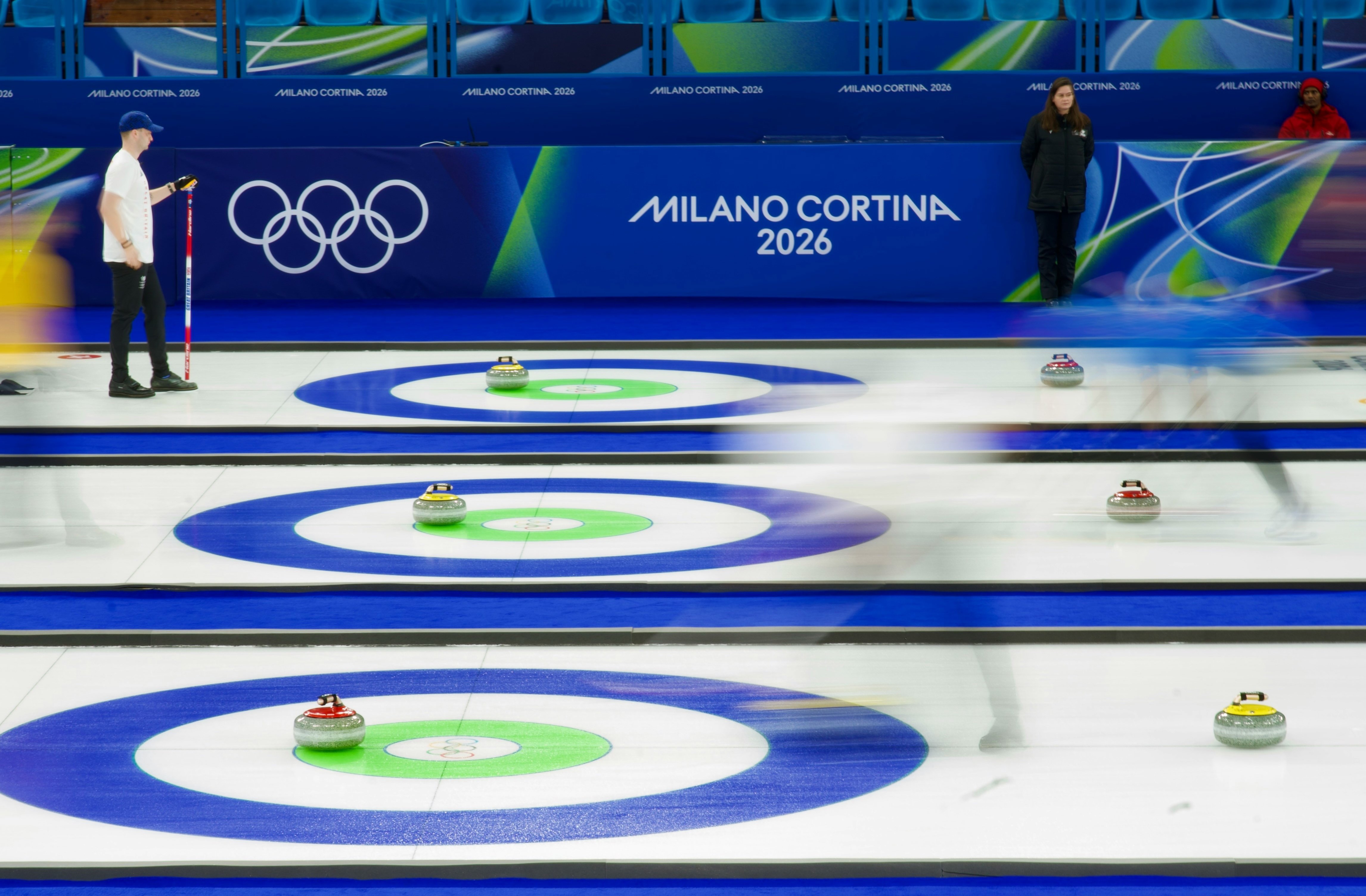
Compared to the previous three entries, curling is the ultimate change of pace, with the sport being a test of precision and team strategy. The teammates slide a weighted granite stone across the ice, aiming to score the most points by landing on the target and knocking the opponent’s stones off. What makes curling so interesting is the brushes that the athletes expertly use to steer the stone after it’s thrown by making the ice slicker in the path of the stone. With each end (the term for a round) involving eight stone slides per team and eight to ten ends, the matches last a long time. Curling is a great sport to watch for a relaxing afternoon, so give it a try if you get the chance.
1. Biathlon (Sprint, Pursuit, Mass Start and Relay)
Of the sports listed in this article, this is probably the only event that I would watch and follow year-round. The Biathlon somewhat randomly combines two very different events into one, with athletes being tasked with completing a physically demanding long-distance skiing race. The catch comes with the integration of the shooting, or sniping, section of the biathlon. After skiing a complete lap around the course, the athletes must stop, slow their intense heart rate, pick up a rifle, and successfully hit five small targets before continuing again. Each miss of a target with the rifle leads to a smaller penalty lap before continuing on the main course. No winter sport better combines physical exertion with mental fortitude. If you haven’t checked out the biathlon, do yourself a huge favor and turn on the Men’s and Women’s mass start finals on Feb. 20 and 21.