Every semester, the Bible department hosts a dialogue between students and professors on subjects that have been historically contentious or misunderstood within the church. Last week, professors Seth Hart, Kaitlyn Hawn and Dylan Parker sat down with JBU students to talk about Halloween, the occult and horror movies.
The Medium of Endor
Hawn began the evening with a candid exploration of one of the strangest spiritual encounters in scripture: the spirit of Samuel and the medium of Endor. The story, which takes place in 1 Samuel 28, tells of a distraught King Saul seeking advice from the deceased prophet Samuel in the midst of a war with the Philistines. Saul sneaks past enemy lines under cover of darkness to the house of a medium, or a ba'alat ‘ôb, a Hebrew word that does not connote “witch” as is often assumed, but literally means “master of the spirits of the dead.” The medium summons Samuel per Saul’s request, and the text says that Samuel’s elohim, or his divine being rose out of the ground and conversed with Saul.
The primary debate between Christians on this passage is whether the medium, by some demonic power, was able to summon the spirit of Samuel, or whether it was God acting through the medium of Endor. According to Hawn, the historical response throughout second temple Judaism is that the spirit of Samuel was summoned by God. Hart responded by mentioning that St. Augustine also held this view, using Moses and the magicians of Pharaoh's palace as evidence. Parker likewise pointed to the surprise on the part of the medium at the appearance of Samuel, indicating that she may not have previously had this power.
However, the professors made sure to point out that even if the medium was empowered by some demonic force, we should not be surprised or fearful. The spiritual realm is very real, as are demons, and yet God is still in control. To overemphasize demonic influence and live in constant fear is unhealthy for any believer. As Parker observed in closing, “in evangelicalism, we are often more concerned with finding the devil and demons than finding God.”
Origins of Halloween
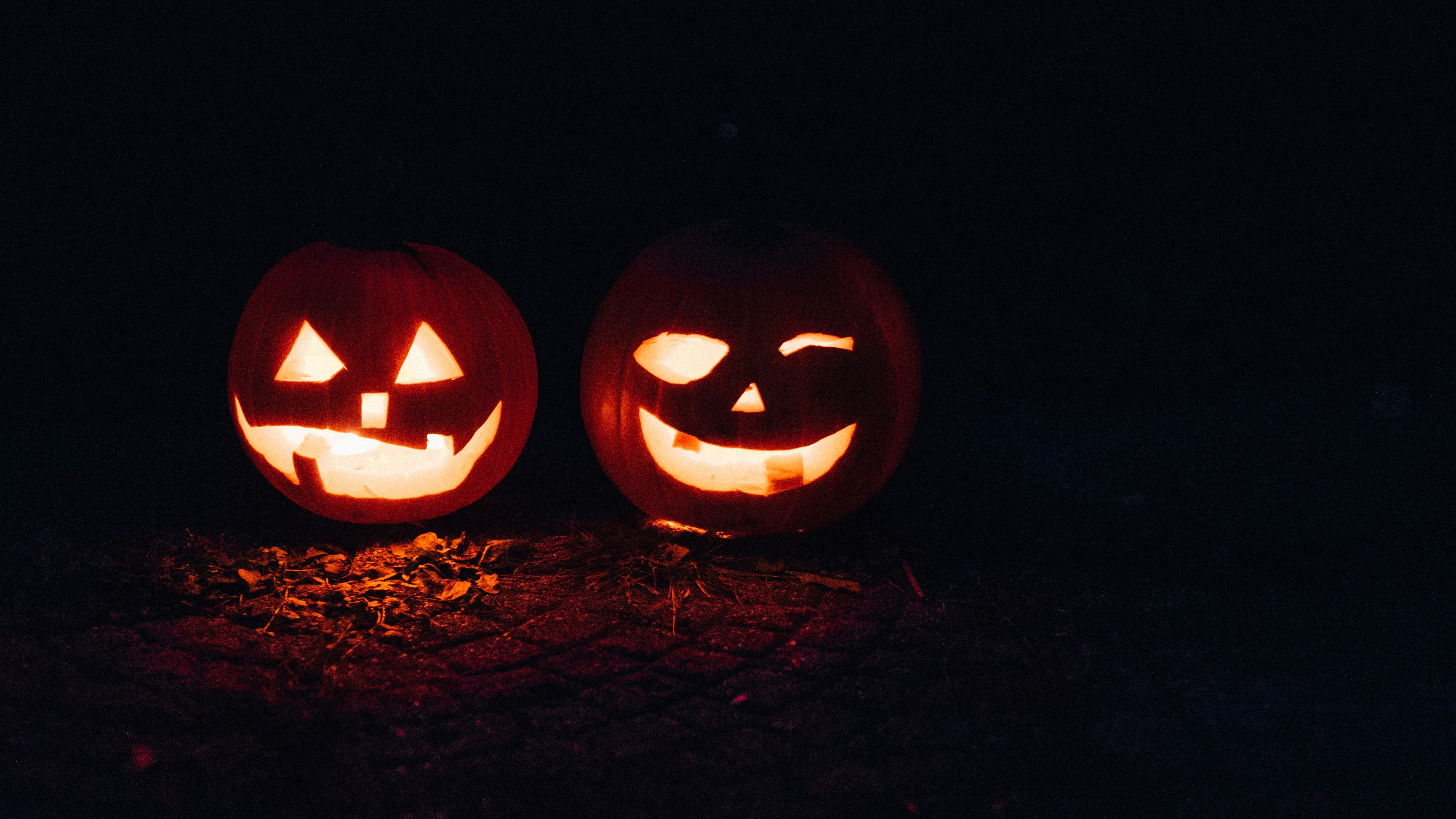
Hart opened his segment by refuting a common misconception around Halloween’s origins: it was not born out of the pagan Celtic holiday Samhain (“Sow-een). There are no historical records of when the Celts originally celebrated the holiday, but it was primarily a harvest festival, so it was likely centered around an agricultural calendar. Thus, the beloved “Harvest Festival” may actually be more explicitly connected to the pagan holiday than “Halloween.”
The term “Halloween” originates from the Catholic holiday “All Hallows Eve,” which takes place on the night before All Saint’s Day, a day of honoring the departed saints, and All Soul’s Day, a day of prayer for all the faithful departed. The modern traditions of Halloween, however, are an amalgamation of multiple European customs.
The Irish took to banging pots and pans in the street to scare away the spirits who would be causing mischief.
The French developed the “Dance of the Macabre,” an artistic representation of the skeletons and living people dancing side-by-side as a manner of remembering one’s mortality during the Black Plague.
The British contributed perhaps the strangest of traditions, Guy Fawkes Day, in which a prominent Catholic dissident attempted to blow up parliament. Great Britain celebrates his failure to destroy parliament every fifth of November, and many of its traditions, such as costumes and masks carried over to the American rendition of Halloween.
Trick-or-treating can be traced back to the medieval times when the poor would go door-to-door for food, but in America it is more strongly linked with 1933’s Black Halloween, when, in the midst of the great depression, many impoverished children went door-to-door for desserts and food. This tradition was naturally capitalized on by American candy companies and became a permanent staple of Halloween.
So is Halloween Christian? Kind of, like any other major Holiday (Holy-Day). Is Halloween Pagan? No.
Hart’s consensus: in our contemporary culture we don't often have reminders of our mortality, we prefer to obsess over youth. If we avoid remembering the dead, we lose this necessary memento mori that we too will die one day, and that’s okay. Like the Dance of the Macabre, we need a joy that can look in the face of death and dance, being fully confident in the life to come.
Horror Movies
Parker questioned the tendency of Christians to avoid horror movies by asking whether Christians could in fact enjoy or even benefit from watching them. While the actual genre of horror is difficult to define, for Parker horror is simply “any arrangement of media or film which unsettles, unnerves or frightens us.” Horror is often subjected to a double standard within the church. Though many deride its gore, while statistically the time actively showing blood and gore in a horror movie is less than four minutes. Many war and action movies use on-screen gore for significantly longer, with "Saving Private Ryan" containing 23 consecutive minutes.
Regarding scariness, the Bible itself is full of intentionally unsettling images, like Nebuchadnezzar's transformation into a beast, Jaal driving a tent peg into a man’s skull, the entire book of Revelation and, most significantly, the crucifixion of Christ. Thus, horror is never simply about the external image, the unsettling brings deeper, internal struggles to the surface. As Parker notes, we watch horror movies because "we are trying to make sense together of the things that really harm us;" we are trying to learn what we cannot control. Christians are called to learn how to engage with the issues articulated in these unsettling images rather than rejecting them entirely. Parker argues that we must look deeper at the media we consume — whether that be comedy, drama, romance, action or horror—and ask what it is producing in our hearts and whether it is healthy to only watch films which ignore human vulnerability and the necessity for redemption in a fallen world.
The evening served as a reminder that, for Christians, to always avoid death and fear is to neglect facing uncomfortable realities which draw us closer to truth. Facing our mortality and vulnerability isn't an acceptance of defeat, but celebration of the hope and joy we hold in the face of death.
Photo by Beth Teutschmann on Unsplash