At long last, the JBU’s Mabee Learning Resource Center is open for business. Starting in January of 2024, the renovation brought together the library, study rooms, writing center, media lab, IT Help Desk, Student Support Services and campus favorite, Ground Floor Coffee, into one centralized space. A reception was held on Monday, April 6, in celebration of the renovations' long-awaited completion. The highly anticipated opening was accompanied by an array of fruit, cheese and cookies along with complimentary drip coffee from Ground Floor.
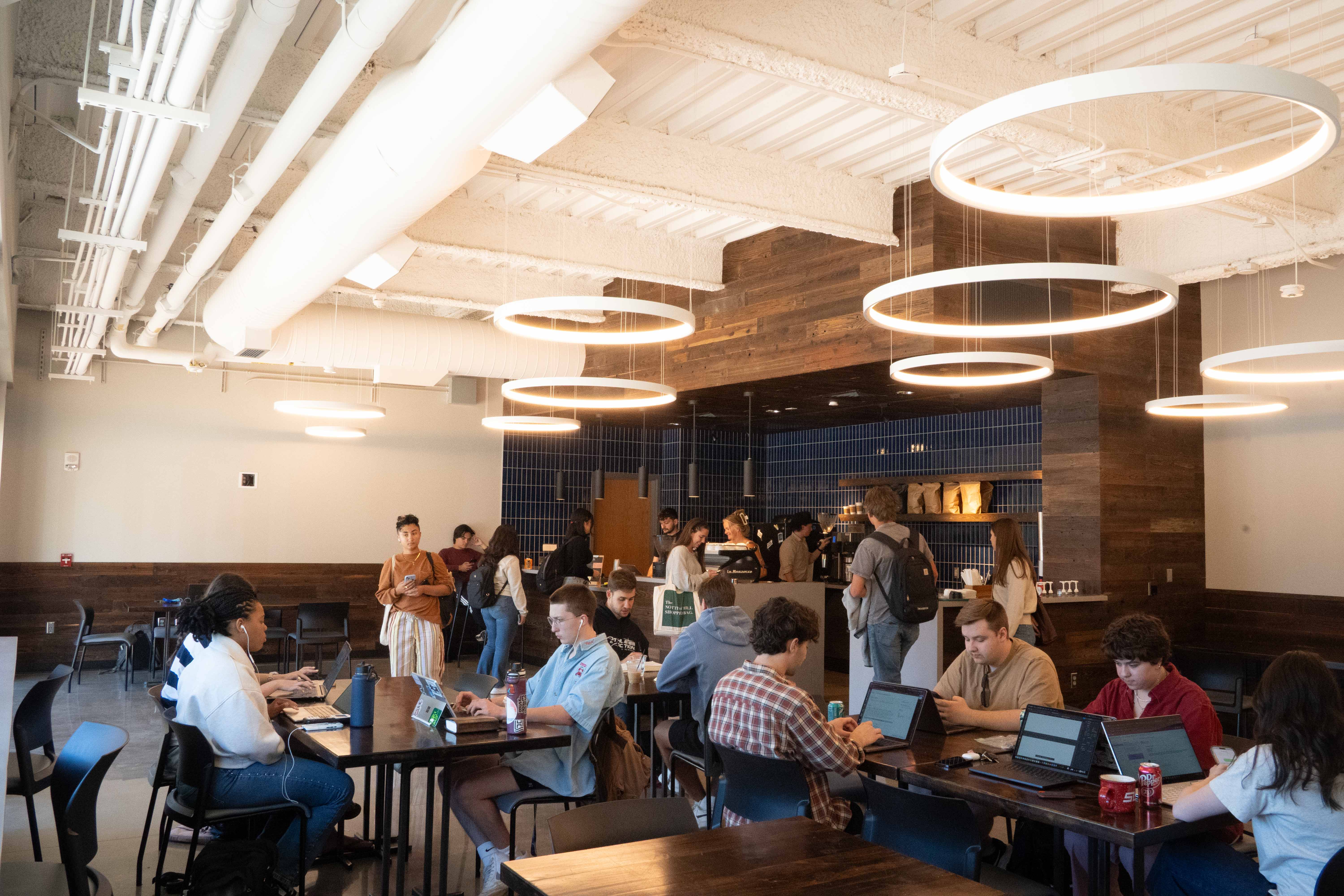
Before the reception had begun, students were gathered in Ground Floor and in the new library studying, while faculty roamed the area, appreciating the work that had been done. The library had been supplemented with the Neufeld Commons before the finishing stages of construction, which offered limited space and limited resources.
“I’ve missed the library a lot, since my sophomore year, since freshman year, so I’m really excited for it to be back,” junior Kirsten Higley said.
Another junior, Olivia Bond, reciprocated the sentiment.
“I didn’t realize how much I would miss the library until it was gone, and then I was like, where will I study? Nowhere,” Bond said.
Although the common area had been well used and loved by students, it could never replace the library.
“It didn’t really feel like a full college library,” freshman Vale Guzman Rivero said.
The new library offers abundant seating and study areas, including study rooms for the students to use. This was a highlight for sophomore Lauren Moore.
“I love all of the study rooms, because when I need to meet for group projects, it’s been a lot harder to find places, since the old library was closed. They have so many good options for that,” Moore said.
Another highlight included spaces for children’s books.
“As an ‘elementary ed’ major, I love the little room that they kept upstairs for the children’s books. It just feels like a little fun space that I can go and hang out with some of my ‘ed’ friends,” junior Malorie McRostie said.
Once the reception had fully begun, the lobby and Ground Floor dining area were full of students, faculty, staff and even some off-campus visitors. Notable JBU appearances included both JBU Chaplain Keith Jagger and President Chip Pollard.
Walking from the old part of the LRC into the newly renovated area felt like stepping from one decade into another. It was clean and streamlined, and large glass windows gave a view into the different resource areas. At the beginning of the reception, the Media Lab was already full of busy students and those just coming in for a peek. The same was true for the smaller study spaces and the IT Help Desk. People weaved in and out, admiring the exciting new spaces.
“…all the natural lighting is so great. I’m like a plant and want the sun. I’ve missed places with windows to study, and I was excited to see all the windows,” Higley said.
The new Ground Floor took the same smiling faces, good coffee, tables and chairs, and put them into a brightly lit area. An outdoor plaza is under construction right outside the building, and the windows will eventually be able to open up to the seating area. The higher ceilings and large windows make the space feel much larger and more alive.
“It’s immaculate in here. The other one was so dark and ‘cave-like’, but this one is really nice. I really like it,” Bond said.
All the resources in Mabee Learning Resource Center are officially open, including Ground Floor Coffee, whether for a mid-study session caffeine fix or a study date.
Photo courtesy of Julianna Jones

.jpg)



.jpg)