News


blog

2026 Grammy Awards: Kendrick and Bad Bunny Landslide

On Feb. 1, 2026, the 68th annual Grammy Awards shook the music scene. With newly debuting artists being recognized for the first time, and long-established musicians receiving another spotlight, this ceremony was truly one for the history books.

As the eyes of the internet were focused on his drama with Drake, 2025 was the year of Kendrick Lamar. He was praised for the release of his 2025 album, GNX and the standout performance at last year’s Super Bowl halftime show. As such, it was no surprise to anyone that he took the Grammys by storm. This hip-hop legend took home five separate awards. Including Best Rap Album (GNX), Record of the Year ("Luther" with SZA), Best Rap Song ("TV Off"), and Best Melodic Rap Performance ("Luther"). His song beat big names like Lady Gaga, Bruno Mars, Billie Eilish and Chappell Roan in the category of Record of the Year.

When accepting his award for Best Album, Kendrick noted the significance of hip-hop in our culture and as a lasting tradition.

“Every time I tell you this, hip-hop going to always be right here…we are going to have the culture with us,” Lamar said.

The Grammys did not stop the hip-hop hype, with Tyler, the Creator brilliantly performing his songs, “Thought I was Dead” and “Sugar on My Tongue” after he had won an award for Best Album Cover. These two songs notably came from each of the two different albums he dropped during 2025. The flashy red costume and the intricate sets (including a moving Ferrari F40 and a Gas station) were entertaining and engaging. The performance concluded with a pyrotechnic show as he exploded the gas station.

As far as one of the most prestigious awards goes, winning Album of the Year for the first time ever was Bad Bunny with his LP, “DeBÍ TiRAR MáS FOToS.” This album has an estimated 36.95 million streams and became the first all-Spanish album to win this award. This Grammy provided fuel for the Bad Bunny hype as he recently performed for the 2026 Super Bowl Halftime show. During both events, the artist sought to share his positive message, saying that the only thing more powerful than hate is love.

Later in the night, hip-hop country sensation Post Malone performed a cover of the iconic Black Sabbath anthem, War Pigs, in honor of the recently deceased Ozzy Osbourne. Guns and Roses’ Slash and Red-Hot Chili Peppers’ Chadd Smith joined him.

Claiming victory in the film sector was the soundtrack of Sinners, with its unique blend of folk, soul, and rock, headed by Nikki Sherrod, winning the award for Best Compilation Soundtrack for Visual Media.

Meanwhile, musical theatre triumphed in the category of Best Pop Duo/Group Performance with Cynthio Erivo and Ariana Grande covering the classic Broadway song “Defying Gravity.”

With so many fresh and talented voices emerging in the music world, it was a tall order to pick Best New Artist. However, Olivia Dean took home the award, beating out singers like Sombr, Leon Thomas, Alex Warren and The Marias. She showed this talent off with her breathtaking performance of her song, “Be the Man I Need[AB1] .”

With new voices like Olivia Dean and the other nominees, music enthusiasts have a lot to look forward to in the 69th annual Grammy Awards. All of the results of this year's Grammys can be found on their website.

Photo by Wikimedia Commons

Read More

Opinion


blog

Top Five Most Underrated Winter Olympic Sports

With the Winter Olympics in full swing and the closing ceremony approaching on Feb. 22, the 25th edition of the Winter Olympiad has not disappointed. From U.S. figure skater Ilia Malinin’s shocking crashes and 8th place finish in the men’s figure skating solo final, to a potential impending grudge match in the Gold Medal game between the U.S. and Canada men’s hockey teams, there have been and will continue to be exciting moments at Milano Corina.

While sports like figure skating, ice hockey, snowboarding, skiing, and speedskating receive the majority of the media’s attention, there are other sports that aren’t thrust into the spotlight. Ranging from life-threatening ice-tube roller coaster rides to sports that leave you questioning how they were invented in the first place, here are the top five most underrated Winter Olympic Sports, worth watching for the remainder of these games and in future editions.

5. Bobsleigh (Two-Man and Four-Man)

Originally invented in the late 1800’s, the bobsleigh event was added to the winter Olympics in 1924, with the two-man event being added in 1932. This event is probably most famous for being the focus of the 1993 Disney film, Cool Runnings, which highlights in hilarious fashion the 1986 Jamaican Bobsleigh team. Irv Blitzer’s (played by John Candy) famous quote sums up the thrill and danger of sport well: “In a bobsled, your bones don’t break. Oh no. They shatter.” The event starts with the crucial push start as the men push the sled forward as fast as possible down an ice chute before piling into the sled and following the driver in unison, bobbing and weaving with each turn at breakneck speeds. Bobsledding is a truly exhilarating sport where the smallest mistakes lead to losing by the finest of margins. Check out the four-man final if you have the chance on Feb. 22.

4. Luge (Relay, Doubles and Singles)

Before these Olympics, I had never heard of the Luge event. However, while scrolling through Peacock, I saw the event, and the name piqued my interest. Luge, which was originally invented in Switzerland, begins with the athlete putting on a shield face mask straight out of the Tron franchise. They then mount a flat sled foot first and push themselves frantically downhill using their hands. After entering the main track, athletes must maintain contact with the sled lying flat as they fly through 90-degree turns at top speed. Even more entertaining is the doubles version, with teammates sharing the sled lying on top of each other. The cool outfits, excitement of imminent danger and thrill of high-speed racing make this event worth a watch.

3. Skeleton (Individual and Mixed Team)

Right off the bat, the name Skeleton lets you know you’re in for something exhilarating and potentially terrifying. The event is similar to the luge, with one key difference being the dismounted run up while holding the sled before mounting face-first at speeds of up to 90mph. Interestingly, the name does not come from the danger of the sport, but the shape of the older sleds being skeleton-like. If you’re looking for high speed, dangerous thrills, then few sports are more entertaining.

2. Curling (Singles and Mixed Doubles)

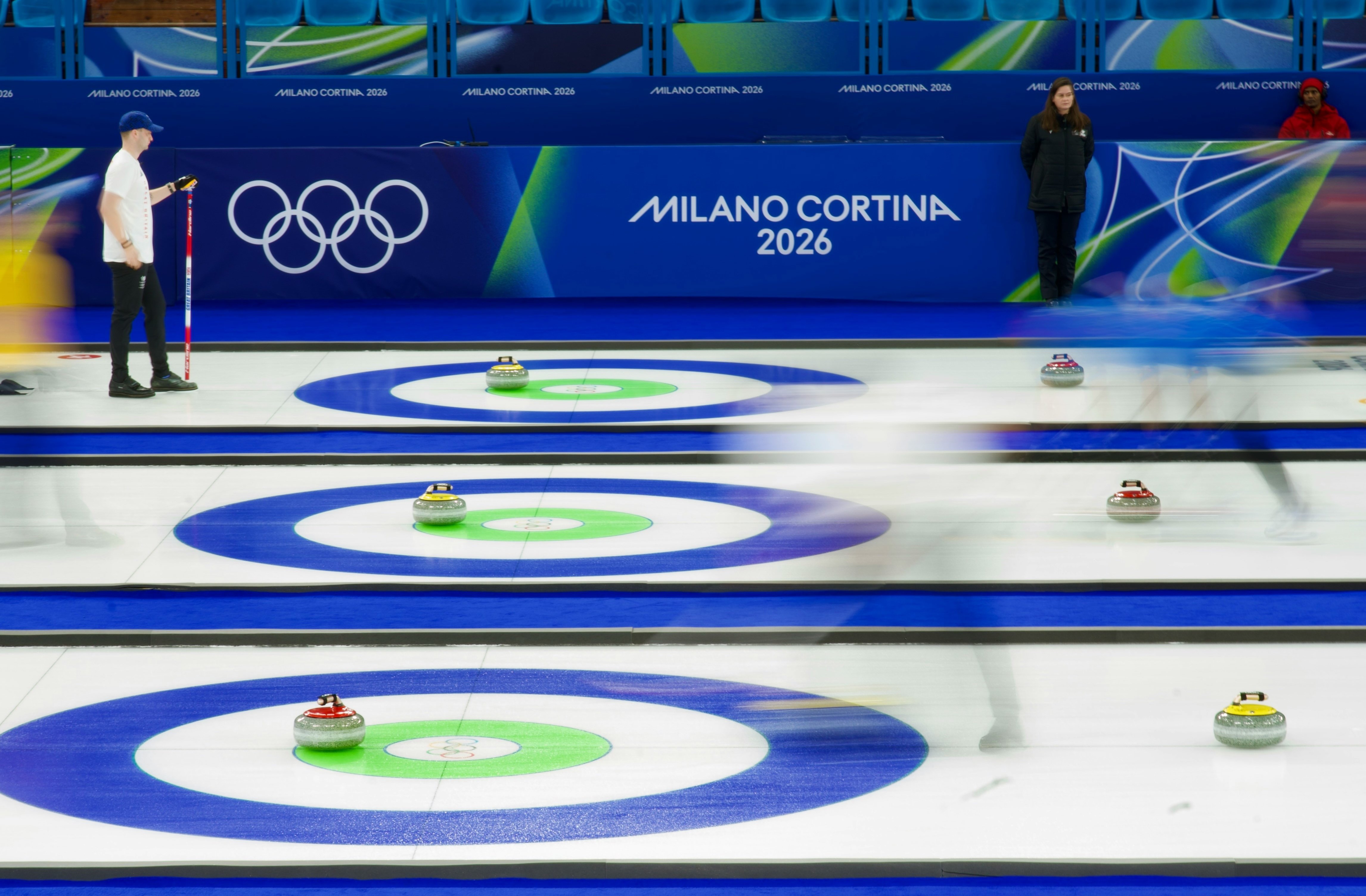
Compared to the previous three entries, curling is the ultimate change of pace, with the sport being a test of precision and team strategy. The teammates slide a weighted granite stone across the ice, aiming to score the most points by landing on the target and knocking the opponent’s stones off. What makes curling so interesting is the brushes that the athletes expertly use to steer the stone after it’s thrown by making the ice slicker in the path of the stone. With each end (the term for a round) involving eight stone slides per team and eight to ten ends, the matches last a long time. Curling is a great sport to watch for a relaxing afternoon, so give it a try if you get the chance.

1. Biathlon (Sprint, Pursuit, Mass Start and Relay)

Of the sports listed in this article, this is probably the only event that I would watch and follow year-round. The Biathlon somewhat randomly combines two very different events into one, with athletes being tasked with completing a physically demanding long-distance skiing race. The catch comes with the integration of the shooting, or sniping, section of the biathlon. After skiing a complete lap around the course, the athletes must stop, slow their intense heart rate, pick up a rifle, and successfully hit five small targets before continuing again. Each miss of a target with the rifle leads to a smaller penalty lap before continuing on the main course. No winter sport better combines physical exertion with mental fortitude. If you haven’t checked out the biathlon, do yourself a huge favor and turn on the Men’s and Women’s mass start finals on Feb. 20 and 21.


Read More

Opinion


blog

“Seguimos Aquí” - Latinos Aren’t Going Anywhere, and Bad Bunny Just Proved It

This February, Benito Antonio Martínez “Bad Bunny” Ocasio made headlines for both the Grammy’s and Super Bowl. Martínez headlined the Super Bowl LX halftime show merely a week after he scored major wins at the 68th Annual Grammy Awards, taking home Album of the Year and becoming the first artist with a fully Spanish album to win such an accolade. Though he was not the first Latin American artist to receive a Grammy in one of the four major categories, this was the first instance since 2000, when the Latin rock band Santana scored both Album and Record of the Year awards.

The heartfelt moment where Martínez broke down into tears as he was announced as the winner, bled into the beginning of the Super Bowl. The halftime show portrayed Bad Bunny handing a younger version of himself the Grammy as he watched the acceptance speech, a moment that moved many viewers with its inspiring message.

Bad Bunny’s selection as this year’s halftime performer back in September, however, was met with immediate backlash. Social media and news outlets were filled with complaints before he ever took the stage. Some argued that a halftime show performed fully in Spanish would be inappropriate for a primarily American, non-Spanish speaking audience who would feel alienated as they would be “unable to understand.” Others insisted that an “American artist” should headline the Super Bowl, an ironic comment considering that Puerto Rico is, in fact, a U.S. territory, and that Martínez himself is a legal American citizen. After the performance, some even criticized the show for lacking “white representation.”

This discomfort, however, only underscored the very thing the performance would go on to prove. The show itself consisted of a medley of many of Martínez’s top hits, beginning with the cheeky “Titi Me Pregunto” and weaving in songs from the albums“YHLQMDLG,” “Un Verano Sin Ti,” “Nadie Sabe Lo que Va a Pasar Mañana,” and, of course, “DeBÍ TiRAR MáS FOToS.” The setlist included songs like the feminist anthem “Yo Perreo Sola,” the salsa sensation “BAILE INoLVIDABLE,” club classics like “EoO” and “Safaera” and even a salsa version of Lady Gaga’s “Die With a Smile.”

What was perhaps most striking about the performance, however, was the intentionality behind every aspect of the show. Where “DeBÍ TiRAR MáS FOToS” already served as Bad Bunny’s love letter to Puerto Rico, the halftime show played like a full serenade to it, with each element of the set design, act and setlist highlighting a different facet of its culture.

Previous half-time shows have been applauded for implementing impressive scenography and choreography. For example in Rihanna’s 2023 show dancers performed across suspended platforms and in 2025 Kendrick Lamar’s dancers moved in formations to represent the “great American game.” Bad Bunny’s performance, however, stood out not only for its production design but for its presented narrative. Similar to Kendrick, Martínez created a show that was not merely designed to entertain, but to tell the story of his people, his island and his culture on one of the largest stages in the world.

Puerto Ricans and Latinos alike took to social media to express their joy at the specific cultural references included throughout the show, with many seeing themselves in the nail salons, piragua stands and even the boy using three chairs to sleep during a wedding.

“bad bunny is so real for including the kid who’s always sleeping on two chairs at a party 😭😭😭,”said one user on X.

“Beautiful representation of Latino culture from Bad Bunny down to the little boy sleeping on chairs at the boda,” said another.

Bad Bunny even went as far as to reference the destruction of Puerto Rico at the hands of Hurricane Maria during his performance of “El Apagon,” in which he climbed a light post not only to represent the island’s ongoing struggle with electrical outages, but also to foreground the devastation of infrastructure during the tragedy. This is not the first time Martínez has shone a light on this issue. In 2024, he released “Una Velita” as a way of speaking out about the disaster and condemning the government’s mishandling of the crisis, which led to the deaths of hundreds.

Bad Bunny’s halftime show will go down in history as — if not the best — at least the most culturally relevant show in recent years. In a time of uncertainty, where Latinos hardly see themselves represented in media outside of yellow filters and stereotyped, drug trafficking characters, where Latinos are feared as dangerous criminals and often treated as such, Bad Bunny has shown us that we are not unheard or alone. We are anything but alone — we are there, with him, on that stage. Dancing, singing, calling out the names of our countries and waving our flags. In a time of fear and hate, Bad Bunny continued his message calling for love.

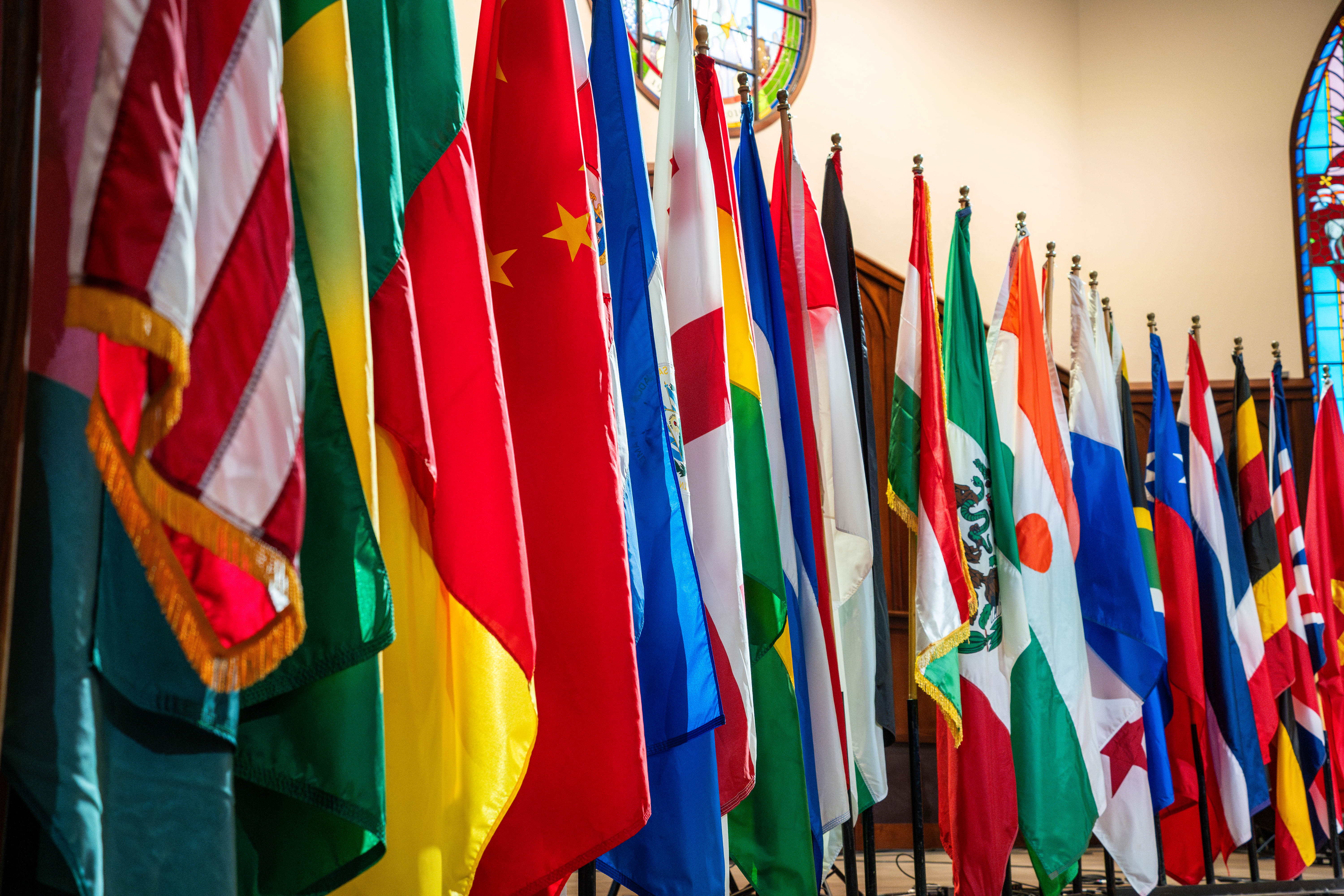
The performance ended with Bad Bunny listing out all of the names of the American countries as dancers ran out carrying their flags, a move made to highlight that ‘America’ describes an entire continent, not just one country. A massive screen lit up behind him with the words “The only thing more powerful than hate is love,” echoing his Grammys acceptance speech. Various clips of viewers becoming excited and tearing up at the mention of their countries have since surfaced online, proving the significance of the gesture (I, too, teared up as I heard Costa Rica called out).

And as “DtMF” blared out the speakers and the dancers ran across the field, Bad Bunny looked into the camera and closed his performance by saying “seguimos aquí” — we are still here. In our countries. In our homes. In America. Latinos are here to stay, and everything Bad Bunny did on that stage proved it.

Photo by Mihai Moisa via Unsplash 

Read More

Lifestyles


blog

Streaming Services Respond to Backlash and Boycotts

Spotify, a music streaming service, is facing a growing wave of user boycotts and artist pushback following a series of controversies involving artificial intelligence and federal immigration advertisements. Meanwhile, their competitor Bandcamp doubles down as a platform that prioritizes human-centered connection.

Bandcamp, an online record store popular with independent artists, officially announced a total ban on AI-generated music on January 13, 2026. The company’s new policy prohibits any audio “generated wholly or in substantial part by AI” and restricts the use of AI tools to impersonate other artists.

“Bandcamp’s mission is to help spread the healing power of music by building a community where artists thrive through the direct support of their fans,” the company said in an official statement. “We believe that the human connection found through music is a vital part of our society and culture, and that music is much more than a product to be consumed.”

Bandcamp's decision contrasts sharply with Spotify, which has been criticized by users for allowing its “DiscoverWeekly” and “Release Radar” playlists to be populated with low-quality, algorithmically generated tracks that often mimic existing artists.

The dissatisfaction reached a boiling point in late 2025 when Spotify began running recruitment advertisements for U.S. Immigration and Customs Enforcement (ICE).

While Spotify confirmed in early January that the ICE ads had ceased running due to backlash, a spokesperson told Mashable the campaign ended simply because the government contract had expired. According to The Independent, Spotify defended the ads as compliant with its advertising policies, noting they were part of a “broad campaign” across many media platforms.

The controversy has pushed some artists to pull their music entirely. The post-hardcore band Thursday and labels like Epitaph Records have publicly called for platforms to better reflect the values of the music community.

“Artists and fans deserve platforms that reflect the values of the culture they sustain,” Epitaph Records wrote in a recent social media post

Adding to the friction is Spotify CEO Daniel Ek’s personal investment in Helsing, a military AI defense company. Critics argue that the platform’s reliance on AI algorithms and its leadership ties to military technology are at odds with the creative spirit of the music industry.

Despite the boycotts, Spotify has maintained a large portion of its loyal listeners, reporting 281 million premium subscribers by the end of 2025.

For now, Bandcamp is encouraging users to use its reporting tools to flag suspected AI content, taking an opposite approach to Spotify.

“We reserve the right to remove any music on suspicion of being AI-generated ... We are fortifying our mission so that fans have confidence that the music they find on Bandcamp was created by humans,” the company said in a public statement.

Photo by Possessed Photography on Unsplash

Read More