News


blog

Mabee, We’ve Missed You! LRC Returns with an Open House

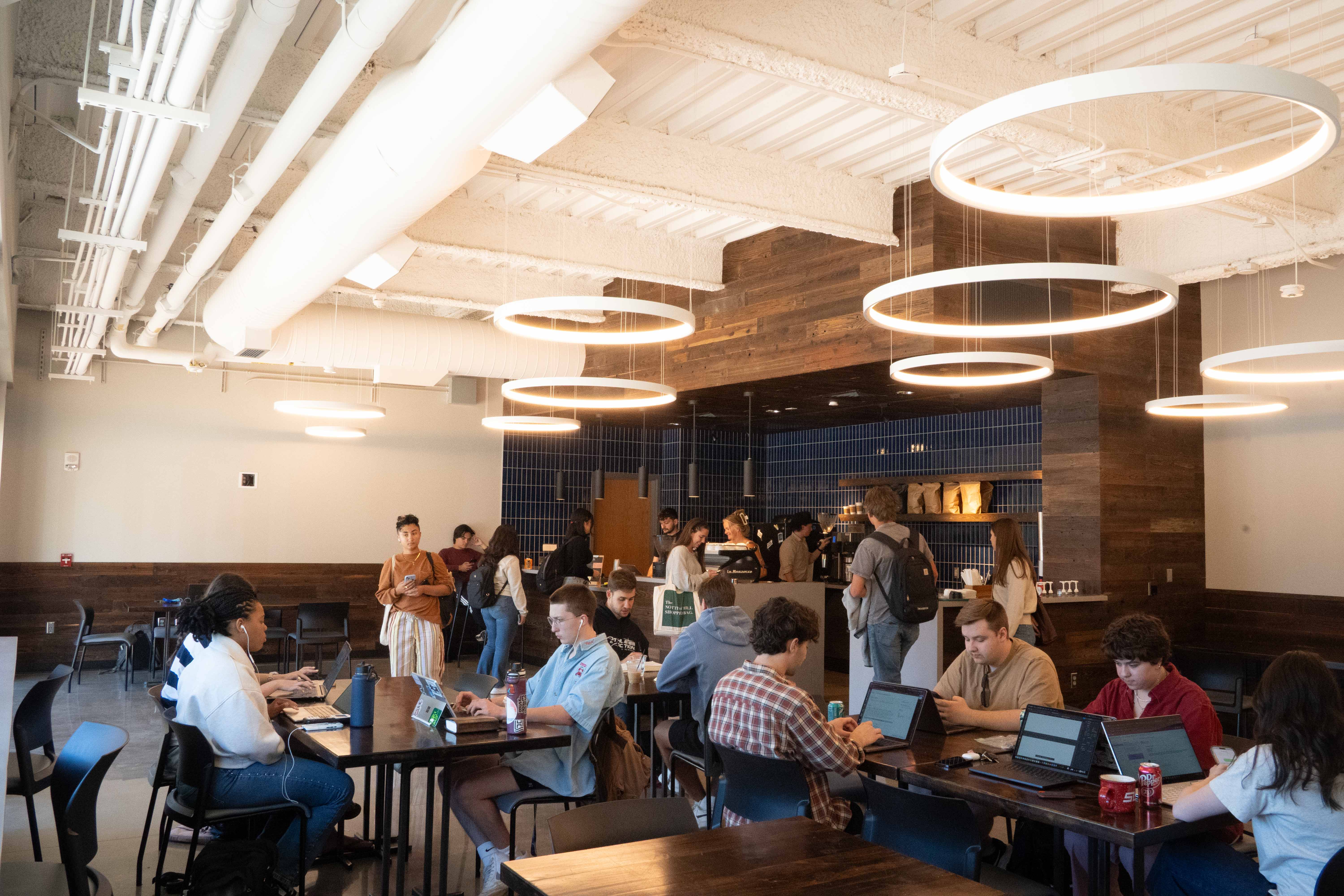
At long last, the JBU’s Mabee Learning Resource Center is open for business. Starting in January of 2024, the renovation brought together the library, study rooms, writing center, media lab, IT Help Desk, Student Support Services and campus favorite, Ground Floor Coffee, into one centralized space. A reception was held on Monday, April 6, in celebration of the renovations' long-awaited completion. The highly anticipated opening was accompanied by an array of fruit, cheese and cookies along with complimentary drip coffee from Ground Floor.

Before the reception had begun, students were gathered in Ground Floor and in the new library studying, while faculty roamed the area, appreciating the work that had been done. The library had been supplemented with the Neufeld Commons before the finishing stages of construction, which offered limited space and limited resources.

“I’ve missed the library a lot, since my sophomore year, since freshman year, so I’m really excited for it to be back,” junior Kirsten Higley said.

Another junior, Olivia Bond, reciprocated the sentiment.

“I didn’t realize how much I would miss the library until it was gone, and then I was like, where will I study? Nowhere,” Bond said.

Although the common area had been well used and loved by students, it could never replace the library.

“It didn’t really feel like a full college library,” freshman Vale Guzman Rivero said.

The new library offers abundant seating and study areas, including study rooms for the students to use. This was a highlight for sophomore Lauren Moore.

“I love all of the study rooms, because when I need to meet for group projects, it’s been a lot harder to find places, since the old library was closed. They have so many good options for that,” Moore said.

Another highlight included spaces for children’s books.

“As an ‘elementary ed’ major, I love the little room that they kept upstairs for the children’s books. It just feels like a little fun space that I can go and hang out with some of my ‘ed’ friends,” junior Malorie McRostie said.

Once the reception had fully begun, the lobby and Ground Floor dining area were full of students, faculty, staff and even some off-campus visitors. Notable JBU appearances included both JBU Chaplain Keith Jagger and President Chip Pollard.

Walking from the old part of the LRC into the newly renovated area felt like stepping from one decade into another. It was clean and streamlined, and large glass windows gave a view into the different resource areas. At the beginning of the reception, the Media Lab was already full of busy students and those just coming in for a peek. The same was true for the smaller study spaces and the IT Help Desk. People weaved in and out, admiring the exciting new spaces.

“…all the natural lighting is so great. I’m like a plant and want the sun. I’ve missed places with windows to study, and I was excited to see all the windows,” Higley said.

The new Ground Floor took the same smiling faces, good coffee, tables and chairs, and put them into a brightly lit area. An outdoor plaza is under construction right outside the building, and the windows will eventually be able to open up to the seating area. The higher ceilings and large windows make the space feel much larger and more alive.

“It’s immaculate in here. The other one was so dark and ‘cave-like’, but this one is really nice. I really like it,” Bond said.

All the resources in Mabee Learning Resource Center are officially open, including Ground Floor Coffee, whether for a mid-study session caffeine fix or a study date.

Photo courtesy of Julianna Jones

Read More

Sports


blog

Southwestern University Met Its Match Against JBU Tennis

On Saturday, Feb. 21, the Golden Eagles tennis team was able to complete a full sweep, despite less-than-favorable conditions. It was cold and windy as JBU competed against Southwestern University at the JBU Tennis Facility arena.

The match day started with the doubles games in which JBU players Andrew Aylor and Spencer Keeter won 6-2 for an early victory. In the second game, Grant Hinkle and Jonathan Hillock won 6-1. For the third game, Lucas Machado and Santiago Jaime were supposed to play, but Southwestern University didn't have enough players, so the game was won by forfeit.

After the John Brown University men’s tennis team swept the doubles games, the singles games began. Machado dominated the contest, winning the first set 6-3, the second set 6-1.

“In the first few games, I noticed that his backhand was his weakness. After realizing that, I started serving to his backhand to begin the points, which allowed me to open up the court and take control of the rallies. When returning his serve, I focused on hitting through the middle of the court at first, and then I began creating wider angles to his backhand. Overall, my strategy was to target his weakness and use it to my advantage,” Machado said.

For the second single game, Hillock won both sets 6-1 for a quick victory.

In the third single game, Jaime won the first set. Then for the second set, Jaime was able to have a bigger lead, winning the set 6-3.

“I felt really good during the game, and I think I did well overall. In the first set, I didn’t play so well, but in the second set I improved a lot by focusing more and playing smart,” Jaime said.

For the fourth and fifth singles games, which were played by Aylor and William Prochazka, they were able to complete a full sweep. Both won their singles games 6-0 in both sets.

For the last single game, Hinkle won the game by default because they didn’t have enough players.

The Woman's tennis team won by default all of the games because Southwestern University didn’t have enough players to play the games needed.

Photo by David Camacho Padilla

Read More

Opinion


blog

Ed Sheeran and the Illusion of the Apolitical Artist

On Sept. 15, four of Ed Sheeran’s opening acts withdrew from the remaining North American dates of his “Loop” world tour. Lukas Graham, Aaron Rowe, Finneas and Irish folk band Beoga pulled out in protest and solidarity with American rapper Macklemore, who had been dropped from the tour after making pro-Palestinian comments onstage.

Upon being dropped from the tour, Macklemore expressed via Instagram that Sheeran was put in a difficult position.

“His typical apolitical stance was being challenged in a way it never had been before … But he couldn't get past his public facing, ‘I don't take sides,’” Macklemore said.

What followed was a wave of criticism toward Sheeran over what many perceived as neutrality and a lack of support for Macklemore, with some even calling for him to cancel the tour altogether.

Sheeran responded by stating that the decision to drop Macklemore was not his own, and that he “was not complicit” for choosing not to take a public stance on the conflict between Israel and Palestine.

“There is a reason I do not use my professional platform for politics,” Sheeran said. “My audience includes young people, often children, of all backgrounds. Those who come to my shows do not expect a political forum.”

In one way, despite the internet’s response, I don’t think Sheeran was entirely wrong to take the stance he did. Sheeran doesn’t owe the public a declaration of his personal beliefs and values, and being a famous musician does not automatically make him a political spokesperson.

What I do think is more interesting is his decision to draw a clear line between himself, his music and the political world altogether: he seems to understand his role as an artist as fundamentally separate from the political consequences of using — or choosing not to use — his platform.

A stance of this nature is not rare in our day and age. In fact, it seems to have become increasingly common with the rise of what I like to call the “apolitical artist.” German filmmaker Wim Wenders offered a clear example of this stance at the 2026 Berlinale Film Festival, arguing that filmmakers should stay out of politics because artists should be “the counterweight of politics” and should “do the work of people, not the work of politicians.”

Actor Neil Patrick Harris, speaking at the same festival, offered a similar view. Describing himself as something of a “jester in the castle,” Harris said that he is interested in doing things that are apolitical because the world is increasingly “algorithmic and divided” and, as artists, “we’re all as humans wanting to connect in some way.”

The apolitical artist, then, is not necessarily an artist who has no political beliefs. They are artists who argue that politics and art do not, or should not, intersect, and who perceive their work as existing outside of politics: a space where people can escape the divisions and conflicts of the world around them.

At first glance, this position does not seem unreasonable. There is nothing inherently wrong with wanting art to provide an escape from politics. In fact, there is something valuable about it. Movies, shows, books and music can be lightweight, playful and feel-good. We would live in a very depressing reality if every piece of media required us to confront the world's worst problems. Similarly, it would also be absurd to expect every artist to wear their heart on their sleeve and openly state their opinions about every political happening in the world.

So, naturally, we can’t expect (and possibly don’t want) every piece of art we are presented to be political. Nevertheless, that doesn’t mean art exists outside of politics altogether.

When we think about art, in its very essence, we think about a medium through which we seek to transmit something: a message, an experience, an emotion, an idea, a memory. Art, therefore, is a tool that we use to better understand and connect with the world around us.

Academic Frank Möller describes art as something that can articulate “a vision of the world that is insightful and consequential.” Art, he argues, can move audiences from what is to what “may be or could be or even, normatively, should be.”

In other words, art has the ability to help us make sense of the foreign and irrational while giving us the opportunity to analyze it and feel something about it. This is part of why art has so often been used to communicate political ideas. From Billie Holiday’s “Strange Fruit” and Keith Haring’s “Unfinished Painting” to Childish Gambino’s “This is America,” artists have historically used their work to make audiences confront realities that might otherwise feel distant or abstract.

And this is why I find arguments such as Harris’ or Wender’s so reductive. Art is created by people who exist within political, social and economic realities. It is consumed by people who exist within those same realities. The fact that a piece of art does not explicitly address those realities does not mean it was created outside of them.

Take actress Sydney Sweeney, for example, who has described her role as an actor as being about telling stories rather than speaking about politics. Yet her public image, commercial partnerships, roles, statements and participation in public campaigns have repeatedly become subjects of debate because of their cultural and political implications. The point is not that Sweeney is trying to be a political activist; it is that calling oneself apolitical does not erase the cultural meaning of one's actions.

The same is true of Ed Sheeran.

When finally addressing the issue onstage, Sheeran said he has always aimed “not to be a political commentator of any kind,” because he wants his “music and shows to be about unity, not division.” He also said that while his “heart has been broken by the scale of devastation and loss of civilian lives” in Gaza, he has never wanted to be an “activist musician.”

Sheeran's music is not generally political. He sings about love, romance, family, grief, loneliness and mental health. His work asks audiences to connect with deeply personal emotions. We trust him, in some small way, to tell us something about what it means to love and lose and miss and need another person.

So how, as audiences, are we expected to connect with the work of someone who cannot — or refuses — to recognize his own intersection with the world that generates the very emotions he sings about? Sheeran himself may not consider himself complicit in the political situation, but the spaces he performs in, and the people and institutions that make those performances possible, are not necessarily removed from it.

And perhaps that is where the idea of the “apolitical artist” begins to fall apart. Not because every artist needs to become political, but because no artist creates in a world untouched by politics. Because if art is one of the ways we understand the world, feel our way through it and connect with one another, then artists are inevitably part of that process too.

Celebrities don't have to tell us what to think. But perhaps, every once in a while, they should be willing to show us that they are looking at the same world we are.

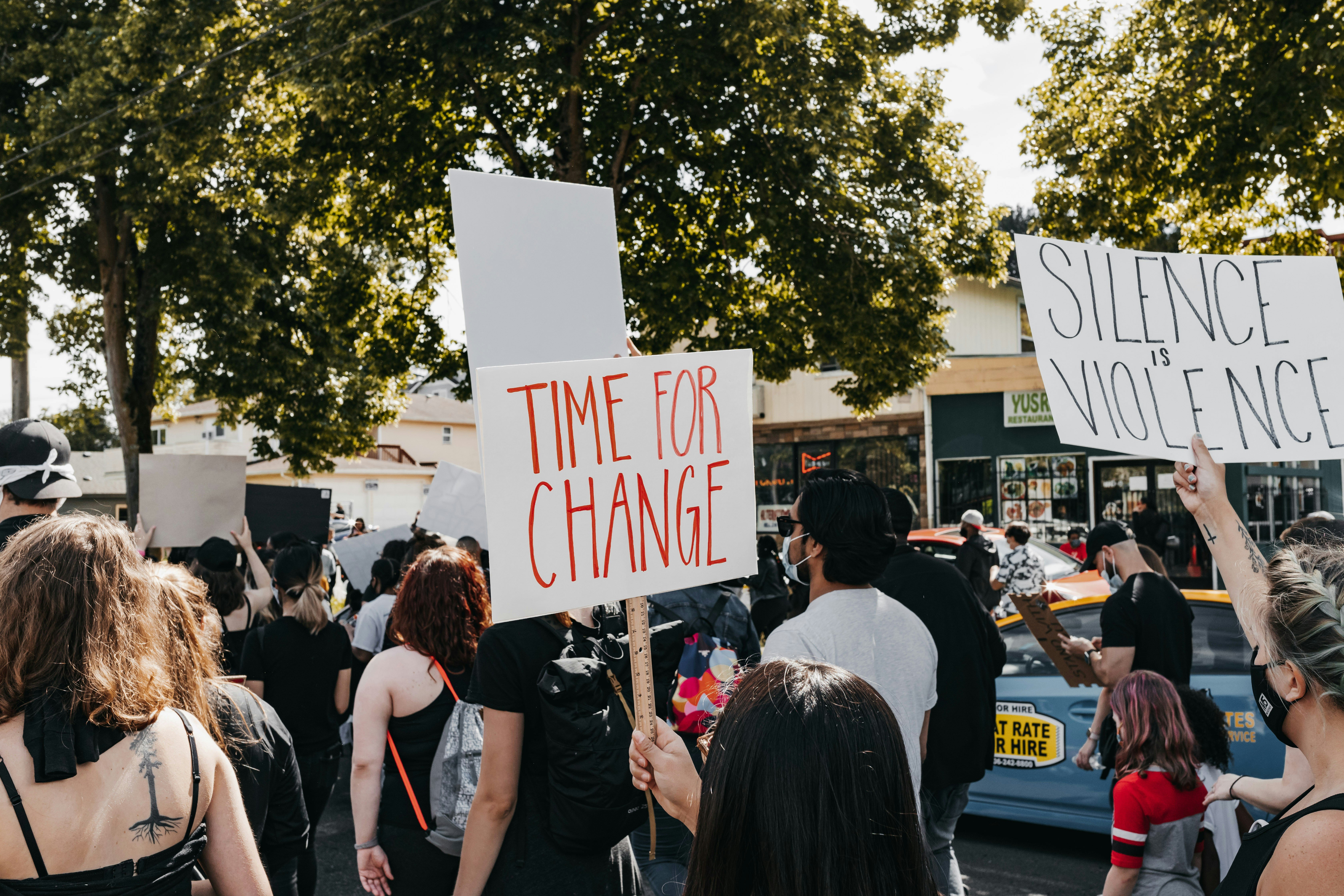
Photo courtesy of Drew de F Fawkes via Wikimedia


Read More

Opinion


blog

How to Have a Stars Hollow Fall in Siloam Springs

The first day of fall has come and gone, which means it is time for the return of the fast-talking, coffee drinking, mother-daughter team: the Gilmore Girls. Nothing screams fall quite like the idyllic fictional town of Stars Hollow. If only life were as simple as boy drama, concerning amounts of coffee and junk food, and walking around a downtown while being serenaded by whatever “La la” fit your mood. While life may never be that simple, you can still enjoy a cozy Gilmore Girls fall in NWA’s own Siloam Springs. Here’s how you can do it:

"I need coffee in an IV:"

One thing Rory and Lorelai cannot live without is coffee, and honestly, who doesn’t feel the same way? Siloam Springs does not fall short on that front. For an option that feels like stepping into Luke’s Diner, check out Café on Broadway. They have what comes closest to that Luke’s Diner feel, with coffee, breakfast, lunch and great places to sit and people watch. If you want to study like Rory, Pour Jons is the place to go, and if you’re saving money for Chilton check out Perisseia for a student discount.

The “Rory Sweater:”

To truly have a Stars Hollow fall, you have to dress the part. The Gilmore Girls' iconic style is one part of the nostalgic fall feeling the show captures. This means lots of knits, turtlenecks, miniskirts, low-rise jeans and the occasional early 2000s graphic T-shirt. After grabbing a coffee from Pour Jons, head next door to Beautiful Lives to find those perfect 2000s fall pieces. The upscale women’s resale shop just hosted its seasonal thrift flip on Sept. 19, which means fall attire is out!

The Perfect Study Tree:

Whether it was Chilton or Yale, the academic world is one that Rory goes in and out of (cue Jess, “Why did you drop out of Yale?”). To get a piece of this, take a walk down John Brown University’s quad and find yourself a study tree to sit under. As the leaves change, it creates the perfect place to watch them fall as students walk by. The community also has the same “everyone-knows-everyone” quality that Stars Hollow has in its own downtown.

Downtown is a Must:

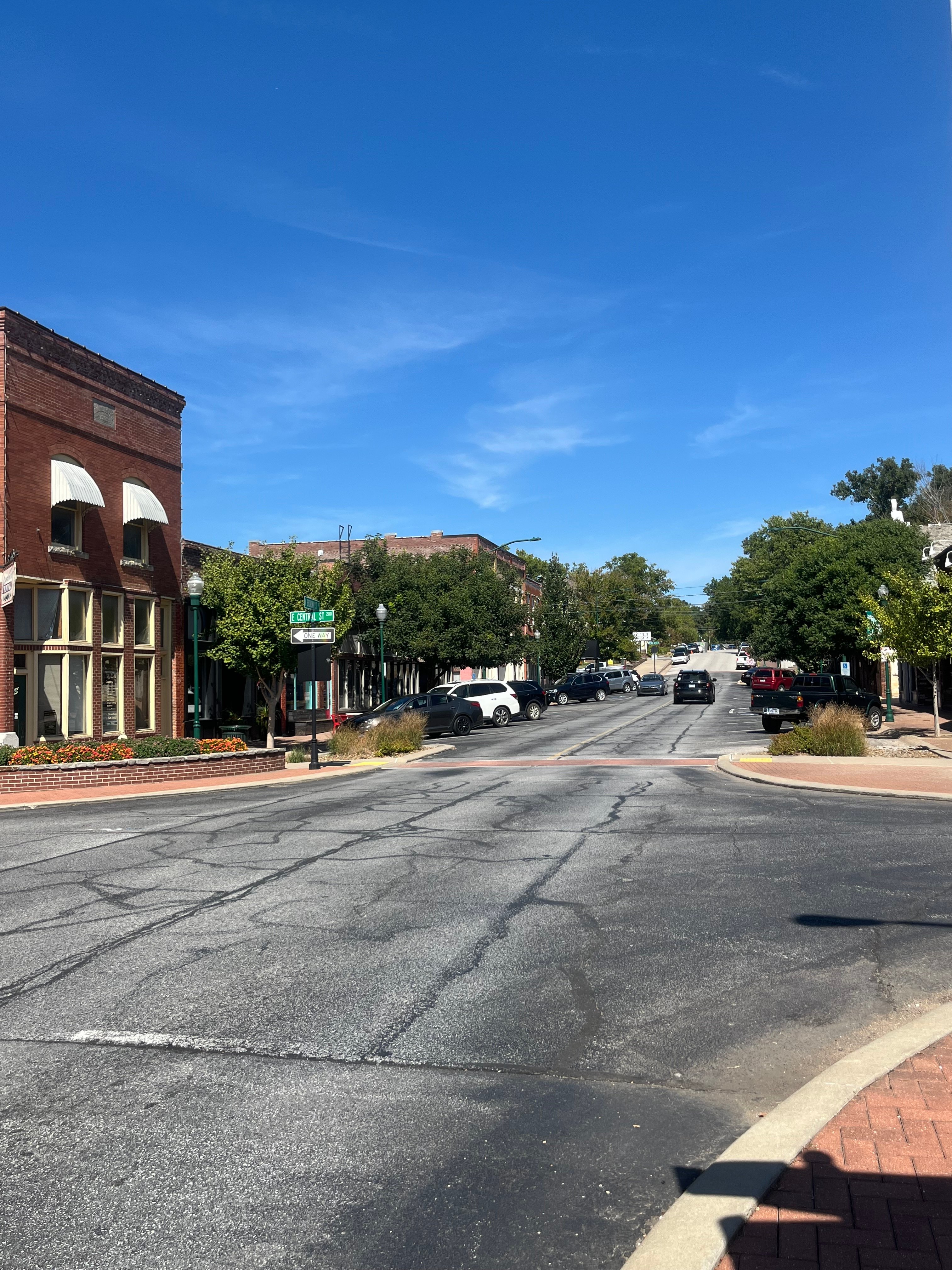
What is Stars Hollow without its downtown? Well, downtown Siloam Springs has plenty of its own NWA Stars Hollow sights. One of the most “Stars Hollow” aspects of sweet downtown is the gazebo. One look at the fallen leaves and hay around the white wood and you can practically hear Carole King singing about “winter, spring, summer or fall.” It is also home to mirrors of other iconic Stars Hollow businesses. Miss Patty’s School of Ballet is Downtown Dance Studio, Kim’s Antiques is Milling Around Marketplace or 2 Gals’ Junk and for Al’s Pancake World, look no further than AM Eats & Tea Treats. For that classic Stars Hollow fall festival feeling, make sure to check out Siloam Springs' Homegrown Festival, happening on Oct. 3.

“Where You Lead, I Will Follow:”

To add that final Gilmore Girls touch to your fall day out and about, add a little Carole King or Sam Phillips to your walk about downtown. With the smell of coffee, feel of the fall breeze, colorful autumn colors and the perfect Stars Hollow playlist, all senses will be engaged and fully immersed in the Gilmore Girls feels. If you want to experience a live show, JBU will be hosting indie folk-rock band Dawson Hollow for the second consecutive year on Oct. 30. Lane Kim would be proud!

End It Right:

At the end of the day, what is a more Gilmore way to close it out than to eat a concerning amount of junk food and enjoy classics like “Casablanca”? Pop Tarts, Red Vines and Twinkies are a must, but don't forget the takeout! For the Gilmore Girls takeout experience, try So Chill Eat or Fratelli's Wood-Fired Pizzeria.

Now you have the perfect recipe for a Stars Hollow Day in Siloam Springs. Just find the Lane to your Rory, or the Sookie to your Lorelai, and you’re ready to go!

Photo by Adeline Gruen

Read More