News


blog

A Brief History of the US Death Penalty

The long-debated issue of the death penalty in the United States has once again returned to the national stage following the attempted execution of Christi Pike and the planned Dec. 3 execution of Nidal Hasan. In this debate, Americans might be familiar with legal phrases like “cruel and unusual punishment” or “evolving standards of decency,” but few are aware of how fiercely debated capital punishment has been throughout U.S. history.

Prior to the independence of the United States, the penalty of capital punishment was widely accepted throughout Europe and England, so, when the U.S. ratified its Bill of Rights, it assumed the use of the death penalty, but sought to install fair limits.

Two primary limitations appear in the Fifth and Eighth Amendments:

“No person shall be held to answer for a capital, or otherwise infamous crime ... nor be deprived of life, liberty, or property, without due process of law,” the Fifth Amendment states.

The Eighth Amendment adds, “Excessive bail shall not be required, nor excessive fines imposed, nor cruel and unusual punishments inflicted.”

Both provisions were borne directly out of British law. The Fifth Amendment’s guarantee for due process traces back to the 1354 version of the Magna Carta: “No man of what state or condition he be, shall be … put to death, without he be brought to answer by due process of law.” Likewise, the Eighth Amendment’s prohibition of cruel and unusual punishment was taken verbatim from the 1689 English Bill of Rights.

However, these frameworks were not adopted without local dispute. In Virginia and Philadelphia, early leaders like Thomas Jefferson and William Penn successfully limited the scope of the death penalty down from a multitude of major and minor crimes to just two: treason and murder. At the national level, Dr. Benjamin Rush sought unsuccessfully to abolish state executions altogether. Advocating for long-term confinement and labor as a means of rehabilitation, Rush’s ideas formed the foundation for the modern penitentiary system.

“Before this shift, confinement was primarily used to hold individuals awaiting trial or punishment; it was rarely used as a means of punishment in se. The once predominantly public nature of punishment gave way to less theatricality and more privacy,” the University of Richmond School of Law notes.

Throughout the 19th century, the use of the death penalty fluctuated as individual states exercised complete sovereignty over the application of capital punishment. In 1879, the Supreme Court ruled that death by firing squad did not violate the Eighth Amendment. Then, in 1890, the Supreme Court faced another Eighth Amendment challenge regarding execution by electric chair before also ruling it a constitutional method of execution.

A major legal turning point arrived in 1910 with Weems v. United States. The Supreme Court overturned a sentence involving hard labor and removal of civil rights for fraud in the Philippines on grounds that it constituted “cruel and unusual punishment.” Establishing the proportionality of the punishment to the crime, the Court declared the Eighth Amendment clause on unusual punishment to be dynamic and changeable over time.

“Time works changes, brings into existence new conditions and purposes. Therefore a principle, to be vital, must be capable of wider application than the mischief which gave it birth,” the Court said.

In the years from 1900-1918 — years of American prosperity leading into WWI —- the death penalty largely lost favor with the American public, prompting 10 states to abolish it: Minnesota, North Dakota, Colorado, Oregon, Washington, Kansas, South Dakota, Missouri, Arizona and Tennessee.

However, during the post-WWI recession and the 1929 market crash, every one of these states except Colorado reinstated capital punishment. Believing that rising poverty and unemployment would inevitably increase crime, the public once again began to view the death penalty as “a necessary social measure.” Consequently, the 1930s saw more total executions than any other decade in U.S. history, numbering 1,676. Likewise, high approval rates continued throughout the 1940s, resulting in the decade’s 1,289 executions.

Approval remained high through much of the 1950s, fueled by intense Cold War sentiments and highlighted by the federal executions of Julius and Ethel Rosenberg for espionage. By the late 1950s, however, opposition to the death penalty resurfaced. In 1958 with Trop v. Dulles, the Supreme Court extended its definition of cruel and unusual punishment, stating that the clause must draw its meaning from the “evolving standards of decency that mark the progress of a maturing society.”

A wave of state level opposition followed. Between 1957 and 1969, 10 states — Hawaii, Alaska, Delaware, Michigan, Oregon, Iowa, New York, West Virginia, Vermont and New Mexico — repealed the death penalty. This effort was largely driven by the NAACP and its Legal Defense Fund, which raised concerns about the racially discriminatory history of capital sentencing.

This movement culminated in 1972 with Furman v. Georgia, a landmark Supreme Court decision which struck down all federal and state capital statutes as unconstitutional on grounds of violating the Eighth Amendment, ruling that death sentences were being arbitrarily imposed. On June 29, 1972, the Supreme Court effectively voided existing death penalty statutes, “commuting the sentences of 629 death row inmates around the country and suspending the death penalty because existing statutes were no longer valid.” This decision was by no means a uniform decision from the Court. Not only was it a 5-4 vote, but each of the nine justices penned their own separate opinions — an anomaly which has only occurred three times in U.S. Supreme Court History.

The suspension was brief. Just months later, 35 states — led by Florida — redrafted their capital punishment statutes to address the concerns in Furman v. Georgia, reinstating statewide executions.

Public support for the death penalty continued to rise over the following decades, peaking in 1994 with 80% of Americans voting in favor. However, the latest poll in 2025 shows that approval has dropped back down to 52%, its lowest approval rating since Furman v. Georgia in 1972.

Among the G7 nations, the United States and Japan remain the only countries that continue to practice capital punishment, joining roughly 55 countries who maintain the penalty, including China, Iran and Saudi Arabia.

As high-profile cases like those of Pike and Hasan return the death penalty to national headlines, they serve as modern reminders of a centuries-old debate. Reshaped across generations by economic crises, judicial rulings and shifts in public conscience, the American death penalty continues to reflect Trop v. Dulles’ “evolving standard of decency.” And so, as it has since the nation’s founding, the future of capital punishment remains inextricably tied to how Americans define justice in the modern era.

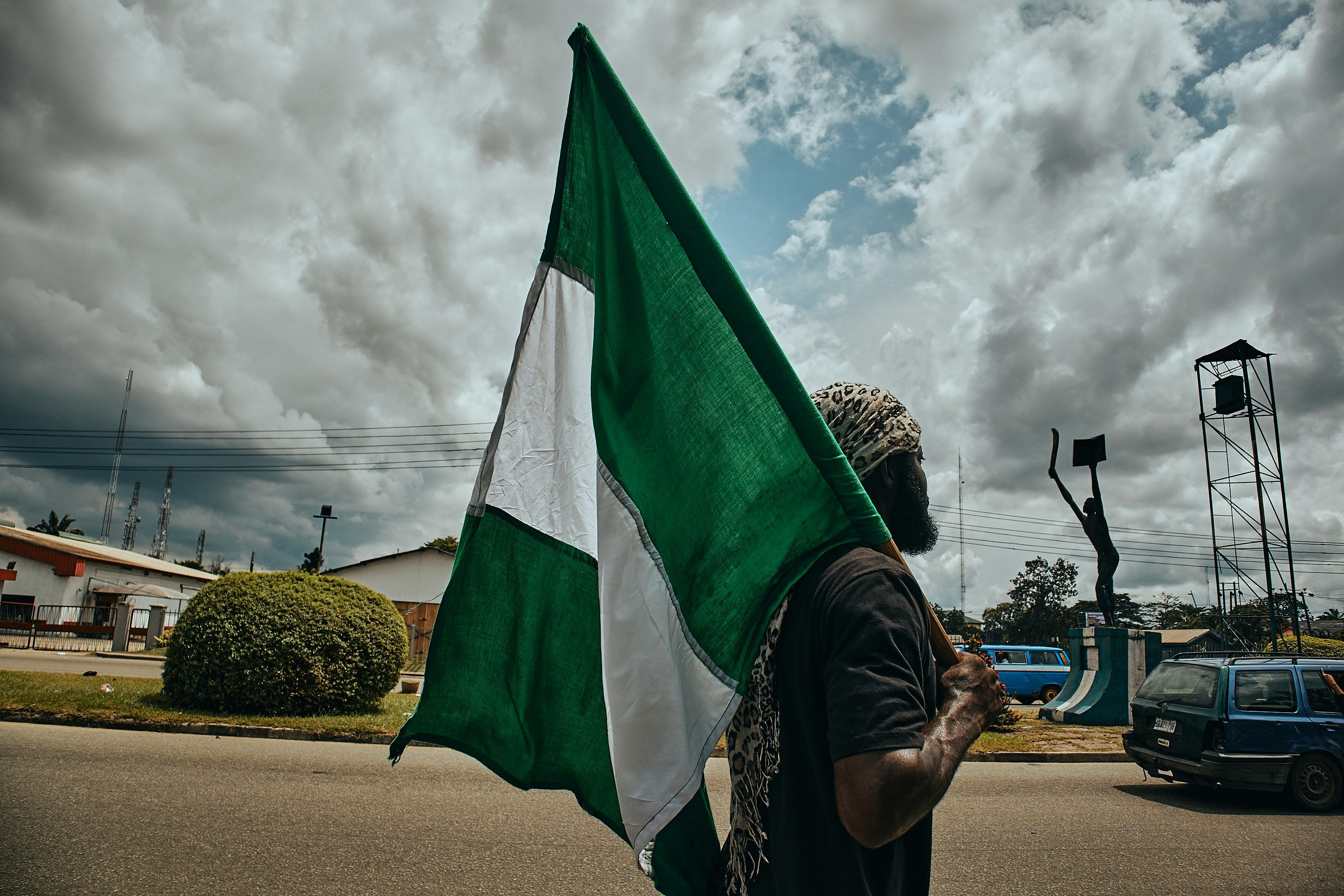
 Photo by Pavel Danilyuk via Pexels 

Read More

Sports


blog

After the Whistle: Harry Kane’s Post-World Cup Achievements

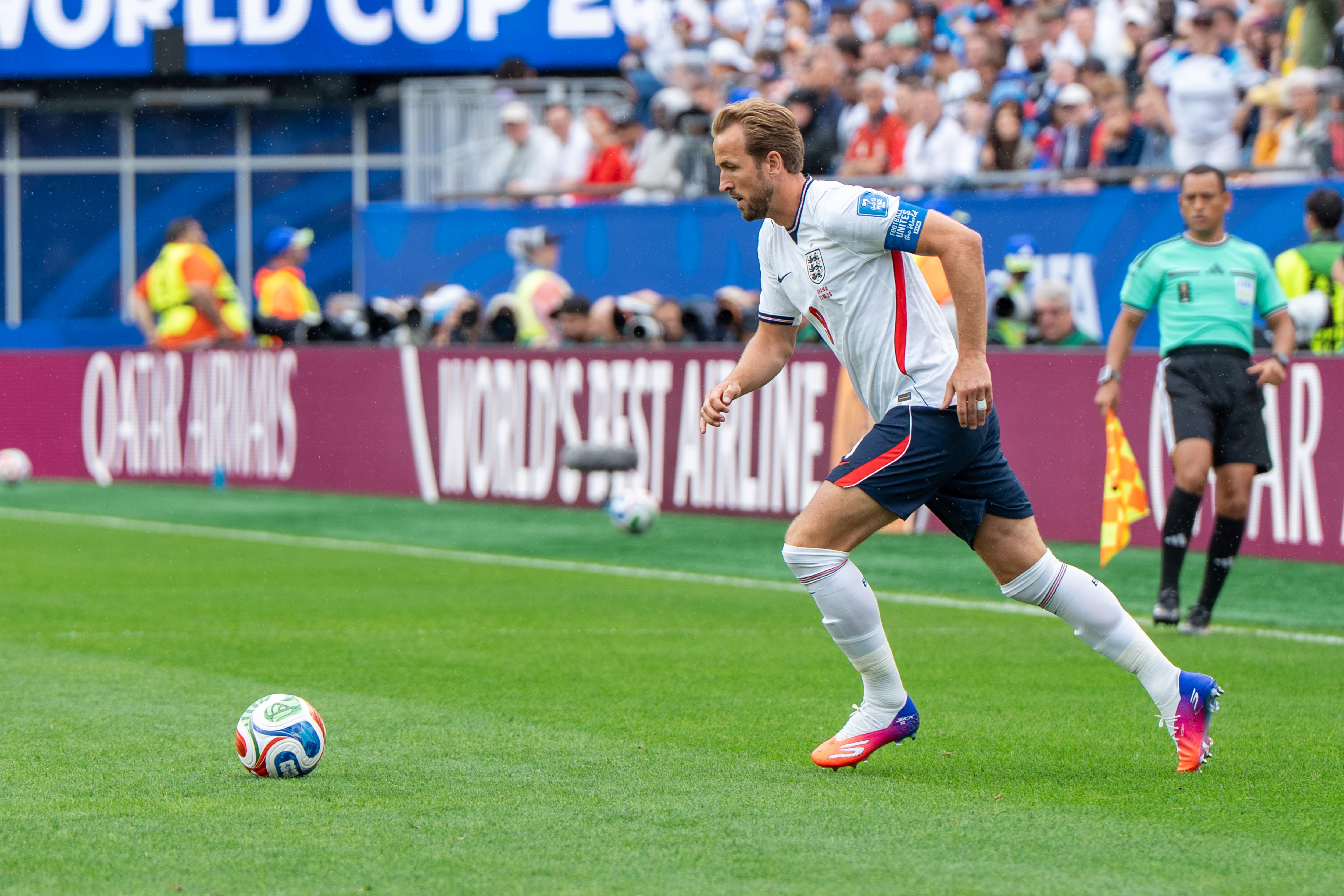
For many Americans, the sport of soccer (known to the rest of the world as football) tends to pass under the radar until global events like the 2026 FIFA World Cup bring it into the international spotlight. From June 11 to July 19, the world watched Cape Verde make its World Cup debut and advance to the Round of 32, witnessed Lionel Messi’s hat-trick against Algeria, and celebrated Norway’s victories with their characteristic “Viking Row.” Japanese fans were introduced to barbecue and armies of bagpipe-wielding Scots marched through the streets of Boston. However, after the final whistle at the championship game in New Jersey, the world of football largely retreated to the background for many Americans. Even though attention has shifted away from the World Cup teams, most players have returned to their respective football leagues and continue to achieve remarkable feats. Harry Kane, who played for England at the 2026 FIFA World Cup, recently won the highly coveted Golden Shoe and cemented his status as one of Europe’s best strikers.

Kane was awarded the Golden Shoe as Europe's top goalscorer for the 2025-26 season, the second time in his career. Playing for the club Bayern Munich, he scored 36 goals in 31 matches held by Bundesliga, Germany’s top professional football league. Italian World Cup winner and former FC Bayern striker Luca Toni congratulated Kane at the award ceremony.

“Dear Harry, on behalf of all strikers – past, present and those who still dream of scoring as many goals as you have: every striker is proud of how you have taken our game to a new level. You are the premium version of a striker,” Toni said.

The award uses a points system that gives more weight to goals scored in Europe’s top five leagues. Kane decisively secured the award ahead of Erling Haaland, who scored 27 goals for Manchester City, and Kylian Mbappe’s 25 goals for Real Madrid.

This accomplishment was made even more historic by the fact that Kane also received the Ballon d'Or, the most prestigious individual prize in football. Football journalists from each of the top 100 FIFA-ranked nations cast votes for 10 players in order from a shortlist of 30 nominees compiled by France Football and the French publication L'Equipe, with weighted points associated with each ranking. The winner is the player who collects the most points. Voting is based off of individual performances, team performances, and class or “fair play.”

Only seven players in history have been awarded both the Golden Shoe and the Ballon d’Or. This exclusive list includes names like Cristiano Ronaldo, Lionel Messi and Eusebio. Kane’s achievements are a testament to his superiority as a striker. Toni addressed Kane during the presentation of the Golden Shoe, praising his athletic prowess.

“You don’t just wait in the box – if the ball doesn’t come to you, you create the chance yourself and then put it away. A good striker finds space – and Harry Kane creates it,” Toni said. “Future strikers will be judged against your standards.”

Off the pitch, Kane is committed to promoting mental health through the Harry Kane Foundation, which, according to the foundation’s website, “collaborates with experts, charities and strategic partners to fund and champion mental health awareness campaigns, proven education programs, workshops, research projects and support services designed to get people of all ages active on mental health.”

Kane’s recent accolades within the world of football and his prominence outside of it prove that the thirty-three-year-old striker is establishing a career to remember. Just because the World Cup is over doesn’t mean that the talent displayed on the global stage has ceased; in some cases, it has only grown. Although these achievements might not be accompanied by bagpipes or barbecue, they are still worth acknowledging. It shouldn’t be another four years before these football players regain the world’s attention.

Photo provided by Bryan Berlin / WikiPortraits

Read More

Opinion


blog

Why We Shouldn't Normalize Sports Injuries

Sports in America are like oxygen, it feels like a way of life. There are leagues for children as young as six-years-old. Don’t get me wrong, sports are a great way to stay in shape, meet new people, make long-lasting bonds and so much more, but not every part of the sports world is positive.

Injuries are a part of life; there’s no arguing against that. People get hurt and they recover over time. What about athletes though? How many athletes get injured and fully recover before getting back on the field, court, ice or the many other surfaces sports are played on? Spoiler alert: it's less athletes than you think.

According to Warrior Sports Rehab, more than half of athletes observed that undergo common injuries never return back to the level they were once at, and if they do, it takes years to get back to where they once were. This doesn’t even account for the fact that many athletes play through injuries, making the long-term consequences much more serious.

On Oct.10, 2026, Philadelphia Eagles’ superstar Jalen Hurts was diagnosed with a blood clot in his left calf. Hurts would go on to play against the Jacksonville Jaguars on Oct. 11 where the Eagles lost 17-19 after a last second field goal made by the Jaguars.

Three days later, follow up scans showed that the blood clots had migrated to his lungs, and five days later on Oct.19, Hurts was ruled out for the remainder of the 2026-2027 NFL season. Though Hurts did not experience any other injuries in his game against the Jaguars, some have argued he never should have been playing in that game to begin with.

Hurts playing through his injury could have put him in a life-threatening scenario, and thankfully it didn’t. But why did he even play through it at all? This wasn’t a meaningful game; it wasn’t to decide if the Eagles made the playoffs or not; it wasn’t to win the Super Bowl. Even if it was one of those more important games, it still doesn’t justify playing through such a serious injury.

Most people expect contact sports to have injuries, but what most people don’t expect is the injuries non-contact athletes go through. Non-contact sports are not exempt to serious injuries, with roughly 15% of athletes in the NBA being on the NBA injury or participation list.

Some of the most notable injuries this season are Minnesota Timberwolves’ shooting guard, Anthony Edwards, who is underwent knee surgery following complications from last season, and Oklahoma City Thunder’s wing, Jalen Williams, who suffered a fractured fibula and dislocated ankle in a game against the Los Angeles Clippers.

Athletes know what they’re getting into whenever they sign up to play sports; for many, the pros vastly outweigh the cons. Most athletes, however, don’t know the true extent to which their injuries could lead. Coaches, parents and any other sort of mentor have a duty to ensure players are not playing through injuries and are maintaining their health.

No matter what some people might say, there’s no such thing as just walking off an ACL injury or just playing through a concussion. Injuries might be part of the consequences of participating in sports, but it doesn’t mean that we should begin to embrace them or ever downplay the seriousness of them.

Instead, we should be doing everything we can to prevent injuries, and if despite our best-efforts injuries still occur, we should do our best to rehabilitate our athletes back to the level they were once at.

Photo by Omar Ramadan on Unsplash

Read More

Lifestyles


blog

From Lake America to South America: How Trump’s Renaming Campaign Became a Political Punchline

Political decisions do not always stay within government. Sometimes, they appear on phone screens, spread through social media and eventually become part of popular culture. Recent attempts by President Donald Trump to change geographic names in the United States have done exactly that, becoming the subject of debate, online reactions and even a joke from the creators of South Park.

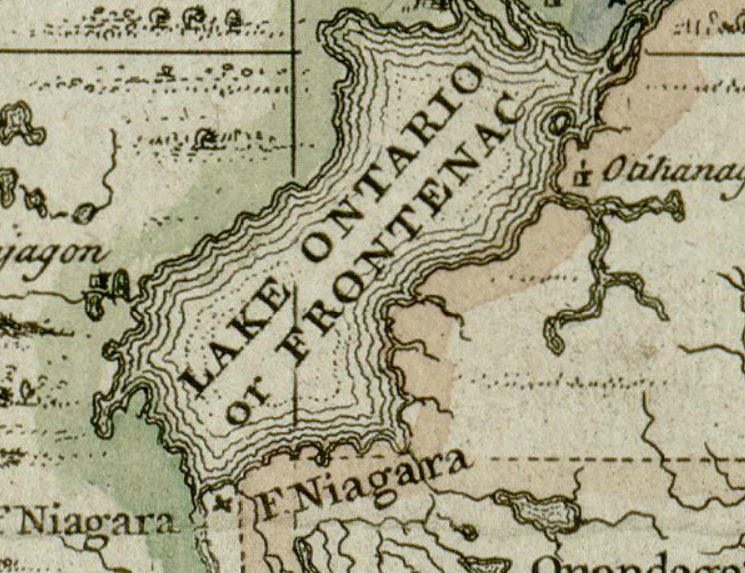
In August, Trump signed an executive order directing the federal government to rename Lake Ontario as Lake America. The lake, which borders New York and the Canadian province of Ontario, became another example of Trump using geographic names as part of his administration’s policies and messaging. The move followed his earlier decision to refer to the Gulf of Mexico as the Gulf of America for federal purposes.

The changes also created different responses from technology companies. Google Maps changed Lake Ontario to Lake America for users in the United States, and Apple later made the same change, though. Users outside of the U.S. continued to see Lake Ontario. Other platforms such as MapQuest, however, decided not to change the name. After announcing its decision on social media, the mapping service experienced an increase in downloads and reached the top of the U.S. App Store.

The naming debate expanded beyond bodies of water. In September, Trump suggested on social media that New Mexico should be renamed “New America.” Unlike Lake Ontario, however, New Mexico was not actually renamed. The proposal generated reactions from residents and politicians in the state, with critics arguing that the existing name is connected to the state’s history and culture.

The situation eventually became material for one of television’s most recognizable satirical shows.

On Sept. 8, South Park creators Trey Parker and Matt Stone announced on the show’s Instagram account that they were changing the name of the series to “SOUTH AMERICA.” The announcement specifically referenced Apple and Google, thanking them for their “bravery and patriotism” after the companies adopted the Lake America name on their maps.

The joke continued when the show’s 29th season premiered on Sept. 16. The opening sequence used the new “South America” name, while the premiere, titled “South American Biker Gangs,” included an animated version of Trump.

The response to these events shows how political decisions can move beyond government and into everyday technology and entertainment.

For South Park, turning political events into satire is nothing new. But the “South America” joke demonstrates how quickly politics can become part of popular culture— and how a decision about what to call a place can become much bigger than a name on a map.

Photo available via the Public Domain

Read More