A series of powerful earthquakes and aftershocks struck Panama on Oct. 9, damaging infrastructure, displacing residents and leaving communities across the country grappling with the aftermath. For Panamanians studying at John Brown University, the disaster has also brought the distress of watching their home country struggle from thousands of miles away.
“The earth was roaring. For a few seconds, the ground felt like Jell-O. Everything seemed so fragile in the face of the earth’s enormous power,” said José Guerrero, a 2024 JBU alumnus who lives in Panama, describing what he experienced as the earthquake began.
The earthquakes, with magnitudes of 7.7 and 6.6, were felt across the country, including in the capital, Panama City, and in neighboring Costa Rica. According to the U.S. Geological Survey, the initial earthquake was centered near Pitaloza Arriba, close to the border between the Herrera and Los Santos provinces.
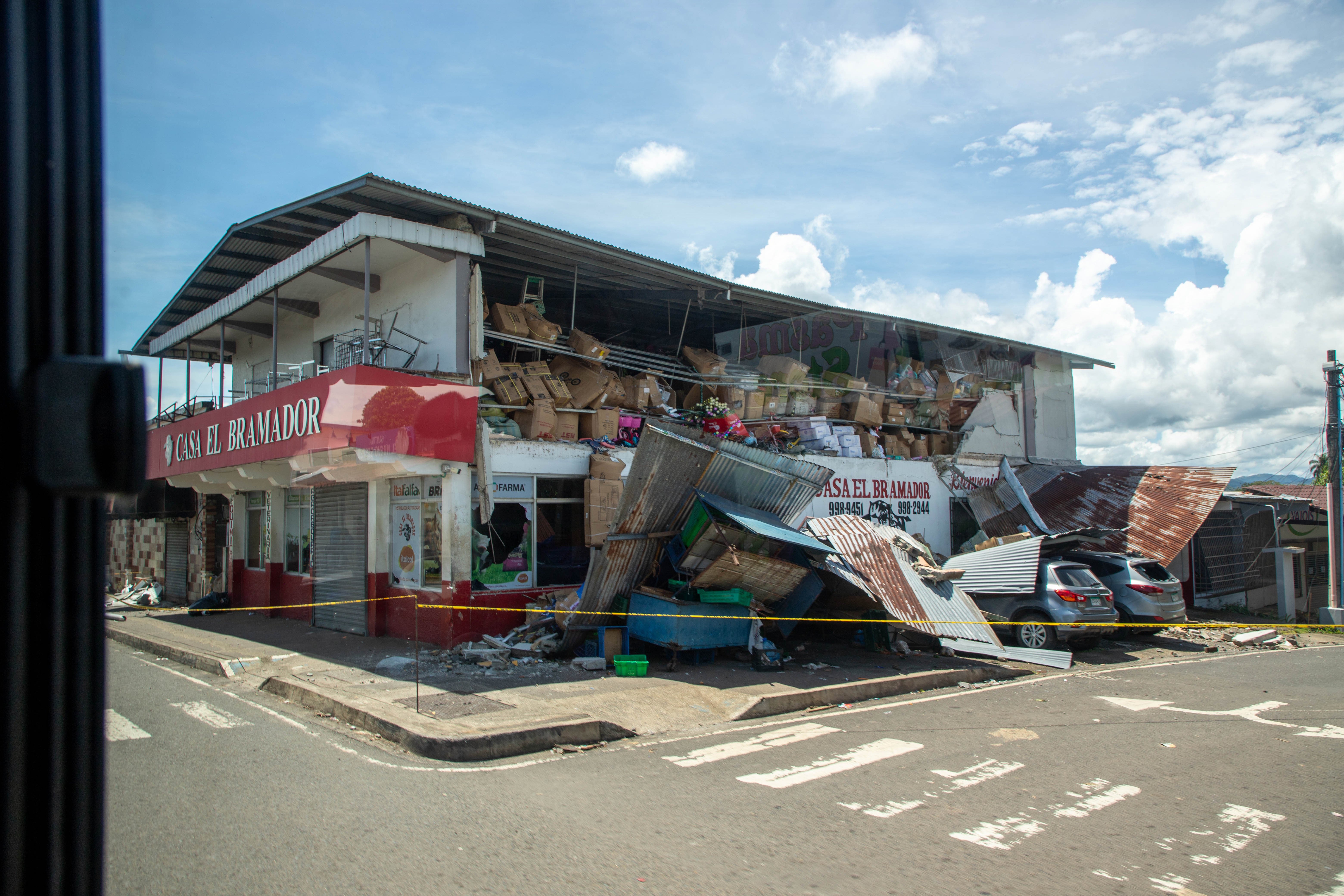
The earthquakes caused structural damage to homes, roads, bridges, churches, businesses and government buildings. In the resort town of Playa Venao, a multistory building collapsed onto several cars parked beneath it. Other communities reported damaged façades and partially collapsed structures, prompting evacuations and inspections of affected buildings.
The extent of the earthquake’s impact has continued to emerge as authorities assess the damage. Two deaths have been confirmed in connection with the disaster, and more than 35,000 people have been registered as affected by it as of Oct. 20, according to Panama’s National Civil Protection System. Meanwhile, approximately 5,628 people were staying in 126 temporary shelters, as humanitarian teams provided assistance to 175 communities.
“The events of Oct. 9 in Panama have been a heartbreaking and desperate experience for most of the population,” Hiledys Velásquez, a resident of Chitré, Panama, who was close to the epicenter when the earthquake began, said in an interview with the Threefold Advocate.
Velásquez recalled initially believing the shaking would be brief. That changed as the earthquake intensified.
“The earth seemed to roar as I heard the screams. All I could think about was getting out of my home, but when I tried, the door wouldn’t budge. The wall was slowly tilting toward the exit and blocking my path. Through tears, anxiety and sheer strength, I somehow managed to get out,” Velásquez said.
Once outside, Velásquez tried to contact her family. Instead, she encountered scenes of destruction: damaged homes and churches, people injured by falling debris and residents struggling to reach their loved ones.
Like Velásquez, Adrian Juarez — another Chitré resident — found himself trying to help others while managing his own fear. When the shaking intensified, he rushed to get his grandmother, who uses a wheelchair, and his grandfather safely outside. Their home began developing cracks as belongings fell and broke around them.
“Personally, I was terribly panicked. After the initial earthquake, my legs were shaking like never before. Still … I tried to organize myself and regulate my emotions, asking the people around me to breathe and calm down,” Juarez said.
The immediate danger did not end when the initial shaking stopped. In the days that followed, Panama recorded more than 200 aftershocks, according to an Oct. 11 report by Reuters. Although the magnitude of the aftershocks was decreasing, the continued seismic activity left residents uncertain about when it would be safe to return to their homes.
“People began sleeping outside because the structures of their homes were no longer safe. The constant aftershocks caused fear among everyone,” Velásquez said.
According to Velásquez, mattresses, hammocks and chairs filled the streets as residents gathered together, seeking comfort in one another’s company. Some were afraid to return to their homes because of the possibility that the structures could collapse.
Velásquez also described the challenges faced by people in areas where assistance was slow to arrive, including residents who spent nights outside or under the rain.
Despite the uncertainty, Velásquez said she was encouraged by the solidarity she witnessed among Panamanians. Residents, including young people organizing independently, mobilized to provide assistance and reach communities affected by the disaster.
“Panama was not prepared for a natural disaster of this magnitude, [but] I can proudly say how supportive and empathetic the Panamanian people are,” Velásquez said, describing community campaigns and volunteers working to deliver help to those in need.
Allison Barria, a senior biochemistry student at JBU originally from La Chorrera, Panama, also described the community’s efforts to respond to the disaster.
“There are a few psychologists, doctors and veterinarians who have mobilized to the affected areas to support families who have lost [their homes and belongings],” Barria said. “Although it is encouraging to see members of the community helping one another, the situation has demonstrated that the government is inefficient when it comes to dealing with a disaster of this magnitude.”
For Barria and other Panamanian students at JBU, the earthquake’s impact extended beyond the country's borders. Being away from home during a national emergency can mean confronting fear and uncertainty without being able to offer immediate, physical assistance to family and friends.
“It was terrifying, because my friends called me at the moment it happened and they were panicking, and I couldn't do anything about it,” Barria said.
The situation was made more difficult by uncertainty about what was happening on the ground. As residents attempted to understand the extent of the damage and locate loved ones, communication challenges added to the confusion.
“Many of my friends were stranded in the city or were near where the earthquake struck, and they didn't know what was happening. So I had to help reassure them and give them information about what was going on to try to calm them down and guide them,” Barria said.
For international students, an emergency in their home country can create a particular sense of helplessness. Even when family members and friends are reachable, students must rely on messages, phone calls and news reports to understand a situation unfolding far away. The distance can make it difficult to know how loved ones are doing, what support they need and when conditions might improve.
Recovery efforts in Panama are continuing. The initial earthquake damaged homes and infrastructure across several central provinces, and the government’s emergency declaration allows it to allocate additional funds for relief. Although the Panama Canal continued operating normally, damage to roads and bridges has complicated efforts to reach some affected communities.
The full extent of the damage may take time to determine, particularly in remote areas. For families whose homes have been damaged or destroyed, recovery will involve more than immediate emergency assistance: it will also require replacing essential belongings, restoring safe housing and rebuilding a sense of security.
As communities across Panama continue to recover, readers can support relief efforts through donations to organizations such as the World Central Kitchen or the UNHCR that are providing humanitarian assistance and resources to those affected by the disaster.
Photo by Kevin Marino Cabrera via Wikimedia Commons