News


blog

Crisis in Venezuela: What’s Next?

On Jan. 3, 2026, the U.S. carried out a covert operation to apprehend Venezuelan President Nicolas Maduro and his wife, Cilia Flores de Maduro, bringing them to New York to face four federal charges. In 2020, the U.S. charged them both for sourcing narcotics being smuggled into the U.S. Now they are both facing a comprehensive judicial trial.

Maduro has been president of the country since Hugo Chavez’s death in 2013 and has a history of declaring victory for himself in all elections since. For example, in the 2024 election, his opponent Edmundo Gonzalez won the election by almost 40%, yet Maduro remained in office. Maduro is known for his involvement with the Cartel of Suns, a drug trafficking organization that was recently named a Specifically Designated Global Terrorist by the U.S. Government. The Department of Justice had been waiting for years to bring him to justice, and now that process has begun.

Venezuelans have rejoiced over Maduro’s capture and over President Trump’s plan to oversee the installation of a new and uncorrupt leader. However, immediately after Maduro’s capture, his close ally, Delcy Roderiguez, was sworn in as interim president, potentially throwing a wrench in Washington’s agenda. 

Carlos Paez, a political science major at John Brown University and a Venezuelan who was forced to leave his country, commented on the regime change.

“I welcomed the news of Maduro’s capture, but excitement quickly dwindled as we realized that the regime was, at least for a time, going to stay,” Paez said. “The regime is still in power, and things have not necessarily improved inside the country either, other than the hope of atransition to democracy sooner than later.”

Since Rodriguez has come to power, she passed the Oil Reform Bill, which opened up the country’s oil industry to foreign investment, particularly with the U.S., as the Trump Administration pressured after Maduro’s arrest.

Although President Trump has claimed his intention to help reform the government, critics are concerned that real political change may be pushed to the sidelines in favor of financial gain.

“Democratic transition in Venezuela should be the priority in U.S. foreign policy, but there’s doubts on whether this is or will be the case,” Paez said. “Trump wants to spur investment in the oil industry, but companies are thinking twice, considering that the regime is still in place. My real concern is that Trump becomes comfortable with the new oil contracts agreed with the Chavista government and pays a blind eye to the only thing that can truly lift Venezuela: a return to sound, democratic institutions.”

Photo by Aboodi Vesakaran via Unsplash

Read More

Opinion


blog

Top Five Most Underrated Winter Olympic Sports

With the Winter Olympics in full swing and the closing ceremony approaching on Feb. 22, the 25th edition of the Winter Olympiad has not disappointed. From U.S. figure skater Ilia Malinin’s shocking crashes and 8th place finish in the men’s figure skating solo final, to a potential impending grudge match in the Gold Medal game between the U.S. and Canada men’s hockey teams, there have been and will continue to be exciting moments at Milano Corina.

While sports like figure skating, ice hockey, snowboarding, skiing, and speedskating receive the majority of the media’s attention, there are other sports that aren’t thrust into the spotlight. Ranging from life-threatening ice-tube roller coaster rides to sports that leave you questioning how they were invented in the first place, here are the top five most underrated Winter Olympic Sports, worth watching for the remainder of these games and in future editions.

5. Bobsleigh (Two-Man and Four-Man)

Originally invented in the late 1800’s, the bobsleigh event was added to the winter Olympics in 1924, with the two-man event being added in 1932. This event is probably most famous for being the focus of the 1993 Disney film, Cool Runnings, which highlights in hilarious fashion the 1986 Jamaican Bobsleigh team. Irv Blitzer’s (played by John Candy) famous quote sums up the thrill and danger of sport well: “In a bobsled, your bones don’t break. Oh no. They shatter.” The event starts with the crucial push start as the men push the sled forward as fast as possible down an ice chute before piling into the sled and following the driver in unison, bobbing and weaving with each turn at breakneck speeds. Bobsledding is a truly exhilarating sport where the smallest mistakes lead to losing by the finest of margins. Check out the four-man final if you have the chance on Feb. 22.

4. Luge (Relay, Doubles and Singles)

Before these Olympics, I had never heard of the Luge event. However, while scrolling through Peacock, I saw the event, and the name piqued my interest. Luge, which was originally invented in Switzerland, begins with the athlete putting on a shield face mask straight out of the Tron franchise. They then mount a flat sled foot first and push themselves frantically downhill using their hands. After entering the main track, athletes must maintain contact with the sled lying flat as they fly through 90-degree turns at top speed. Even more entertaining is the doubles version, with teammates sharing the sled lying on top of each other. The cool outfits, excitement of imminent danger and thrill of high-speed racing make this event worth a watch.

3. Skeleton (Individual and Mixed Team)

Right off the bat, the name Skeleton lets you know you’re in for something exhilarating and potentially terrifying. The event is similar to the luge, with one key difference being the dismounted run up while holding the sled before mounting face-first at speeds of up to 90mph. Interestingly, the name does not come from the danger of the sport, but the shape of the older sleds being skeleton-like. If you’re looking for high speed, dangerous thrills, then few sports are more entertaining.

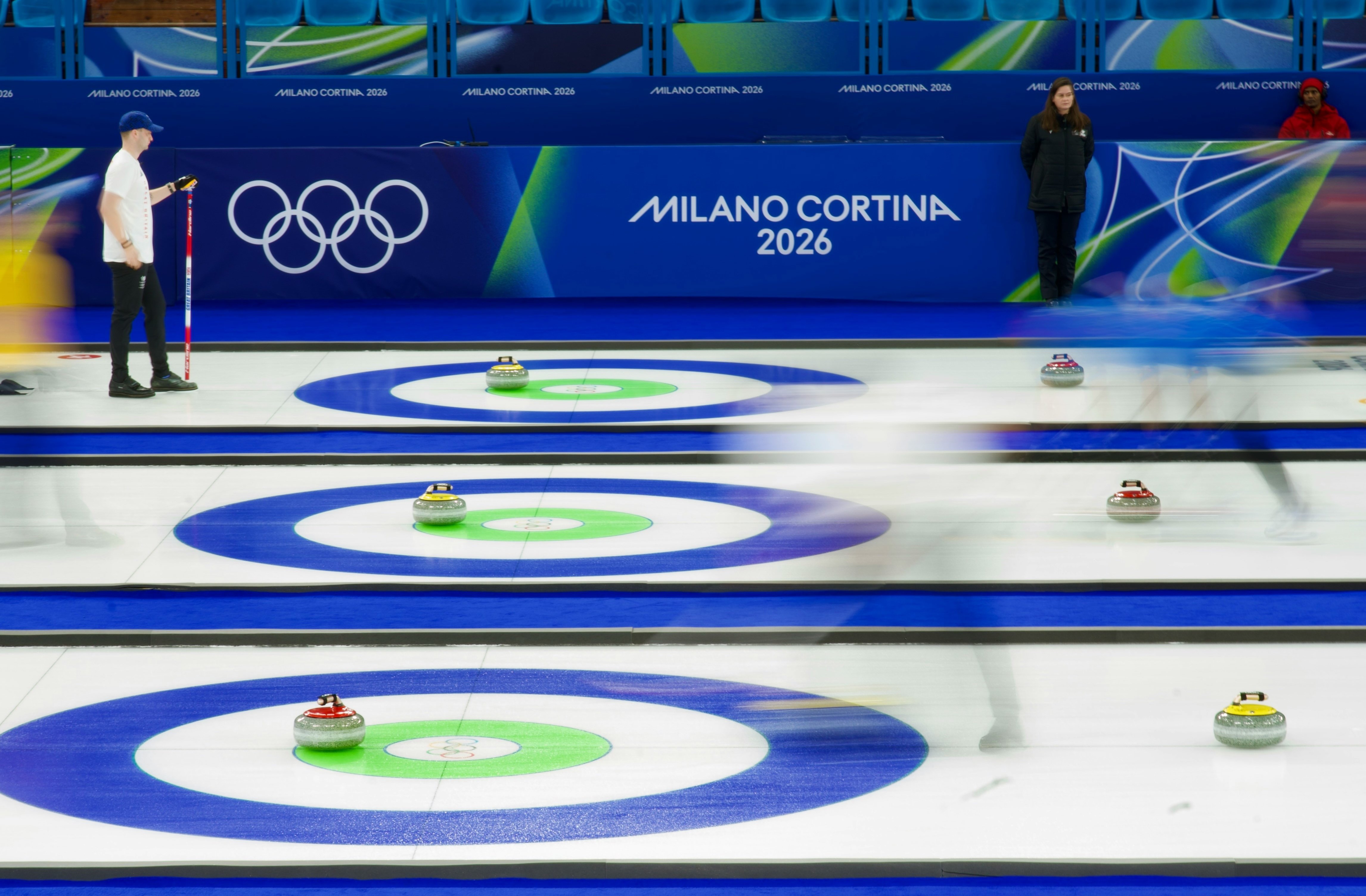
2. Curling (Singles and Mixed Doubles)

Compared to the previous three entries, curling is the ultimate change of pace, with the sport being a test of precision and team strategy. The teammates slide a weighted granite stone across the ice, aiming to score the most points by landing on the target and knocking the opponent’s stones off. What makes curling so interesting is the brushes that the athletes expertly use to steer the stone after it’s thrown by making the ice slicker in the path of the stone. With each end (the term for a round) involving eight stone slides per team and eight to ten ends, the matches last a long time. Curling is a great sport to watch for a relaxing afternoon, so give it a try if you get the chance.

1. Biathlon (Sprint, Pursuit, Mass Start and Relay)

Of the sports listed in this article, this is probably the only event that I would watch and follow year-round. The Biathlon somewhat randomly combines two very different events into one, with athletes being tasked with completing a physically demanding long-distance skiing race. The catch comes with the integration of the shooting, or sniping, section of the biathlon. After skiing a complete lap around the course, the athletes must stop, slow their intense heart rate, pick up a rifle, and successfully hit five small targets before continuing again. Each miss of a target with the rifle leads to a smaller penalty lap before continuing on the main course. No winter sport better combines physical exertion with mental fortitude. If you haven’t checked out the biathlon, do yourself a huge favor and turn on the Men’s and Women’s mass start finals on Feb. 20 and 21.


Read More

Opinion


blog

Top Five Most Underrated Winter Olympic Sports

With the Winter Olympics in full swing and the closing ceremony approaching on Feb. 22, the 25th edition of the Winter Olympiad has not disappointed. From U.S. figure skater Ilia Malinin’s shocking crashes and 8th place finish in the men’s figure skating solo final, to a potential impending grudge match in the Gold Medal game between the U.S. and Canada men’s hockey teams, there have been and will continue to be exciting moments at Milano Corina.

While sports like figure skating, ice hockey, snowboarding, skiing, and speedskating receive the majority of the media’s attention, there are other sports that aren’t thrust into the spotlight. Ranging from life-threatening ice-tube roller coaster rides to sports that leave you questioning how they were invented in the first place, here are the top five most underrated Winter Olympic Sports, worth watching for the remainder of these games and in future editions.

5. Bobsleigh (Two-Man and Four-Man)

Originally invented in the late 1800’s, the bobsleigh event was added to the winter Olympics in 1924, with the two-man event being added in 1932. This event is probably most famous for being the focus of the 1993 Disney film, Cool Runnings, which highlights in hilarious fashion the 1986 Jamaican Bobsleigh team. Irv Blitzer’s (played by John Candy) famous quote sums up the thrill and danger of sport well: “In a bobsled, your bones don’t break. Oh no. They shatter.” The event starts with the crucial push start as the men push the sled forward as fast as possible down an ice chute before piling into the sled and following the driver in unison, bobbing and weaving with each turn at breakneck speeds. Bobsledding is a truly exhilarating sport where the smallest mistakes lead to losing by the finest of margins. Check out the four-man final if you have the chance on Feb. 22.

4. Luge (Relay, Doubles and Singles)

Before these Olympics, I had never heard of the Luge event. However, while scrolling through Peacock, I saw the event, and the name piqued my interest. Luge, which was originally invented in Switzerland, begins with the athlete putting on a shield face mask straight out of the Tron franchise. They then mount a flat sled foot first and push themselves frantically downhill using their hands. After entering the main track, athletes must maintain contact with the sled lying flat as they fly through 90-degree turns at top speed. Even more entertaining is the doubles version, with teammates sharing the sled lying on top of each other. The cool outfits, excitement of imminent danger and thrill of high-speed racing make this event worth a watch.

3. Skeleton (Individual and Mixed Team)

Right off the bat, the name Skeleton lets you know you’re in for something exhilarating and potentially terrifying. The event is similar to the luge, with one key difference being the dismounted run up while holding the sled before mounting face-first at speeds of up to 90mph. Interestingly, the name does not come from the danger of the sport, but the shape of the older sleds being skeleton-like. If you’re looking for high speed, dangerous thrills, then few sports are more entertaining.

2. Curling (Singles and Mixed Doubles)

Compared to the previous three entries, curling is the ultimate change of pace, with the sport being a test of precision and team strategy. The teammates slide a weighted granite stone across the ice, aiming to score the most points by landing on the target and knocking the opponent’s stones off. What makes curling so interesting is the brushes that the athletes expertly use to steer the stone after it’s thrown by making the ice slicker in the path of the stone. With each end (the term for a round) involving eight stone slides per team and eight to ten ends, the matches last a long time. Curling is a great sport to watch for a relaxing afternoon, so give it a try if you get the chance.

1. Biathlon (Sprint, Pursuit, Mass Start and Relay)

Of the sports listed in this article, this is probably the only event that I would watch and follow year-round. The Biathlon somewhat randomly combines two very different events into one, with athletes being tasked with completing a physically demanding long-distance skiing race. The catch comes with the integration of the shooting, or sniping, section of the biathlon. After skiing a complete lap around the course, the athletes must stop, slow their intense heart rate, pick up a rifle, and successfully hit five small targets before continuing again. Each miss of a target with the rifle leads to a smaller penalty lap before continuing on the main course. No winter sport better combines physical exertion with mental fortitude. If you haven’t checked out the biathlon, do yourself a huge favor and turn on the Men’s and Women’s mass start finals on Feb. 20 and 21.


Read More

Lifestyles


blog

Streaming Services Respond to Backlash and Boycotts

Spotify, a music streaming service, is facing a growing wave of user boycotts and artist pushback following a series of controversies involving artificial intelligence and federal immigration advertisements. Meanwhile, their competitor Bandcamp doubles down as a platform that prioritizes human-centered connection.

Bandcamp, an online record store popular with independent artists, officially announced a total ban on AI-generated music on January 13, 2026. The company’s new policy prohibits any audio “generated wholly or in substantial part by AI” and restricts the use of AI tools to impersonate other artists.

“Bandcamp’s mission is to help spread the healing power of music by building a community where artists thrive through the direct support of their fans,” the company said in an official statement. “We believe that the human connection found through music is a vital part of our society and culture, and that music is much more than a product to be consumed.”

Bandcamp's decision contrasts sharply with Spotify, which has been criticized by users for allowing its “DiscoverWeekly” and “Release Radar” playlists to be populated with low-quality, algorithmically generated tracks that often mimic existing artists.

The dissatisfaction reached a boiling point in late 2025 when Spotify began running recruitment advertisements for U.S. Immigration and Customs Enforcement (ICE).

While Spotify confirmed in early January that the ICE ads had ceased running due to backlash, a spokesperson told Mashable the campaign ended simply because the government contract had expired. According to The Independent, Spotify defended the ads as compliant with its advertising policies, noting they were part of a “broad campaign” across many media platforms.

The controversy has pushed some artists to pull their music entirely. The post-hardcore band Thursday and labels like Epitaph Records have publicly called for platforms to better reflect the values of the music community.

“Artists and fans deserve platforms that reflect the values of the culture they sustain,” Epitaph Records wrote in a recent social media post

Adding to the friction is Spotify CEO Daniel Ek’s personal investment in Helsing, a military AI defense company. Critics argue that the platform’s reliance on AI algorithms and its leadership ties to military technology are at odds with the creative spirit of the music industry.

Despite the boycotts, Spotify has maintained a large portion of its loyal listeners, reporting 281 million premium subscribers by the end of 2025.

For now, Bandcamp is encouraging users to use its reporting tools to flag suspected AI content, taking an opposite approach to Spotify.

“We reserve the right to remove any music on suspicion of being AI-generated ... We are fortifying our mission so that fans have confidence that the music they find on Bandcamp was created by humans,” the company said in a public statement.

Photo by Possessed Photography on Unsplash

Read More