News


blog

Mabee, We’ve Missed You! LRC Returns with an Open House

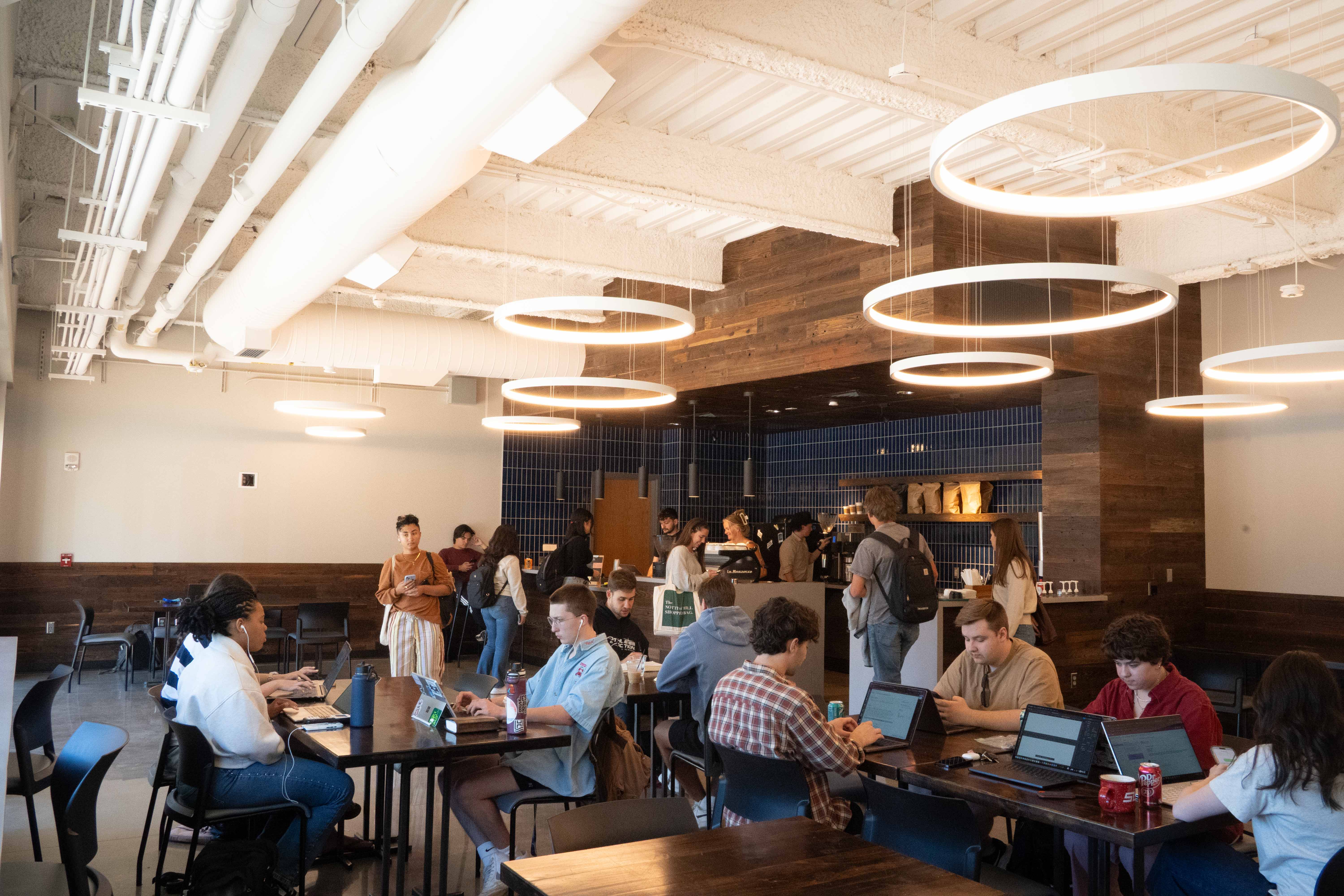
At long last, the JBU’s Mabee Learning Resource Center is open for business. Starting in January of 2024, the renovation brought together the library, study rooms, writing center, media lab, IT Help Desk, Student Support Services and campus favorite, Ground Floor Coffee, into one centralized space. A reception was held on Monday, April 6, in celebration of the renovations' long-awaited completion. The highly anticipated opening was accompanied by an array of fruit, cheese and cookies along with complimentary drip coffee from Ground Floor.

Before the reception had begun, students were gathered in Ground Floor and in the new library studying, while faculty roamed the area, appreciating the work that had been done. The library had been supplemented with the Neufeld Commons before the finishing stages of construction, which offered limited space and limited resources.

“I’ve missed the library a lot, since my sophomore year, since freshman year, so I’m really excited for it to be back,” junior Kirsten Higley said.

Another junior, Olivia Bond, reciprocated the sentiment.

“I didn’t realize how much I would miss the library until it was gone, and then I was like, where will I study? Nowhere,” Bond said.

Although the common area had been well used and loved by students, it could never replace the library.

“It didn’t really feel like a full college library,” freshman Vale Guzman Rivero said.

The new library offers abundant seating and study areas, including study rooms for the students to use. This was a highlight for sophomore Lauren Moore.

“I love all of the study rooms, because when I need to meet for group projects, it’s been a lot harder to find places, since the old library was closed. They have so many good options for that,” Moore said.

Another highlight included spaces for children’s books.

“As an ‘elementary ed’ major, I love the little room that they kept upstairs for the children’s books. It just feels like a little fun space that I can go and hang out with some of my ‘ed’ friends,” junior Malorie McRostie said.

Once the reception had fully begun, the lobby and Ground Floor dining area were full of students, faculty, staff and even some off-campus visitors. Notable JBU appearances included both JBU Chaplain Keith Jagger and President Chip Pollard.

Walking from the old part of the LRC into the newly renovated area felt like stepping from one decade into another. It was clean and streamlined, and large glass windows gave a view into the different resource areas. At the beginning of the reception, the Media Lab was already full of busy students and those just coming in for a peek. The same was true for the smaller study spaces and the IT Help Desk. People weaved in and out, admiring the exciting new spaces.

“…all the natural lighting is so great. I’m like a plant and want the sun. I’ve missed places with windows to study, and I was excited to see all the windows,” Higley said.

The new Ground Floor took the same smiling faces, good coffee, tables and chairs, and put them into a brightly lit area. An outdoor plaza is under construction right outside the building, and the windows will eventually be able to open up to the seating area. The higher ceilings and large windows make the space feel much larger and more alive.

“It’s immaculate in here. The other one was so dark and ‘cave-like’, but this one is really nice. I really like it,” Bond said.

All the resources in Mabee Learning Resource Center are officially open, including Ground Floor Coffee, whether for a mid-study session caffeine fix or a study date.

Photo courtesy of Julianna Jones

Read More

Sports


blog

Southwestern University Met Its Match Against JBU Tennis

On Saturday, Feb. 21, the Golden Eagles tennis team was able to complete a full sweep, despite less-than-favorable conditions. It was cold and windy as JBU competed against Southwestern University at the JBU Tennis Facility arena.

The match day started with the doubles games in which JBU players Andrew Aylor and Spencer Keeter won 6-2 for an early victory. In the second game, Grant Hinkle and Jonathan Hillock won 6-1. For the third game, Lucas Machado and Santiago Jaime were supposed to play, but Southwestern University didn't have enough players, so the game was won by forfeit.

After the John Brown University men’s tennis team swept the doubles games, the singles games began. Machado dominated the contest, winning the first set 6-3, the second set 6-1.

“In the first few games, I noticed that his backhand was his weakness. After realizing that, I started serving to his backhand to begin the points, which allowed me to open up the court and take control of the rallies. When returning his serve, I focused on hitting through the middle of the court at first, and then I began creating wider angles to his backhand. Overall, my strategy was to target his weakness and use it to my advantage,” Machado said.

For the second single game, Hillock won both sets 6-1 for a quick victory.

In the third single game, Jaime won the first set. Then for the second set, Jaime was able to have a bigger lead, winning the set 6-3.

“I felt really good during the game, and I think I did well overall. In the first set, I didn’t play so well, but in the second set I improved a lot by focusing more and playing smart,” Jaime said.

For the fourth and fifth singles games, which were played by Aylor and William Prochazka, they were able to complete a full sweep. Both won their singles games 6-0 in both sets.

For the last single game, Hinkle won the game by default because they didn’t have enough players.

The Woman's tennis team won by default all of the games because Southwestern University didn’t have enough players to play the games needed.

Photo by David Camacho Padilla

Read More

Opinion


blog

Everyone Knows About Them but No One Talks About Them: The Harsh Reality of Sexual Crimes Across College Campuses in America

Amid the ongoing case at Cornell University, regarding the seven men accused of gang-raping a woman, it's important to be reminded that sexual assault and harassment have no place anywhere, and especially not at John Brown University.

Sexual harassment and or assault can take on many forms, including unwelcomed jokes or comments about sex and one’s body, stalking, touching someone inappropriately without their consent and so much more. While these are some examples, these examples are not the only cases of sexual harassment and or assault.

While on the topic of consent, it’s important to create an objective understanding of what consent is. Consent is something that is freely given, meaning there is no external force causing someone to say yes when otherwise they would say no.

For example, if someone were to be held at gunpoint and asked if they wanted to engage in sexual activities, and say yes for fear of being seriously injured or killed, the yes given carries no real weight and is not proof of consent. Likewise, if someone reaches a point of incapacitation due to drugs or alcohol, they legally cannot give consent. Both examples given are addressed under AR Code § 5-14-103.

Unfortunately, sexual assault across college campuses in America is a common problem. According to the National Center for Education, there were an estimated 10,400 formally reported acts of forcible sexual violence across college campuses in America during 2021. To compound this, according to the American Psychological Association, it’s estimated that 90% of assaults that take place on college campuses are not reported.

The American Psychological Association also found that roughly 25% of female students across college campuses report being victims of sexual crimes while in college, with there being an increased risk of sexual crimes against women in their first year of college. Women who are victims of sexual assault are 2 to 4 times more likely to experience lifetime posttraumatic stress disorder and depression. On top of this, women who experienced sexual assault on a college campus in their first semester were found to have symptoms of anxiety and depression.

Also according to the American Psychological Association, male students across college campuses in America, roughly 6.8% of undergraduate men and 2.5% of graduate men report experiencing sexual assault. When comparing men that go to college to men that do not go to college, college-attending men are 78% more likely to experience sexual assault than their non-college attending male peers.

According to the American Psychological Association, students who identify themselves in the LGBTQ+ community are at an increased risk of experiencing sexual assault. Students who are in the sexual minority of men are nine times more likely to experience sexual assault than their male heterosexual peers and students who are in the sexual minority of women are twice as likely to experience sexual assault than their heterosexual female peers.

Christian universities are no exception to this problem either. According to Thomas Moran of Baylor News, 15% of students at Christian affiliated colleges reported experiencing sexual assault. While these numbers indicate that sexual assault happens less frequently on Christian campuses compared to secular campuses, 15% is still 15% too high.

There are many more factors that influence sexual assault which includes, but is not limited to: students with disabilities, students of varying races and ethnicities, international students, undocumented immigrants, first generation and low-income students and graduate students according to the American Psychological Association.

The statistics shown do not even begin to tell the full story of sexual assaults on college campuses. What happens if a student is a female and a first-generation college student? How much more likely is she to experience sexual assault simply because she’s a woman taking a step no one in her family has been able to take before?

No one signs up to get sexually assaulted, and no one should be terrified to attend college in fear of experiencing sexual assault. While the act of the assault might not last a lifetime, the side effects do and no one deserves that.

The number of reported sexual assault across students on college campuses in America is astoundingly high, and until the number of sexual assaults across college campuses in America hits zero, it will continue to be astoundingly too high.

If you believe that you or someone you know is a victim of sexual harassment and or assault, do not hesitate to reach out to Amy Fisher at 479-524-7128 or at TitleIXCoordinator@jbu.edu if you are a student, employee or third party involved at John Brown University.

If you or someone you know is not involved at John Brown University, search for “University name’s Title IX help office” for further assistance. You can also reach out to 1-800-656-4673 for the national sexual assault hotline, or text HOPE to 64673. Both services are available 24 hours a day, 7 days a week.

Sexual assault is a serious crime with serious consequences that unfortunately impact the victims more often than they impact the offenders. Your voice matters, your story matters, and most importantly you matter. Don’t let anyone stop you from getting the help you deserve.

 Photo by Duncan Shaffer via Unsplash

Read More

Lifestyles


blog

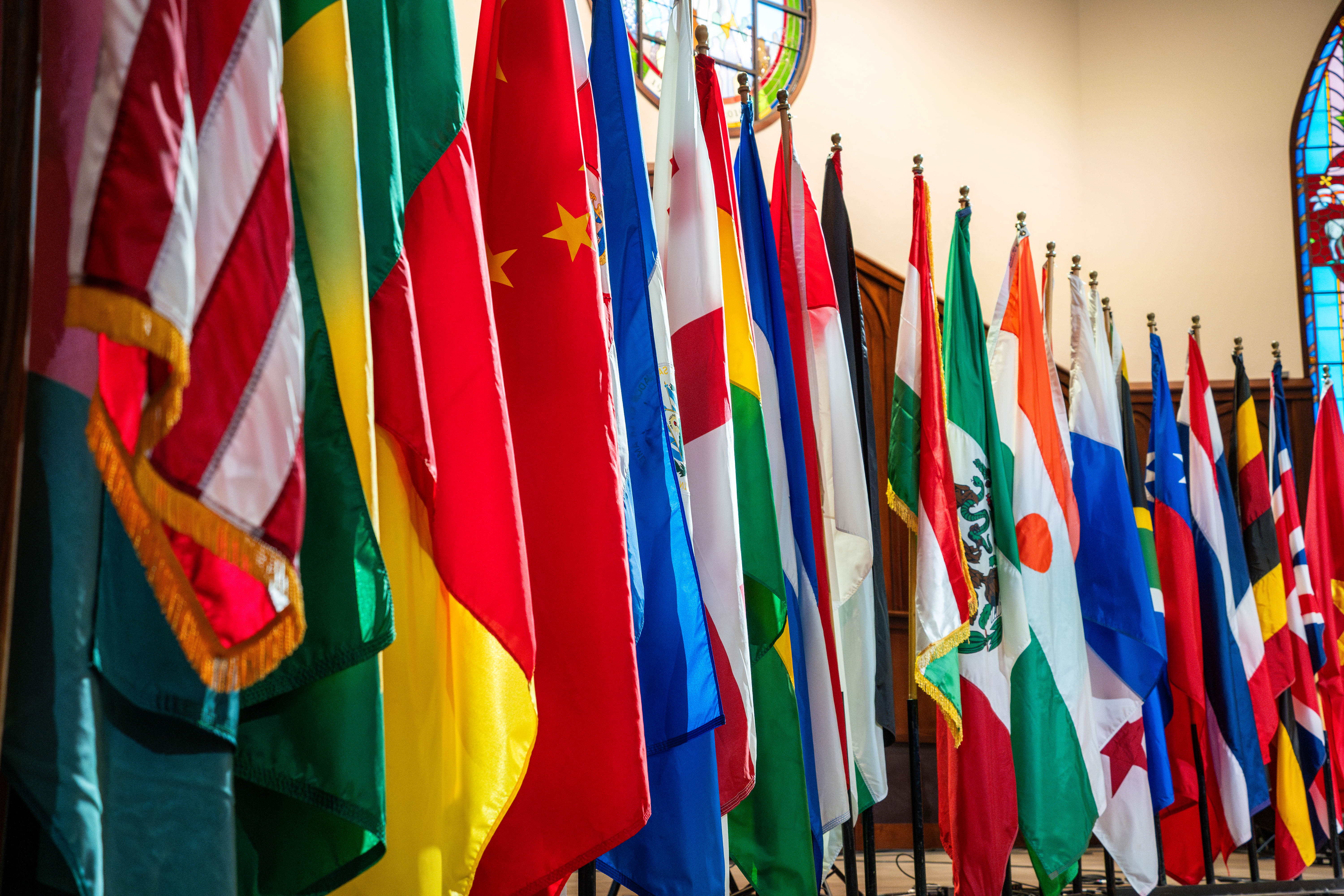
From Lake America to South America: How Trump’s Renaming Campaign Became a Political Punchline

Political decisions do not always stay within government. Sometimes, they appear on phone screens, spread through social media and eventually become part of popular culture. Recent attempts by President Donald Trump to change geographic names in the United States have done exactly that, becoming the subject of debate, online reactions and even a joke from the creators of South Park.

In August, Trump signed an executive order directing the federal government to rename Lake Ontario as Lake America. The lake, which borders New York and the Canadian province of Ontario, became another example of Trump using geographic names as part of his administration’s policies and messaging. The move followed his earlier decision to refer to the Gulf of Mexico as the Gulf of America for federal purposes.

The changes also created different responses from technology companies. Google Maps changed Lake Ontario to Lake America for users in the United States, and Apple later made the same change, though. Users outside of the U.S. continued to see Lake Ontario. Other platforms such as MapQuest, however, decided not to change the name. After announcing its decision on social media, the mapping service experienced an increase in downloads and reached the top of the U.S. App Store.

The naming debate expanded beyond bodies of water. In September, Trump suggested on social media that New Mexico should be renamed “New America.” Unlike Lake Ontario, however, New Mexico was not actually renamed. The proposal generated reactions from residents and politicians in the state, with critics arguing that the existing name is connected to the state’s history and culture.

The situation eventually became material for one of television’s most recognizable satirical shows.

On Sept. 8, South Park creators Trey Parker and Matt Stone announced on the show’s Instagram account that they were changing the name of the series to “SOUTH AMERICA.” The announcement specifically referenced Apple and Google, thanking them for their “bravery and patriotism” after the companies adopted the Lake America name on their maps.

The joke continued when the show’s 29th season premiered on Sept. 16. The opening sequence used the new “South America” name, while the premiere, titled “South American Biker Gangs,” included an animated version of Trump.

The response to these events shows how political decisions can move beyond government and into everyday technology and entertainment.

For South Park, turning political events into satire is nothing new. But the “South America” joke demonstrates how quickly politics can become part of popular culture— and how a decision about what to call a place can become much bigger than a name on a map.

Photo available via the Public Domain

Read More