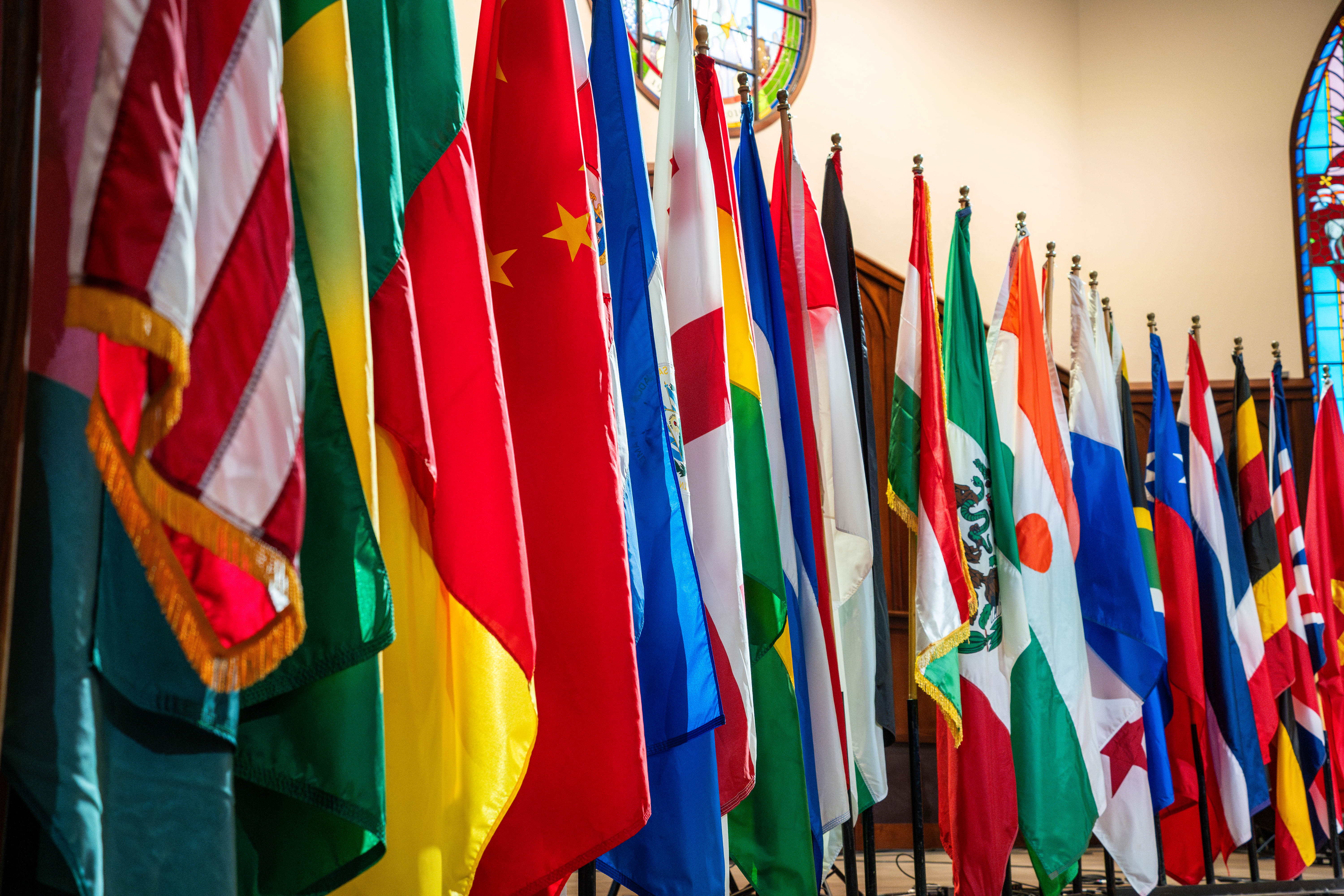
John Brown University hosts a diverse student body from all over the globe. The rows of flags in the Walker Student Center are a testament to each international student who leaves their home country and settles in Siloam Springs, Ark. Moving anywhere —especially overseas —is no small feat, especially when a whole new culture comes with it. What might seem ordinary or even mundane to students from the States, like navigating the aisles of Walmart or watching a squirrel dart across the sidewalk, is a completely new experience for others. The following interviews with a few of JBU’s international students offer a glimpse into their perspective of American culture in the context of the culture they came from.
Junia Licaj (Berat, Albania)
Q: Tell me about your home country. What was the culture like? Where was your favorite place to go?
A: My home country is Albania. It’s in the Balkans right next to Greece. Albania is between 4,000 and 5,000 years old, and it was called Illyria back then. So its culture and language is very unique because it doesn’t have any similarities to any other cultures or languages from the rest of the world.
I have two favorite cities to visit. One of them is Vlora, which is by the seaside. In Vlora, both the Adriatic Sea and the Ionian Sea collide with each other so you can see both seas. If you’re in the northern part of Vlora, you have all the sandy beaches, and if you’re in the southern part, you have all the rocky beaches. So you can choose between the two seas. And the food is great!
My other favorite city is Korca, which is known as the city of art and theater. It’s higher in the mountains, so it’s usually much colder there, and snows for almost half the year. It’s just so quiet, and there’s always a theater or a play going on. I love it so much.
Q: What has surprised you the most about the culture here?
A: That’s an interesting question. I didn’t have a lot of culture shock because with the Internet, you can access anything; you can know how everything and everyone is. But I was kind of shocked that there isn’t a lot of hospitality, even though I’m in the south. Albania is known for its hospitality. And coming to houses in America, like being invited to dinner, I feel like people won’t start a conversation with me and just hang out with who they’re comfortable around. In Albania, hosts talk with guests the entire time.
Q: What is your favorite food back home? What is your favorite food you’ve eaten since coming to the U.S.?
A: I have two favorite foods back home. One of them is called Berati beef, which is only made in Berat. It’s thin and filled with walnuts as well as a specific type of cheese called kaçkavall that’s only made in Albania. And then you coat it with stirred egg mix and flour and fry it in a pan. It’s amazing.
My second favorite food back home is called pastice. It’s very simple, but my mom always makes it for me, and it’s a comfort food. It’s a pasta dish with really thick noodles. You boil them, put them in a pan, and add milk, butter, cheese, and sometimes meat, then put it in the oven.
At JBU, I love the Caf cornbread. We have cornbread in Albania, but the one here is much softer. I also love the Great Value cheese sticks from Walmart.
Q: How did you discover JBU?
A: My mom told me about it. I was looking for universities and in Albania, the prices are OK, but the education isn’t as good. I have a lot of friends back home who study psychology. They told me not to go to state college because it’s horrible. So I looked all over Europe, and apparently in most European universities, you have to pay more if you’re an international student. And then, my mom just told me to check out JBU because we have friends who live in Siloam Springs. That’s how I found out about it.
Lea Fawaz (Bourdeaux, France)
Q: Tell me about your home country. What was the culture like? Where was your favorite place to go?
A: The culture in France is certainly different. It is secular, everything is smaller and people use public transportation and walk to places way more than here. My favorite place to go back home in Bordeaux was Sainte Catherine, which is a very long shopping street (the longest in Europe) where we would often go with my friends to eat, shop and hang out.
Q: What has surprised you the most about the culture here?
A: People are very friendly and approachable. I was very surprised at how easy it is to interact with others here. I’m also not used to seeing so many squirrels!
Q: What is your favorite food back home? What is your favorite food you’ve eaten since coming to the U.S.?
A: I miss chocolate croissants. I would have one for breakfast every day before class. Regarding American food, I discovered ranch sauce recently, and I really like it!
Q: Share any funny stories that happened while traveling to the U.S. or since you’ve arrived here.
A: The first time I went to Walmart in Arkansas, I had a conversation with an old lady. I told her I was going to attend JBU. She told me that if I did not find a husband during my time in college, she could marry me to one of the “lovely young men” she knew in Oklahoma.
Lia Diener (Manila, Philippines)
Q: Tell me about your home country. What was the culture like? Where was your favorite place to go?
A: The Philippines is an island in Southeast Asia, located near the equator and on the Ring of Fire. This means that we are a tropical country, and we basically only experience two seasons: Hot, sunny summers and rain, usually with flooding. We have some of the best beaches in the world, and you can eat and drink the best mangoes and smoothies here. Our culture is very humble, warm and community-oriented and has a strong respect dynamic between the young and elders. It's difficult to choose only one favorite place to go to, so I will name a few: Jollibee, our fast food chain, is my comfort food; the palengke (wet market) where you can buy fresh groceries, snacks and basically everything you can find; Corregidor Island, which was a heavily bombed WWII site that is now preserved and looks like it's still frozen in time in 1945. I camped on Corregidor Island, right on the beach by the forest where there are wild monkeys ... super fun!
Q: What has surprised you the most about the culture here?
A: A few of my biggest culture shocks were sales tax and tipping, how much you need to drive everywhere (I grew up in an area where nearly everything was walking distance/accessible via public transport!) and there's nearly no public transport (at least in Arkansas). I was also shocked by how often people open the door for you, especially guys! People also genuinely mean it when they say “How are you?” and it’s normal to make chitchat with workers, even at the counter of the grocery store. The people here are so sweet! And I love the big portion sizes, especially the chicken and soda.
Q: What is your favorite food back home? What is your favorite food you’ve eaten since coming to the U.S.?
A: This is also a hard question to only pick one dish, but I usually say Tinola – a ginger flavored broth typically with chicken or fish, with vegetables like malunggay (moringa leaves), sayote (chayote), chili pepper leaves and green papaya. One of my first meals when I arrived in the States was a heavily spiced and herbed chicken (not sure what the name of the dish is) and oil.
Q: How did you discover JBU?
A: I went to the U.S. for the first time last summer and went college hunting. When I told people that I was going college hunting, nearly all of them referred me to JBU, so I went on a spontaneous trip down to tour JBU two days before I had to leave the U.S. and absolutely loved it. A couple months later, I applied, got accepted and the rest is history!
Picture by Juliana Jones

.jpg)


.jpg)