News


blog

Mabee, We’ve Missed You! LRC Returns with an Open House

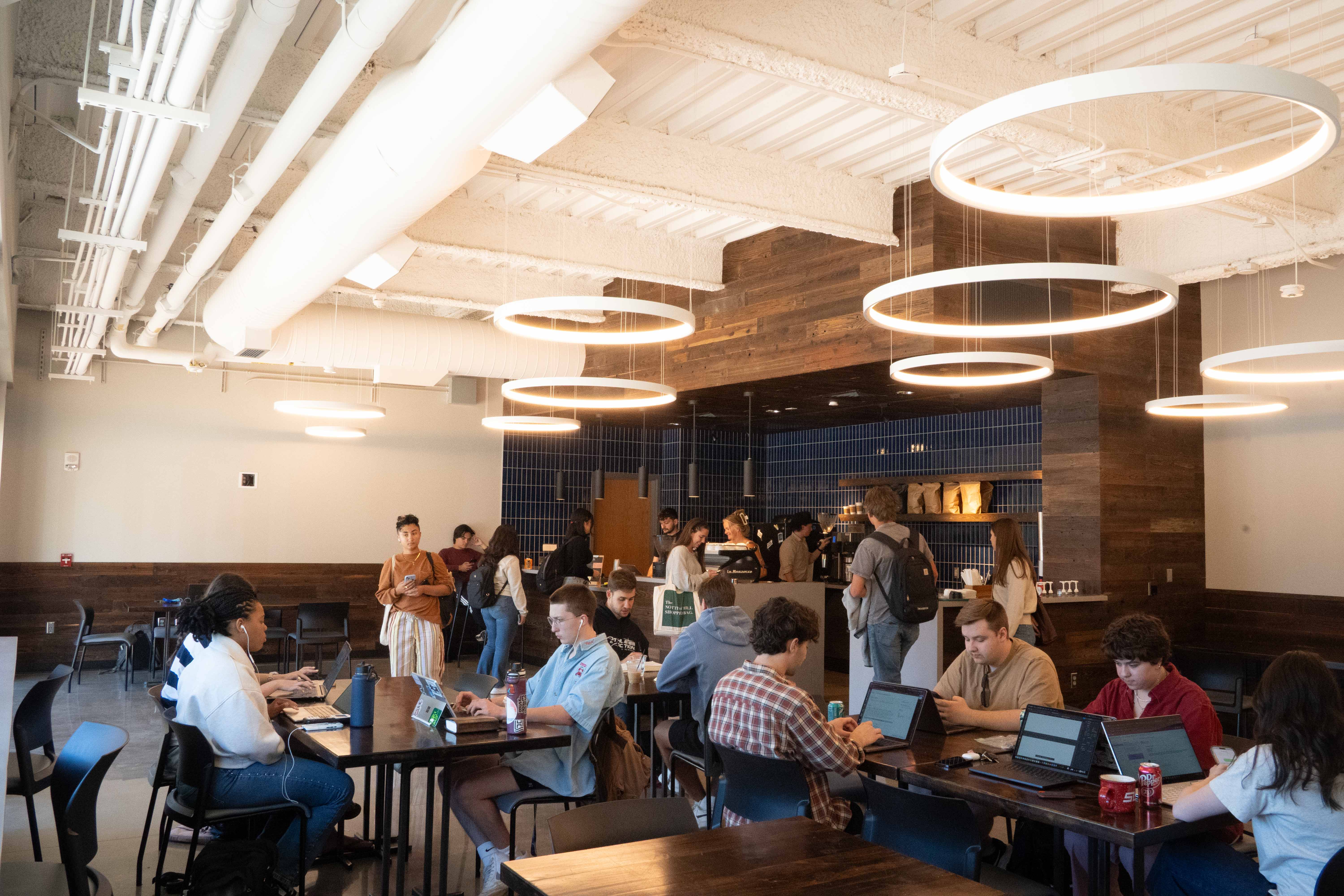
At long last, the JBU’s Mabee Learning Resource Center is open for business. Starting in January of 2024, the renovation brought together the library, study rooms, writing center, media lab, IT Help Desk, Student Support Services and campus favorite, Ground Floor Coffee, into one centralized space. A reception was held on Monday, April 6, in celebration of the renovations' long-awaited completion. The highly anticipated opening was accompanied by an array of fruit, cheese and cookies along with complimentary drip coffee from Ground Floor.

Before the reception had begun, students were gathered in Ground Floor and in the new library studying, while faculty roamed the area, appreciating the work that had been done. The library had been supplemented with the Neufeld Commons before the finishing stages of construction, which offered limited space and limited resources.

“I’ve missed the library a lot, since my sophomore year, since freshman year, so I’m really excited for it to be back,” junior Kirsten Higley said.

Another junior, Olivia Bond, reciprocated the sentiment.

“I didn’t realize how much I would miss the library until it was gone, and then I was like, where will I study? Nowhere,” Bond said.

Although the common area had been well used and loved by students, it could never replace the library.

“It didn’t really feel like a full college library,” freshman Vale Guzman Rivero said.

The new library offers abundant seating and study areas, including study rooms for the students to use. This was a highlight for sophomore Lauren Moore.

“I love all of the study rooms, because when I need to meet for group projects, it’s been a lot harder to find places, since the old library was closed. They have so many good options for that,” Moore said.

Another highlight included spaces for children’s books.

“As an ‘elementary ed’ major, I love the little room that they kept upstairs for the children’s books. It just feels like a little fun space that I can go and hang out with some of my ‘ed’ friends,” junior Malorie McRostie said.

Once the reception had fully begun, the lobby and Ground Floor dining area were full of students, faculty, staff and even some off-campus visitors. Notable JBU appearances included both JBU Chaplain Keith Jagger and President Chip Pollard.

Walking from the old part of the LRC into the newly renovated area felt like stepping from one decade into another. It was clean and streamlined, and large glass windows gave a view into the different resource areas. At the beginning of the reception, the Media Lab was already full of busy students and those just coming in for a peek. The same was true for the smaller study spaces and the IT Help Desk. People weaved in and out, admiring the exciting new spaces.

“…all the natural lighting is so great. I’m like a plant and want the sun. I’ve missed places with windows to study, and I was excited to see all the windows,” Higley said.

The new Ground Floor took the same smiling faces, good coffee, tables and chairs, and put them into a brightly lit area. An outdoor plaza is under construction right outside the building, and the windows will eventually be able to open up to the seating area. The higher ceilings and large windows make the space feel much larger and more alive.

“It’s immaculate in here. The other one was so dark and ‘cave-like’, but this one is really nice. I really like it,” Bond said.

All the resources in Mabee Learning Resource Center are officially open, including Ground Floor Coffee, whether for a mid-study session caffeine fix or a study date.

Photo courtesy of Julianna Jones

Read More

Sports


blog

Southwestern University Met Its Match Against JBU Tennis

On Saturday, Feb. 21, the Golden Eagles tennis team was able to complete a full sweep, despite less-than-favorable conditions. It was cold and windy as JBU competed against Southwestern University at the JBU Tennis Facility arena.

The match day started with the doubles games in which JBU players Andrew Aylor and Spencer Keeter won 6-2 for an early victory. In the second game, Grant Hinkle and Jonathan Hillock won 6-1. For the third game, Lucas Machado and Santiago Jaime were supposed to play, but Southwestern University didn't have enough players, so the game was won by forfeit.

After the John Brown University men’s tennis team swept the doubles games, the singles games began. Machado dominated the contest, winning the first set 6-3, the second set 6-1.

“In the first few games, I noticed that his backhand was his weakness. After realizing that, I started serving to his backhand to begin the points, which allowed me to open up the court and take control of the rallies. When returning his serve, I focused on hitting through the middle of the court at first, and then I began creating wider angles to his backhand. Overall, my strategy was to target his weakness and use it to my advantage,” Machado said.

For the second single game, Hillock won both sets 6-1 for a quick victory.

In the third single game, Jaime won the first set. Then for the second set, Jaime was able to have a bigger lead, winning the set 6-3.

“I felt really good during the game, and I think I did well overall. In the first set, I didn’t play so well, but in the second set I improved a lot by focusing more and playing smart,” Jaime said.

For the fourth and fifth singles games, which were played by Aylor and William Prochazka, they were able to complete a full sweep. Both won their singles games 6-0 in both sets.

For the last single game, Hinkle won the game by default because they didn’t have enough players.

The Woman's tennis team won by default all of the games because Southwestern University didn’t have enough players to play the games needed.

Photo by David Camacho Padilla

Read More

Opinion


blog

Stevie Wonder Back on Tour: “Songs in the Key of Life” 50 Years On

How a 21-year-olds’ fight for artistic freedom reshaped the music industry and produced one of the greatest R&B albums of all time.

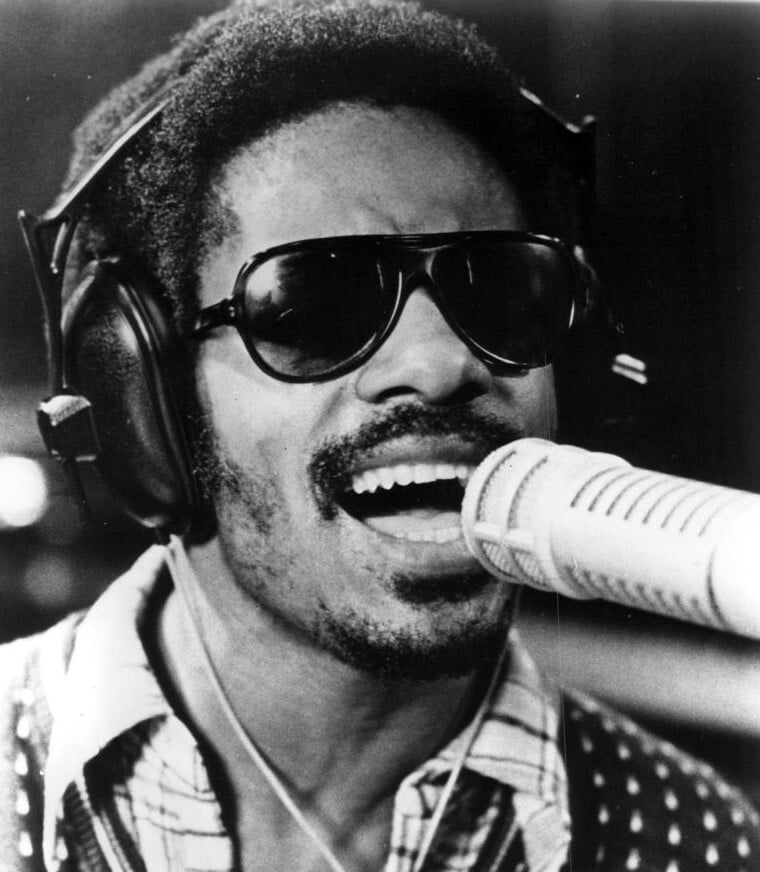
When Stevie Wonder takes the stage this week for an 18-show tour across the US, United Kingdom and Europe, it will be more than a legacy lap for the 76-year-old R&B legend. Opening Oct. 13 in Birmingham, England, and closing Dec. 19 in Los Angeles, Wonder will perform his 1976 magnum opus, “Songs in the Key of Life,” in its entirety to mark its 50th anniversary. In order to understand why this album merits a stadium tour five decades after its release, one has to look at the effect it had on the recording industry and the very sound of popular music as we know it.


The Prodigy

Born six weeks premature, Stevland Hardaway Morris suffered retinopathy of prematurity and was over-exposed to pure oxygen while in the incubator, resulting in permanent blindness from birth. According to a 2004 interview with Oprah Winfrey, Wonder’s mother felt overwhelmed by guilt and often wept in front of her son, believing that God might be punishing her. Yet a young Wonder famously consoled her.

“Don’t worry about me being blind, because I’m happy,” Wonder said.

His sightlessness did not at all impede his musical ability. Wonder was a true musical prodigy, mastering the harmonica, piano and drums when he was just nine. By age 11 he had become well-known around his Detroit neighborhood and caught the attention of Berry Gordy, head of Motown Records. He was signed on immediately, and “Little Stevie Wonder,” as he was rechristened, became the youngest artist in history to hit No. 1 on the Billboard Hot 100 with “Fingertips (Pt. 2)” at just 13 years old.

Throughout the 1960s, Wonder developed into a full-fledged hitmaker, dropping the “Little” from his stage name and churning out classics like “For Once in My Life,” “My Cherie Amor” and “Signed Sealed Delivered (I’m Yours),” all of which were chart toppers.

Yet he had no autonomy as an artist.

Though he was incredibly commercially successful, his childhood contract paid him a meager 2% in royalties and kept him deadlocked in the machine that was Motown: the formula for success focused on three-minute radio singles devoid of political or social commentary and required the use of in-house studio musicians, allowing only material chosen by the label producers.

In May 1971, the morning after his 21st birthday celebration — an extravagant party thrown by Motown in his honor — Wonder decided to walk away.


The Ascent

Allowing his 10-year childhood contract to expire, he withdrew the money held in a trust fund set up by his mother and moved to New York. Wonder then founded his own production company, allowing him to work freely on the concept albums that he had always dreamed of.

With total creative control, Wonder unveiled his full songwriting and instrumental capabilities. On 1972’s “Music of My Mind,” he played every instrument himself except for trombone on one track and guitar on another. Additionally, Wonder began to use synthesizers (like the giant TONTO synth at Electric Lady Studios) extensively in his music, instruments which had before been used only for sound effects and novelty classical albums. His success with the instrument showed its capabilities in mainstream music and laid the foundation for ‘80s synth pop, EDM and ‘90s hip hop tracks (ie. Coolio’s wildly famous “Gangsta’s Paradise,” which directly sampled Wonder’s “Pastime Paradise”).

As Wonder’s new sound became more popular, he began to gain attention at the Grammys. For his 1973 album, “Talking Book,” Wonder won three awards for “Superstition” and “You are the Sunshine of My Life.” In 1974 with “Innervisions,” he received four Grammys, including Album of the Year, and in 1975, he saw another four award sweep with “Fulfillingness’ First Finale,” winning back-to-back Album of the Year awards (a phenomenon which he shares only with Frank Sinatra).


The Deal

With Wonder’s massive successes away from Motown, they were pleading to have him back on their label. So, he decided to strike up a contract with his old label, entirely on his own terms, which became the most lucrative recording contract in music history (up until that point). His seven-year $37 million contract included: unencumbered creative license, full ownership of his master recordings and a 20% royalty rate the likes of which had only been acquired by Ray Charles, Elton John and Paul McCartney before him.

This new record deal gave Wonder the liberty to take as long on the album as needed. Instead of the expected release in 1975, “Songs in the Key of Life” was delayed until 1976. This allowed for a much-needed break after his back-to-back Album of the Year win streak and gave him the chance to craft Grammy-award winning tracks like “I Wish” and “Sir Duke” along with the touching celebration of his daughter’s birth: “Isn’t She Lovely.”

Paul Simon, for one, was quite grateful for Wonder’s pause in 1976, famously closing out his reception speech for Album of the Year with a mention of the star.

“Most of all I’d like to thank Stevie Wonder for not making an album this year,” Simon said.


The Album & Its Legacy

When the 105 minute-long album finally came out in September of 1976, it debuted at No. 1 on the Billboard 200 and held the position for 13 weeks straight until The Eagles’ “Hotel California” finally managed to knock it from the podium. While debuting at No. 1 is almost ubiquitous with big-name artists today due to steaming, this was unheard of in the age of vinyl and the 8-track. Only Elton John had managed this feat previously.

And at the Grammys the next spring in 1977, “Songs in the Key of Life” earned Wonder his third Album of the Year award, a hat trick which has only been achieved two other times by Simon and Sinatra. Unlike those two music legends, however, Wonder’s awards were for consecutive back-to-back-to-back releases, a truly singular achievement. “Songs in the Key of Life” currently sits at No. 4 of Billboard’s list of The 500 Greatest Albums of All Time, and remains a blueprint for generations of jazz, hip hop, R&B and pop artists.

Fifty years on after its original release, “Songs in the Key of Life” endures because it was born out the creative mind of a genius, completely on his own terms — delivering complex melodies with deeply personal lyrics exploring universal experiences of love, faith, injustice and most importantly, the contagious nature of joy.

So, if you can’t make the tour, at least give the album a listen because, as Wonder says in “Sir Duke”:

“Music is a world within itself

With a language we all understand”

Photo courtesy of Wikimedia Commons

Read More

Lifestyles


blog

From Lake America to South America: How Trump’s Renaming Campaign Became a Political Punchline

Political decisions do not always stay within government. Sometimes, they appear on phone screens, spread through social media and eventually become part of popular culture. Recent attempts by President Donald Trump to change geographic names in the United States have done exactly that, becoming the subject of debate, online reactions and even a joke from the creators of South Park.

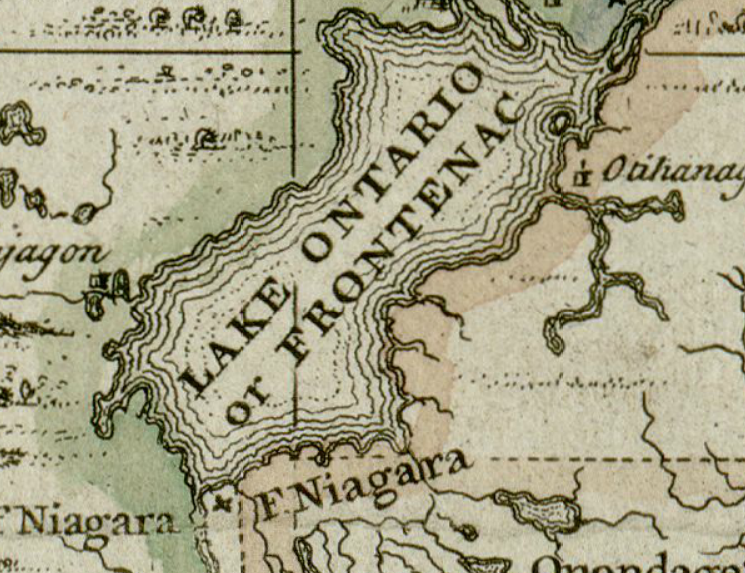
In August, Trump signed an executive order directing the federal government to rename Lake Ontario as Lake America. The lake, which borders New York and the Canadian province of Ontario, became another example of Trump using geographic names as part of his administration’s policies and messaging. The move followed his earlier decision to refer to the Gulf of Mexico as the Gulf of America for federal purposes.

The changes also created different responses from technology companies. Google Maps changed Lake Ontario to Lake America for users in the United States, and Apple later made the same change, though. Users outside of the U.S. continued to see Lake Ontario. Other platforms such as MapQuest, however, decided not to change the name. After announcing its decision on social media, the mapping service experienced an increase in downloads and reached the top of the U.S. App Store.

The naming debate expanded beyond bodies of water. In September, Trump suggested on social media that New Mexico should be renamed “New America.” Unlike Lake Ontario, however, New Mexico was not actually renamed. The proposal generated reactions from residents and politicians in the state, with critics arguing that the existing name is connected to the state’s history and culture.

The situation eventually became material for one of television’s most recognizable satirical shows.

On Sept. 8, South Park creators Trey Parker and Matt Stone announced on the show’s Instagram account that they were changing the name of the series to “SOUTH AMERICA.” The announcement specifically referenced Apple and Google, thanking them for their “bravery and patriotism” after the companies adopted the Lake America name on their maps.

The joke continued when the show’s 29th season premiered on Sept. 16. The opening sequence used the new “South America” name, while the premiere, titled “South American Biker Gangs,” included an animated version of Trump.

The response to these events shows how political decisions can move beyond government and into everyday technology and entertainment.

For South Park, turning political events into satire is nothing new. But the “South America” joke demonstrates how quickly politics can become part of popular culture— and how a decision about what to call a place can become much bigger than a name on a map.

Photo available via the Public Domain

Read More